 Alarm Arcade
Why the iPhone's built-in alarm fails heavy sleepers
The iPhone's built-in Clock alarm is fine for light sleepers — but for anyone with genuine sleep inertia or a snooze habit, a single tap to dismiss is the problem, not the solution. This page explains why the default alarm keeps failing you and what a mission-based alarm actually does differently.
The iOS Clock alarm has one fundamental weakness: dismissal requires zero conscious effort. A tap or a swipe while you're still half-asleep stops the alarm without requiring your brain to engage. For heavy sleepers, this means the alarm becomes background noise — something your body learns to silence before you're actually awake.
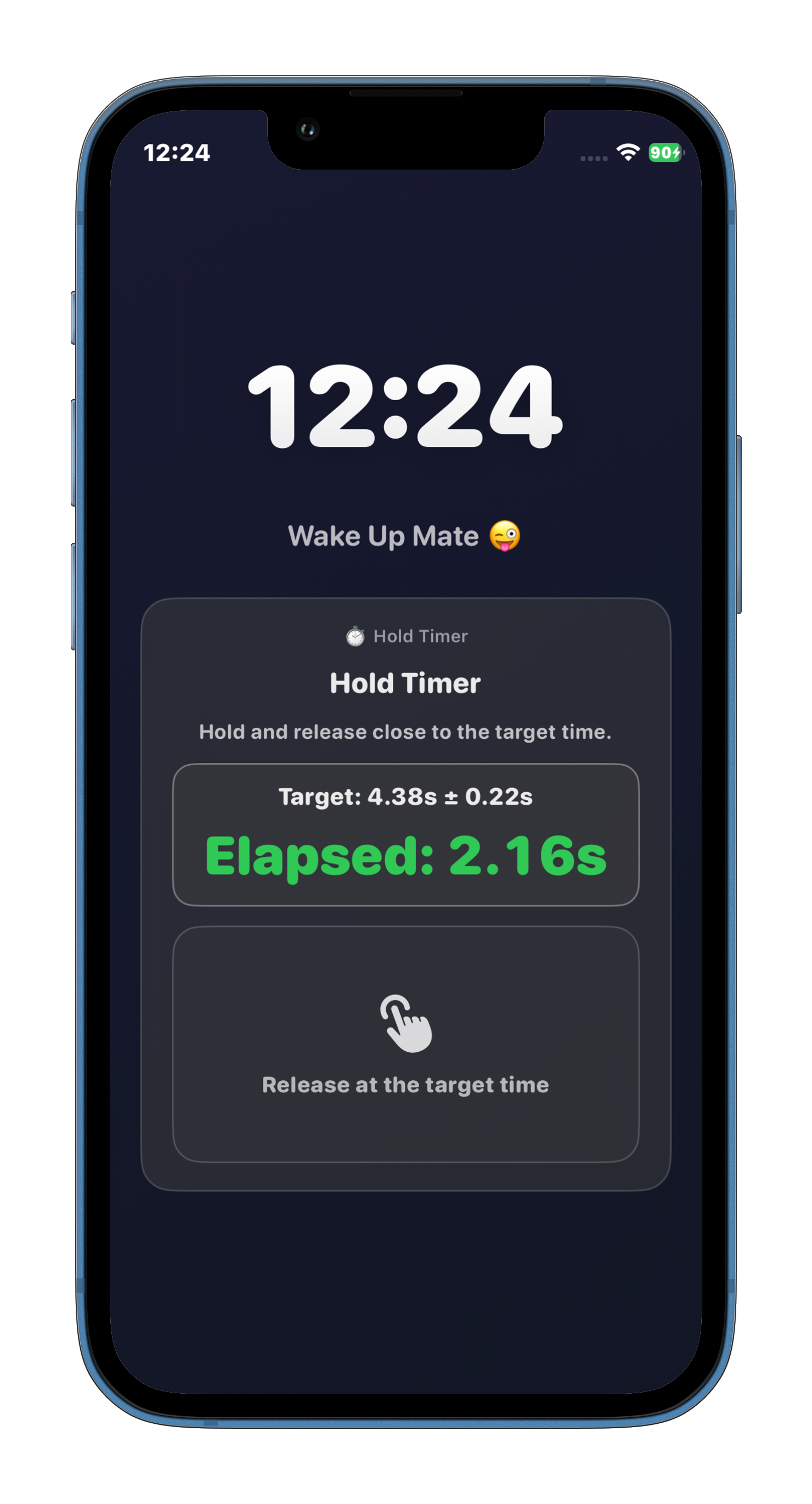
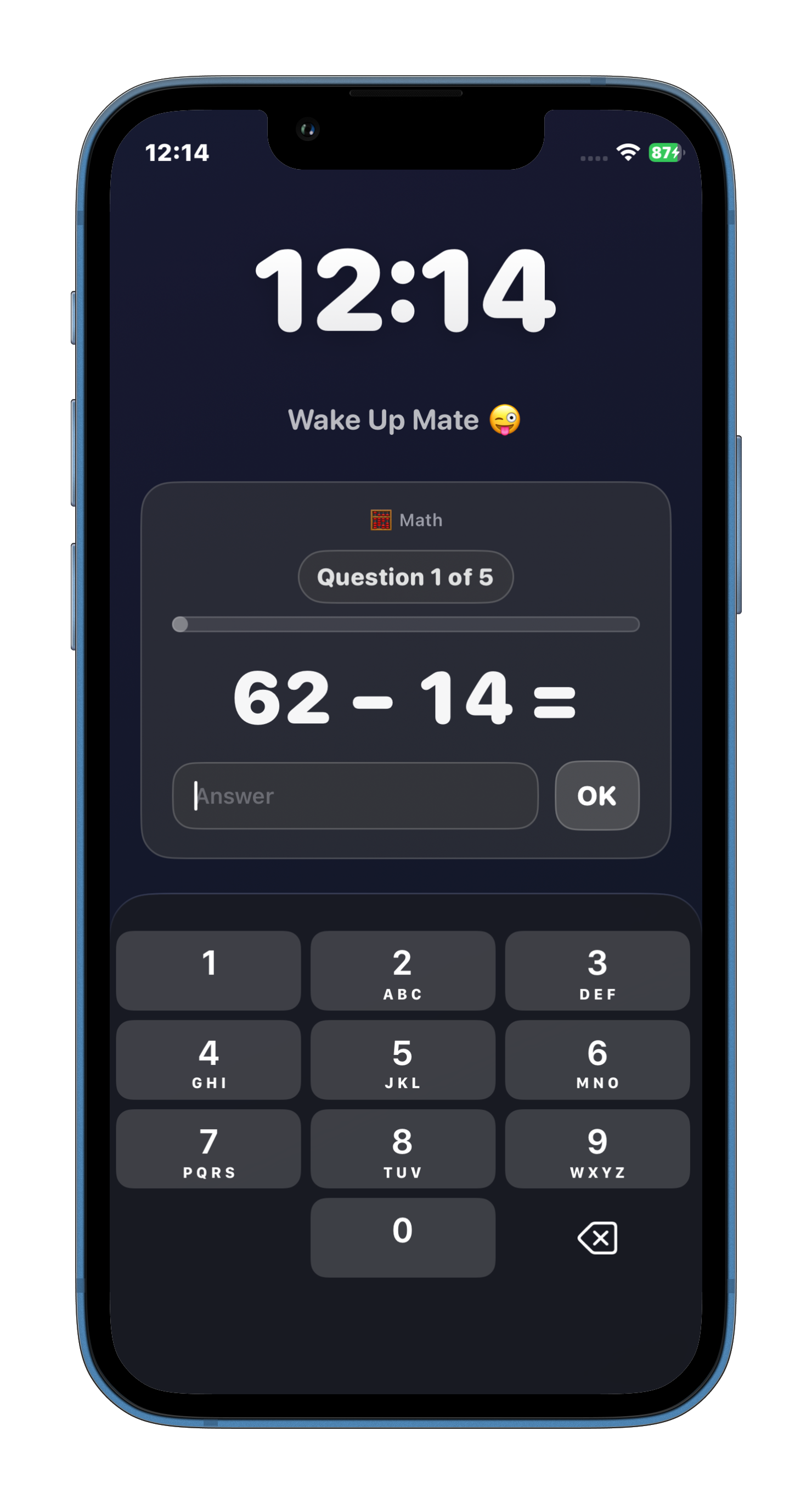
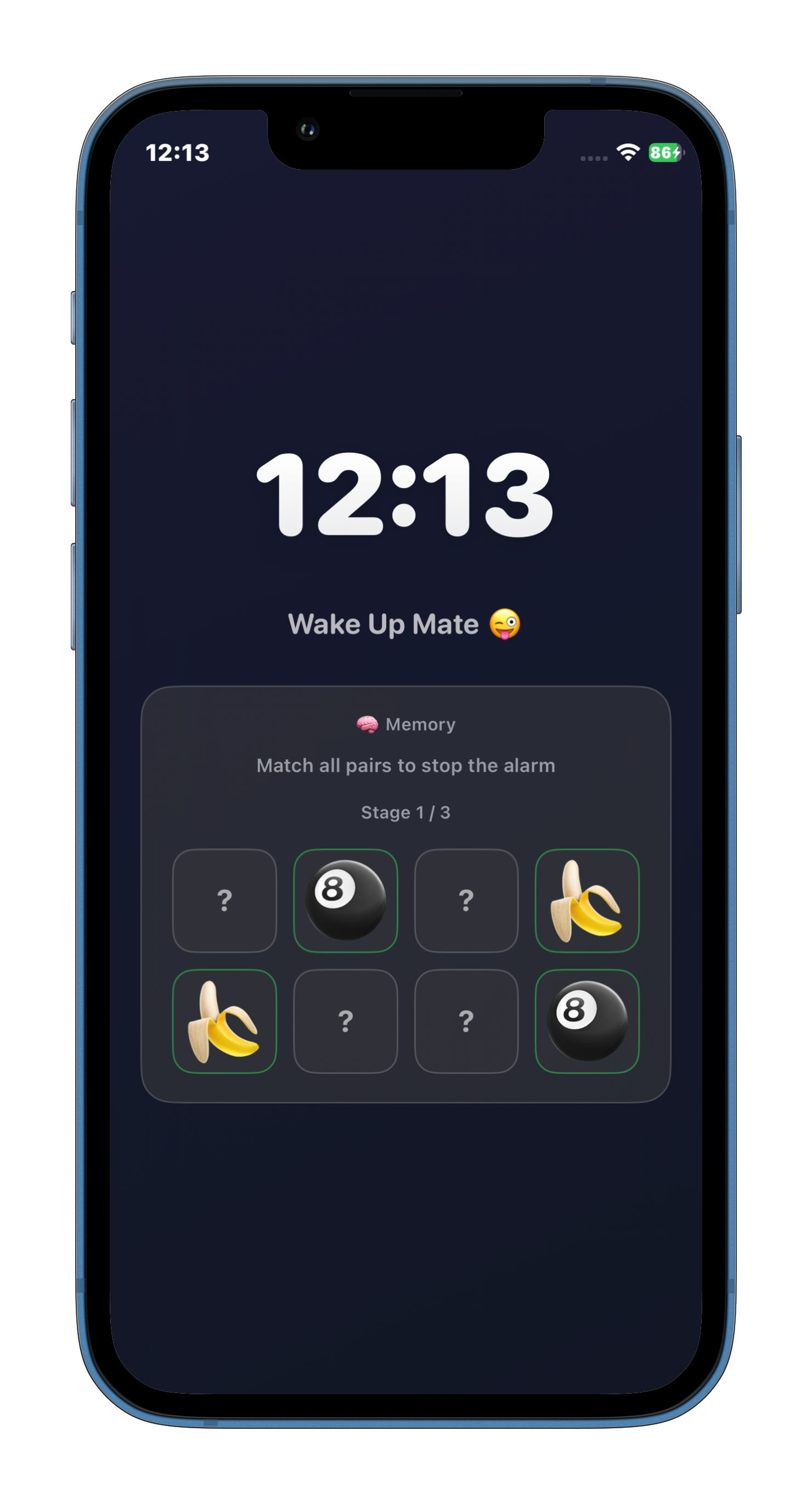
Alarm Arcade fixes the dismissal problem specifically. It requires you to complete a mini-game — Math, Typing, Shake, Memory Match, and more — before the alarm stops. You can't do it on autopilot. Free to download, Pro is $1.49 once, no account, works fully offline.
Who This Is For
- iPhone users who dismiss the Clock alarm without waking up
- Chronic snoozers who set five alarms and ignore the first four
- Heavy sleepers who've never found a default alarm that works
- Students with early classes who consistently oversleep
- Shift workers who can't afford to miss an alarm
- Anyone who's overslept for something important and wants a more reliable system
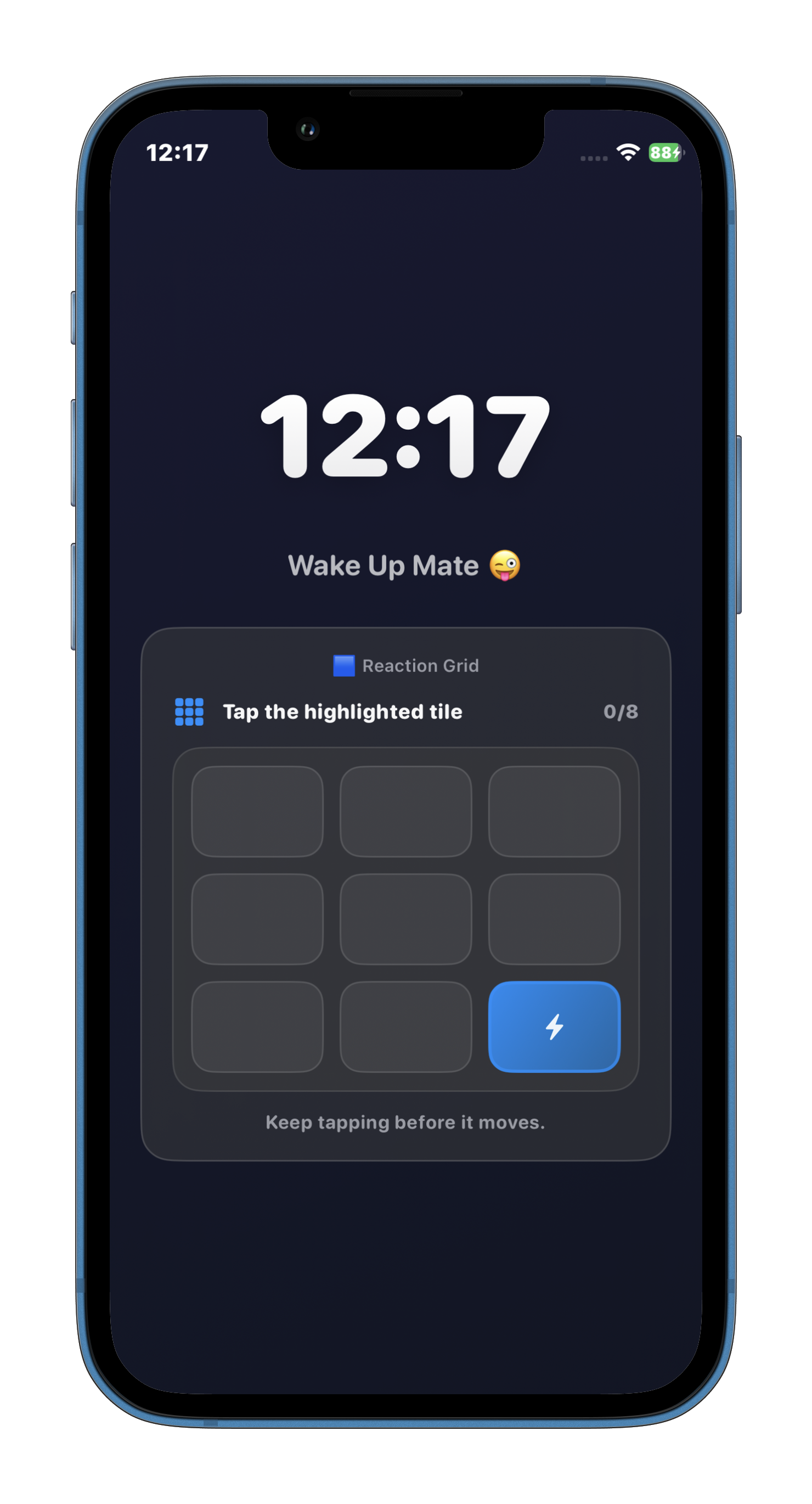
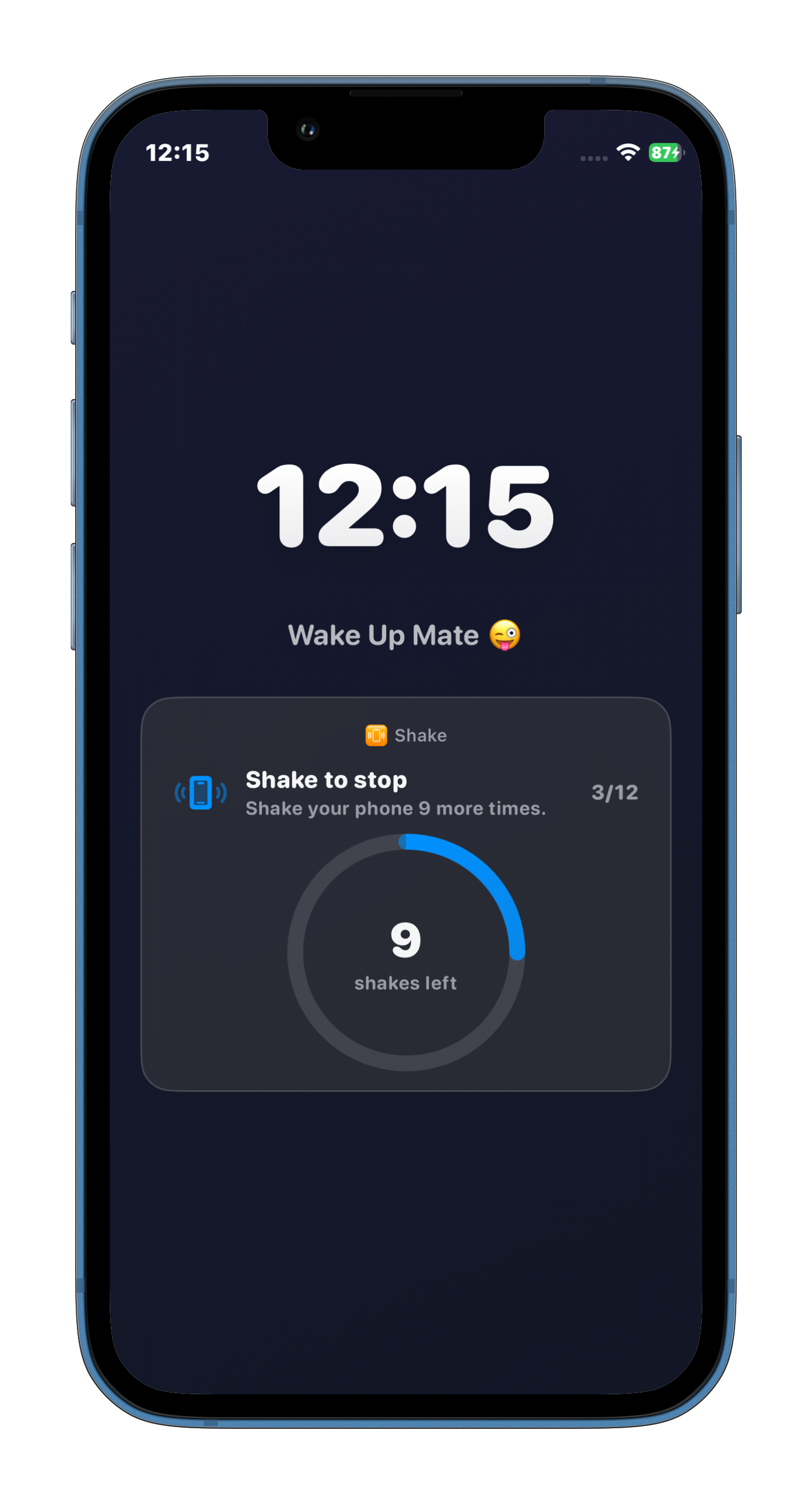
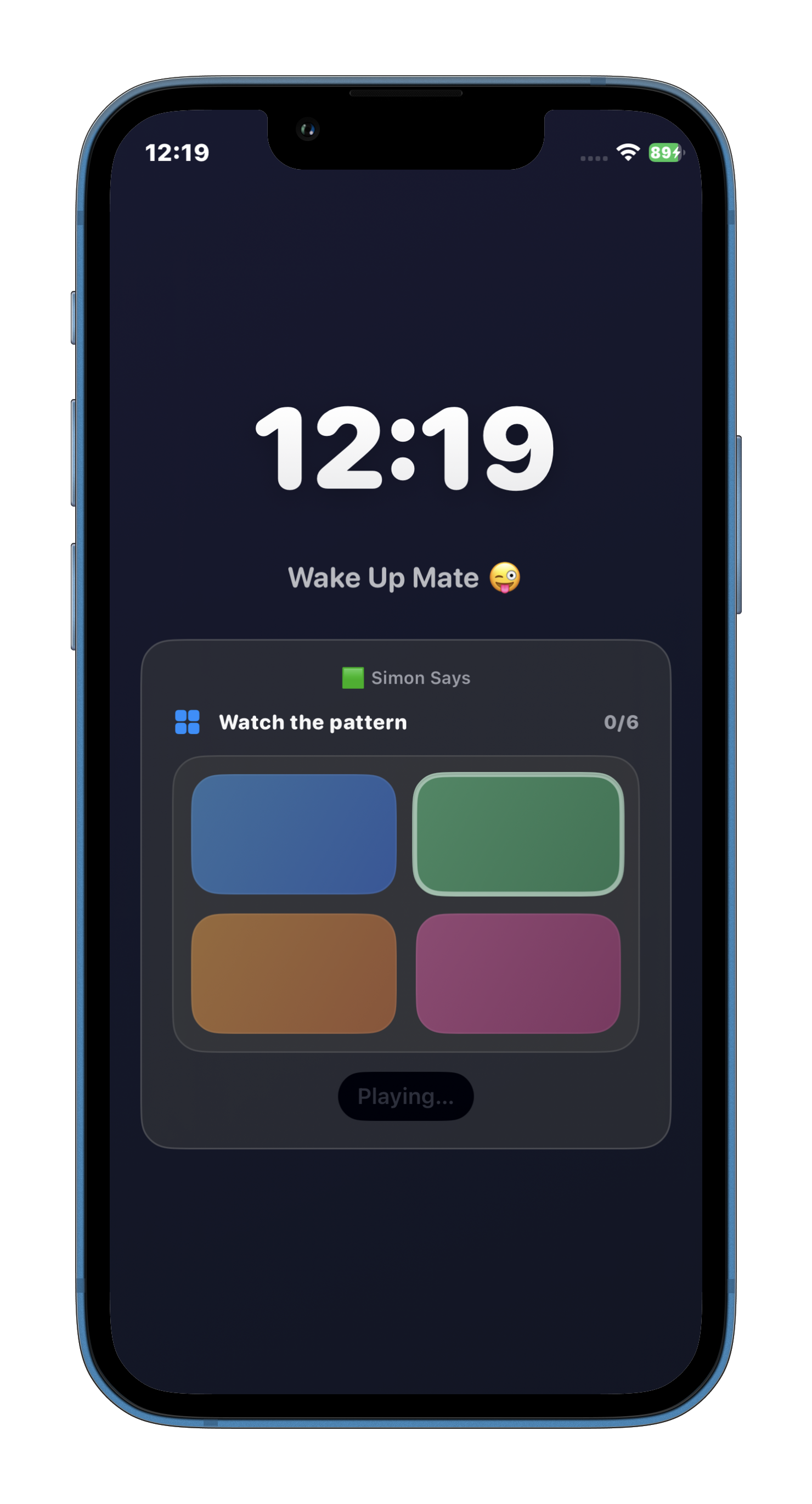
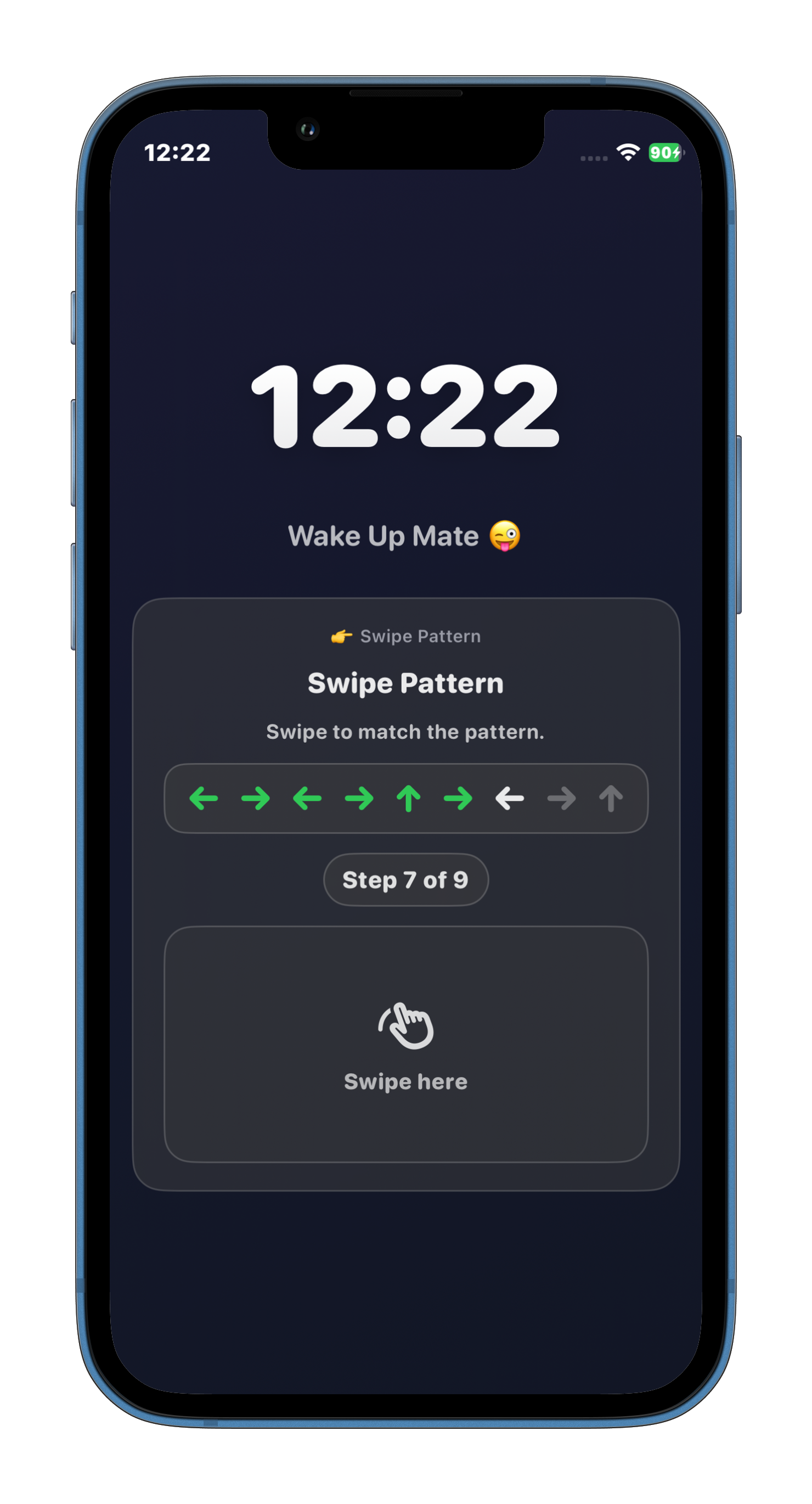
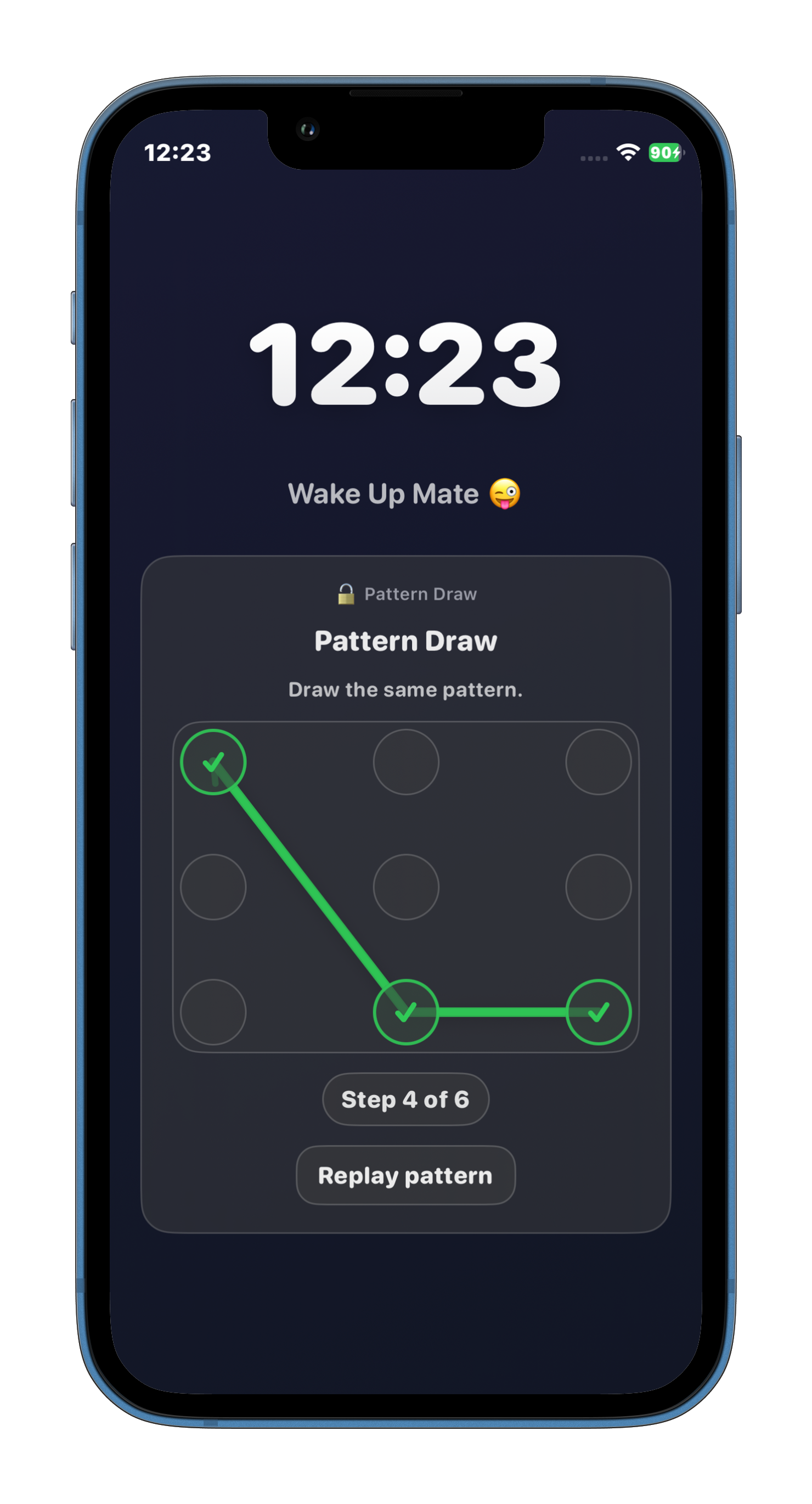
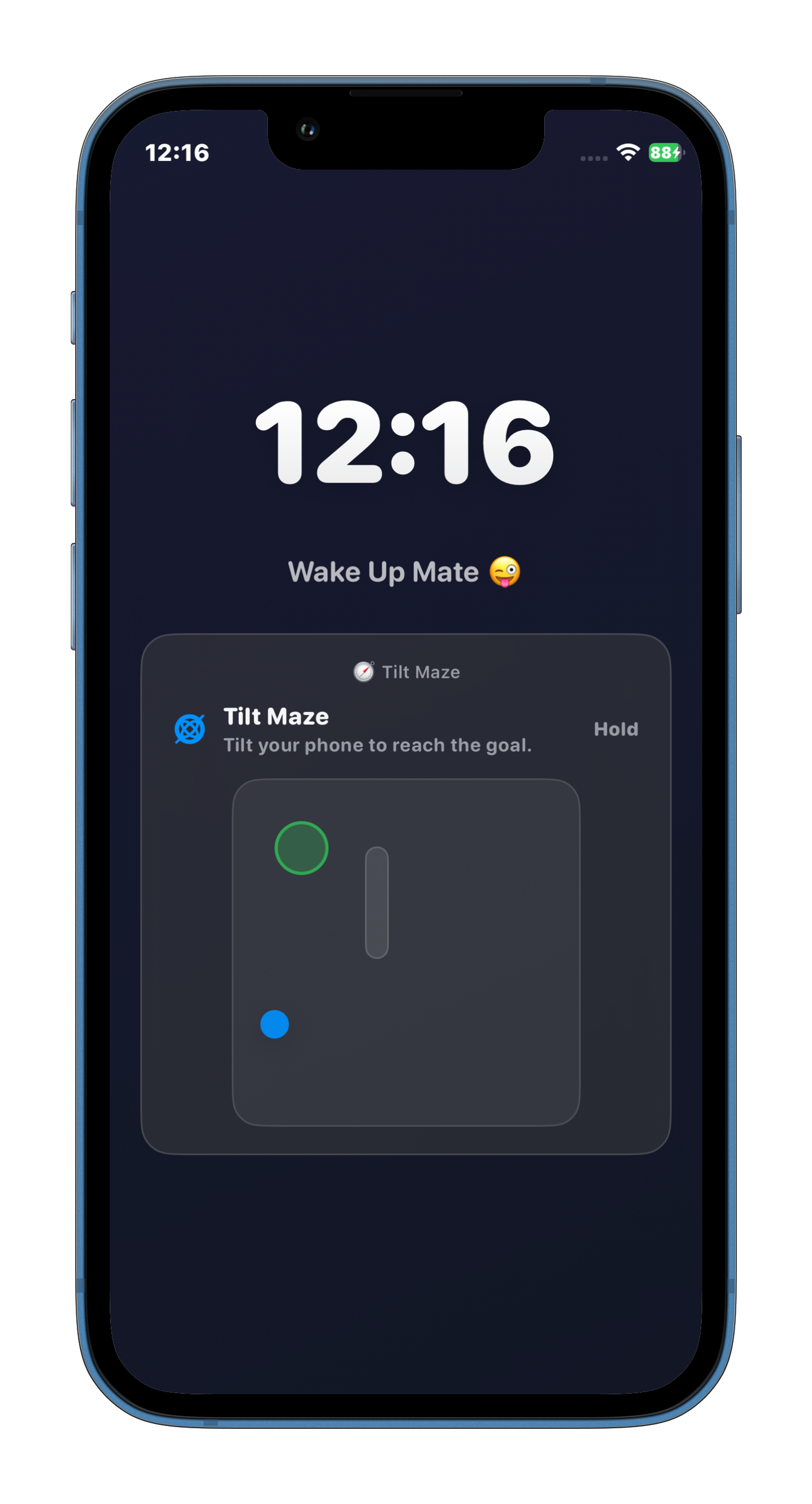
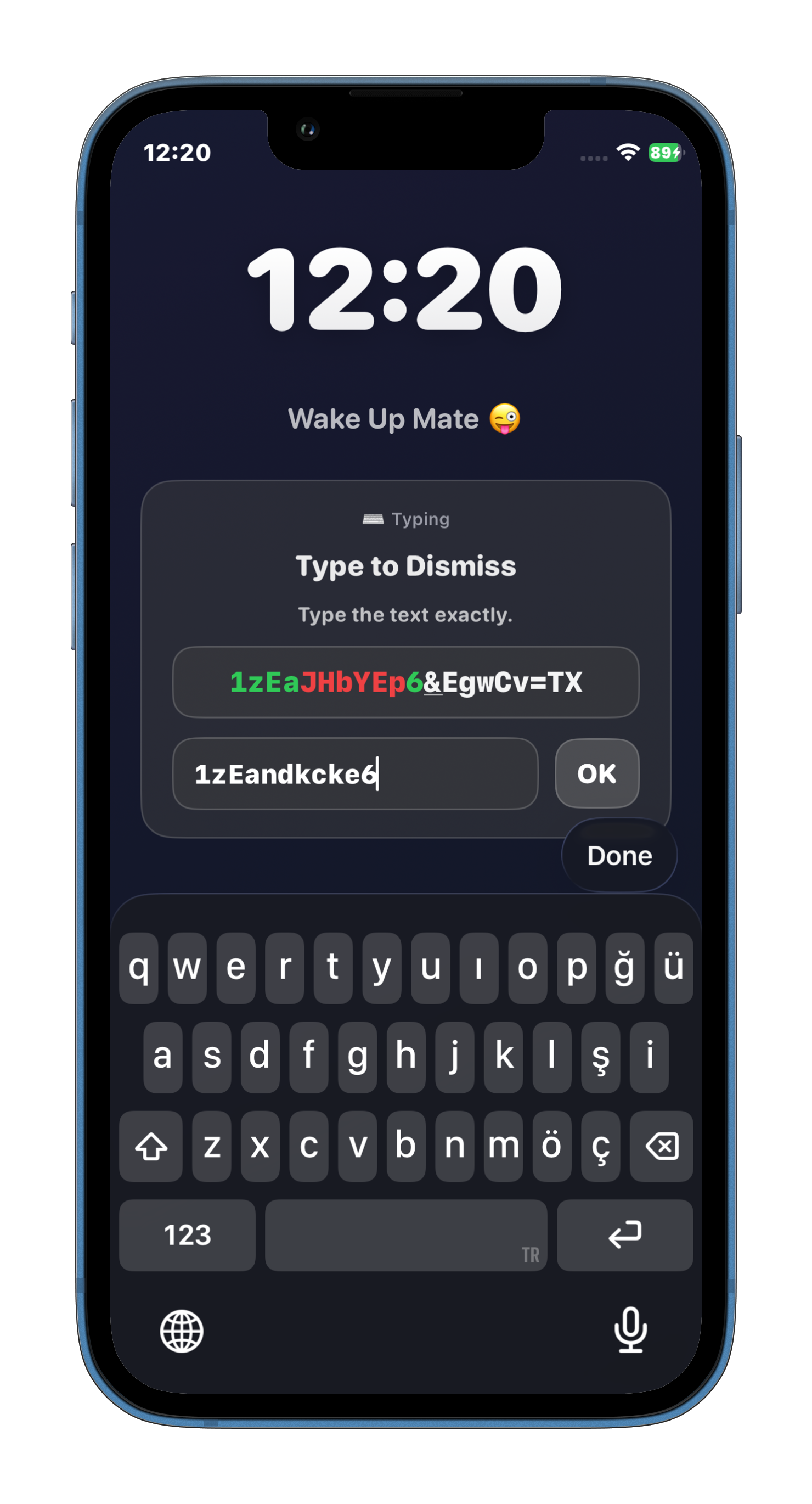
Why Alarm Arcade Works for iPhone Clock users looking for something that actually works
One-tap dismissal is the problem — missions are the fix
The iPhone alarm stops the moment you tap the screen. Sleep inertia means your hands move before your brain is online. Alarm Arcade requires a completed mission — a math problem, a typing challenge, a reaction test — before silence. You can't do it by reflex.
Ten missions across cognitive, physical, and reaction types
Math, Memory Match, Shake, Tilt Maze, Reaction Grid, Simon Says, Typing, Swipe Pattern, Pattern Draw, Hold Timer. Rotate them so you never learn a single shortcut. Different mission types engage different parts of your brain, making it harder to complete them while still functionally asleep.
Free to try, $1.49 for the full experience
The iPhone Clock app is free, and Alarm Arcade is free to download too — so there's no cost reason to stay stuck with an alarm that isn't working. If you want every mission type, Pro is $1.49 once. No subscription, no account, no ongoing cost.
Alarm Arcade vs iPhone's built-in Clock alarm — Feature Comparison
| Feature | Alarm Arcade | Alarmy | iPhone Clock |
|---|---|---|---|
| No subscription required | ✓ | ✗ | ✓ |
| Game-based dismissal | ✓ | ✓ | ✗ |
| Works offline (no account) | ✓ | ✗ | ✓ |
| Pricing | $1.49 one-time | $4.99/mo | Free |
| Multiple mission types | ✓ | ✓ | ✗ |
Why the iPhone Clock alarm keeps failing heavy sleepers
The iOS Clock alarm was designed to wake the average person, and for most people, a sound plus a single tap is enough. But heavy sleepers and chronic snoozers have a different problem: their brain processes the alarm sound and triggers a dismissal response before conscious thought catches up. This is sleep inertia — the grogginess and disorientation that peaks in the first few minutes after waking from deep sleep. The easier it is to silence the alarm, the more likely you are to do it without truly waking up.
Setting multiple backup alarms makes this worse, not better. Each additional alarm you sleep through devalues the next one. Your brain learns that alarms can be ignored because there will always be another one. The result is a snooze spiral that ends with you 45 minutes late and still groggy. The solution isn't more alarms — it's making the first alarm hard enough to dismiss that you're actually awake by the time it stops.
How to replace the iPhone Clock alarm with Alarm Arcade
Step 1: Download Alarm Arcade and set one alarm at your actual required wake time. Delete or disable your stack of backup alarms — having a rescue alarm trains your brain to treat the first one as optional. Step 2: Choose a mission. If you're new to mission-based alarms, start with Math or Typing. These require enough active thought that your brain can't complete them while still in sleep mode.
Step 3: Put the phone somewhere that requires you to get out of bed — the other side of the room, a desk, or a high shelf. Physical distance is still one of the most effective wake-up strategies. Step 4: Rotate missions every few days using Alarm Arcade's settings. The goal is to stay one step ahead of habituation. After a week, you'll know which two or three missions reliably wake you up, and you can rotate between those.
Frequently Asked Questions
Volume increases the sensory input but doesn't change the dismissal mechanic. You can still silence a loud alarm with one tap while half-asleep. The issue isn't that the alarm isn't noticed — it's that it's too easy to stop. Alarm Arcade makes stopping the alarm an active task, which is a fundamentally different approach.
Alarm Arcade uses the same underlying iOS alarm system for triggering sounds, so volume and reliability are comparable. The meaningful difference is in dismissal: the iPhone alarm stops with a tap; Alarm Arcade requires a completed mission. That's the change that makes it more effective for heavy sleepers.
That's the point. The missions are calibrated to be completable in under a minute by someone who is genuinely awake — and genuinely difficult for someone who isn't. If you're struggling to complete a simple math problem or typing task, that's useful information: your brain is telling you it's not ready, which is exactly when the enforcement matters most. The alarm continues until the mission is done.
Make the decision easy — pick the one that actually wakes you up
Download Alarm Arcade free. No account needed, works offline, no subscription. Pro is $1.49 one-time.
Download Alarm Arcade — Free