 Alarm Arcade
Alarm Arcade vs challenge-based alarm apps
Challenge-based alarm apps all share the same core promise — you can't dismiss without completing a task — but they differ significantly in how many challenges they offer, what they cost, and how long they stay effective before your brain adapts. This page compares the category so you can pick the one that doesn't stop working after two weeks.
Most challenge-based alarm apps anchor to one or two dismissal methods — a math problem, a barcode scan, a shaking task. Alarm Arcade covers ten distinct mission types spanning cognitive, physical, and reaction challenges. The wider the variety, the longer it takes for your sleeping brain to build an autopilot response.
If you've burned through a challenge alarm because the challenge stopped being challenging, Alarm Arcade's rotation model is the fix. Free to download, Pro is $1.49 once, no account, works offline.
Who This Is For
- Users who found a challenge alarm effective at first but adapted to it
- People comparing the challenge alarm category before committing
- Heavy sleepers who've tried math-only or shake-only alarms
- iOS users who want multiple challenge types in one app
- People tired of subscriptions just to access basic task dismissal
- Anyone who wants offline reliability and no account requirement
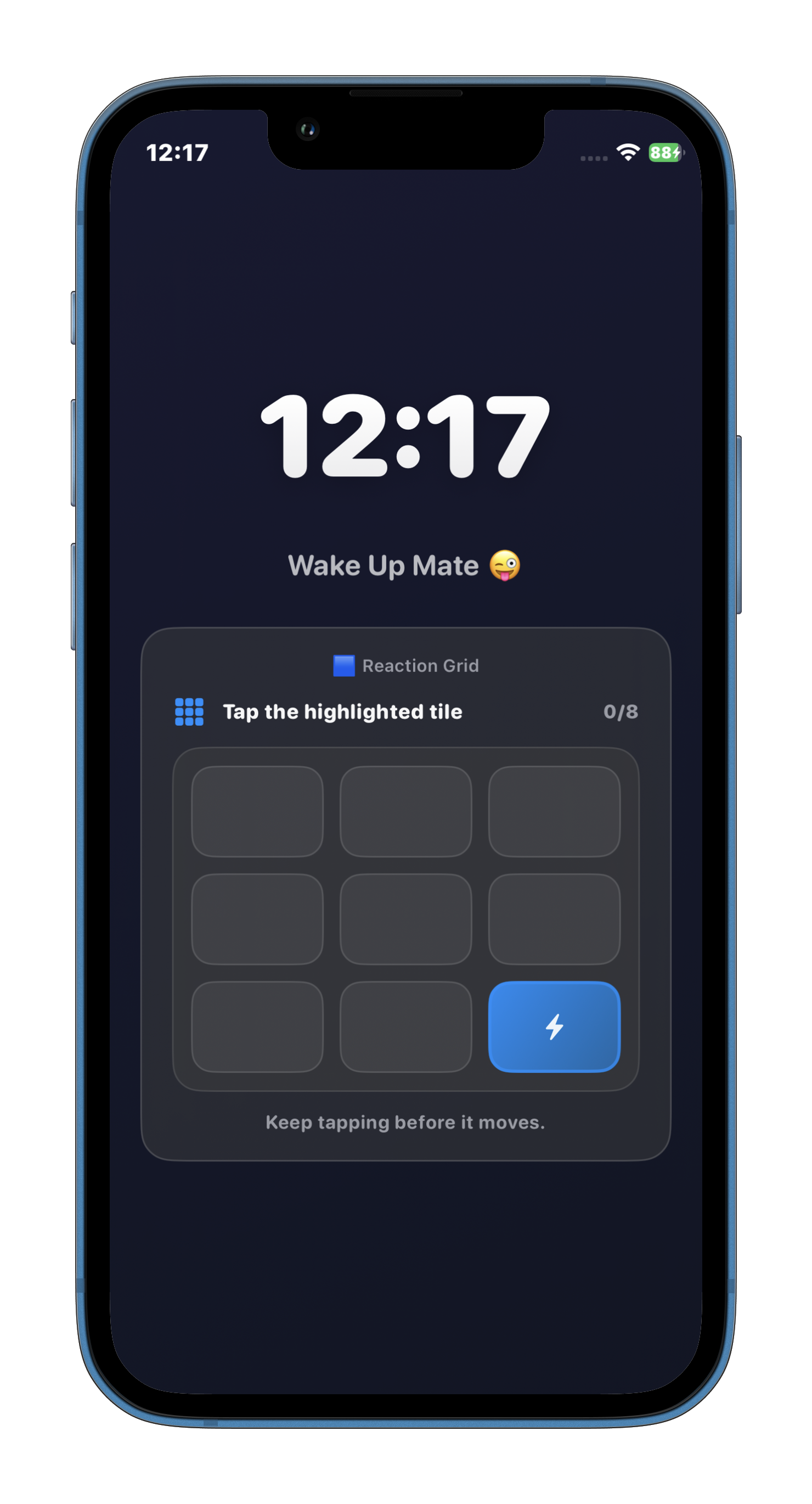
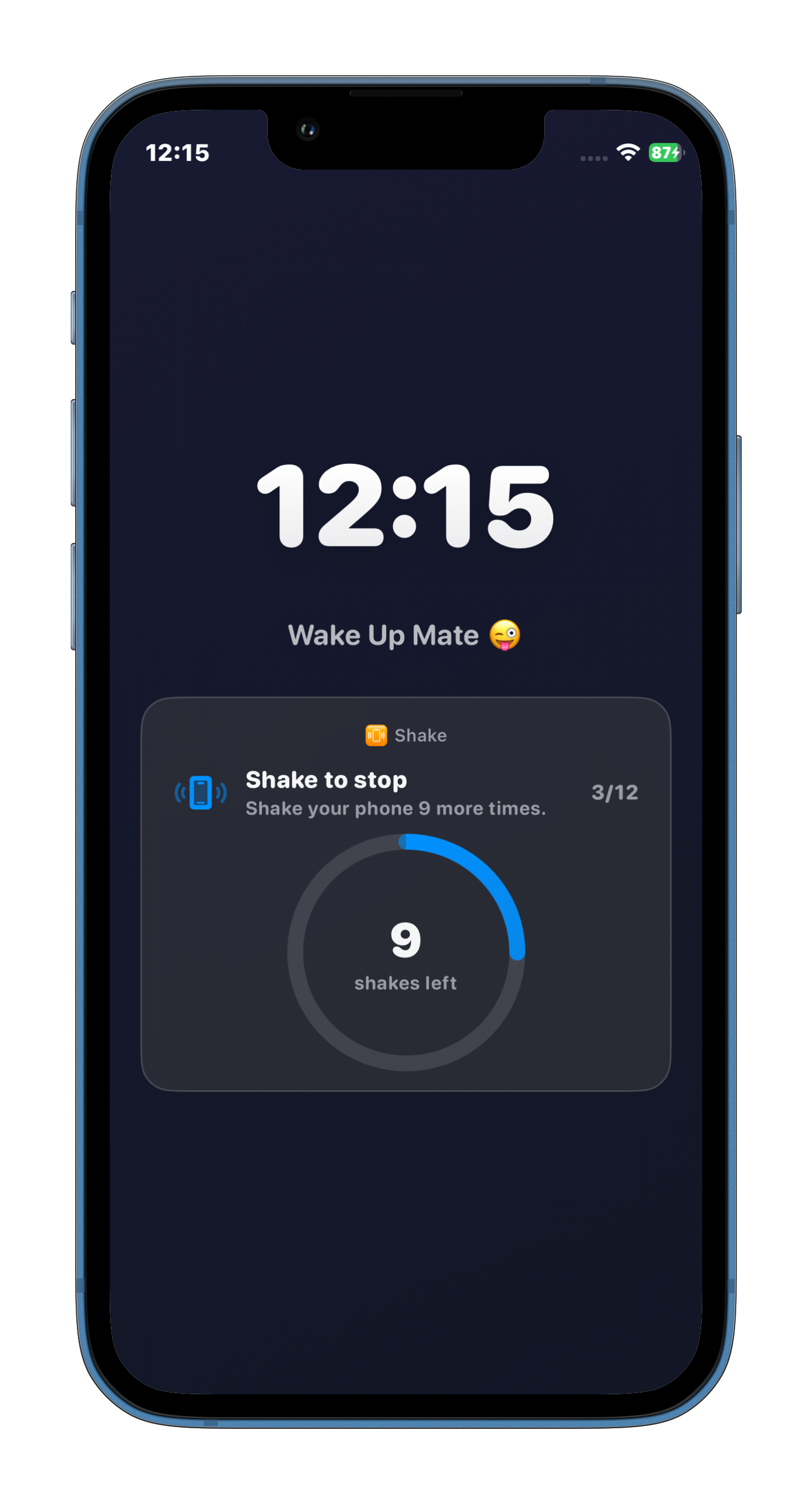
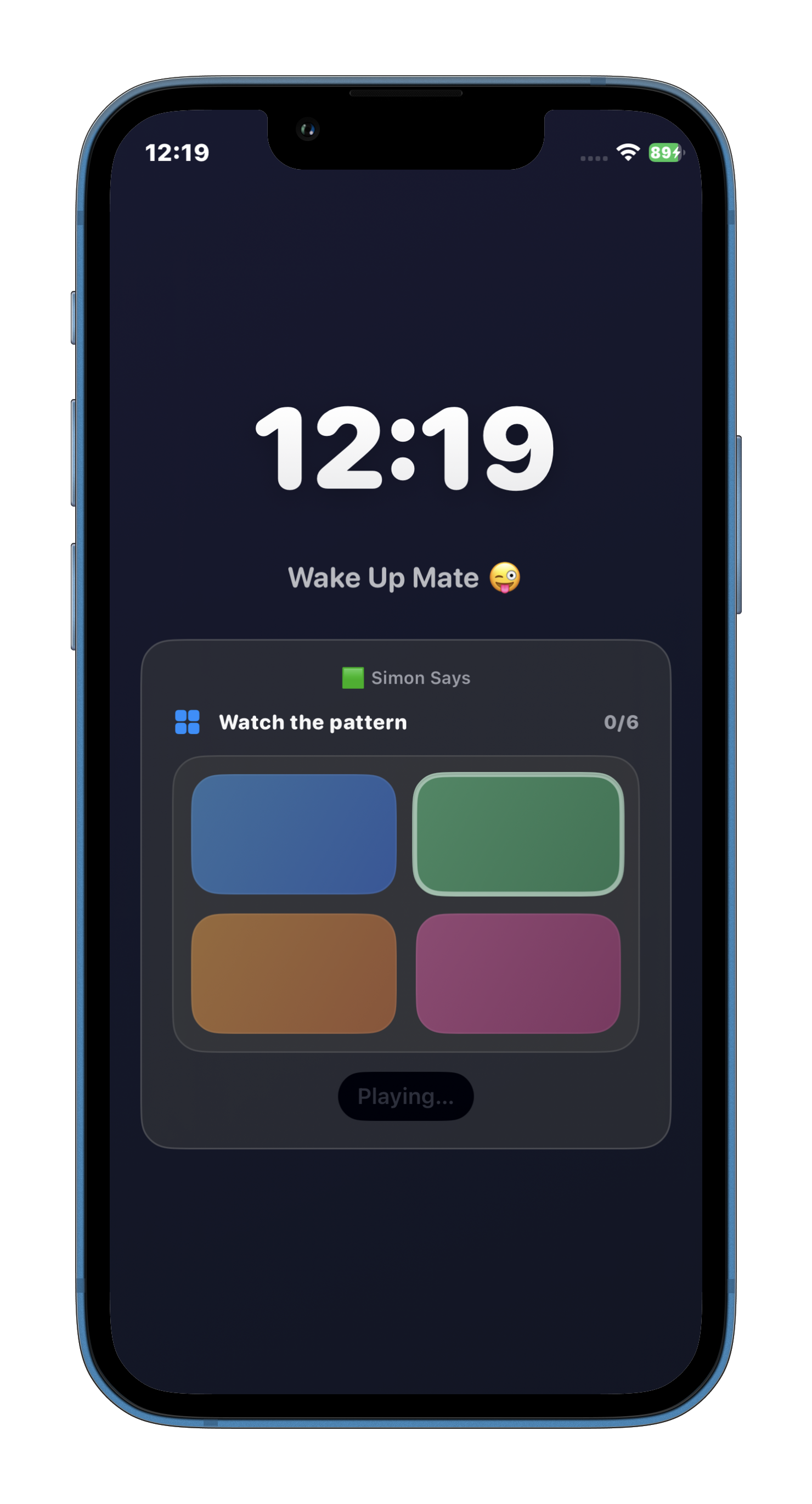
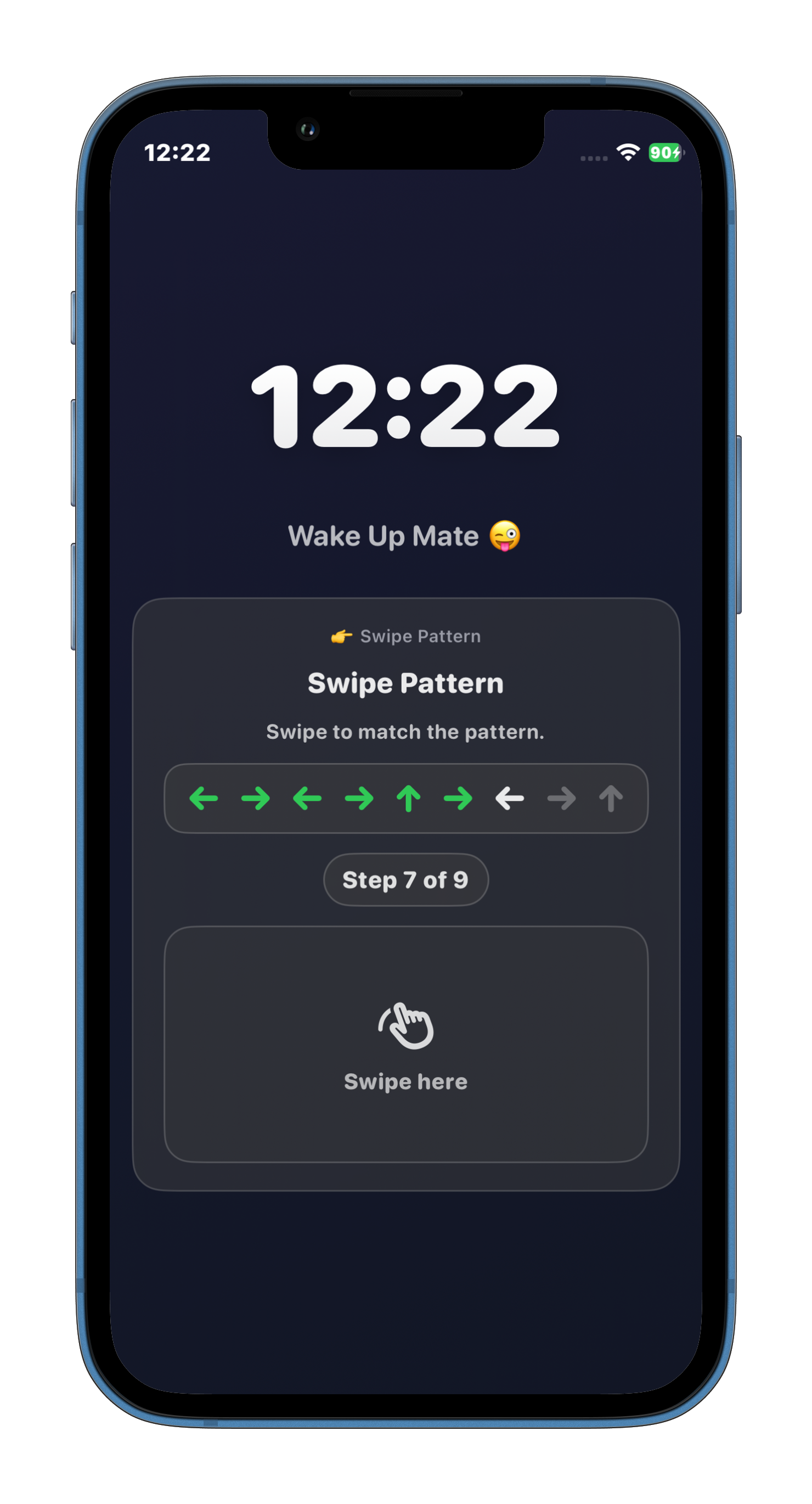
Why Alarm Arcade Works for Challenge-based alarm app users considering a switch
Ten missions across three challenge types — cognitive, physical, reaction
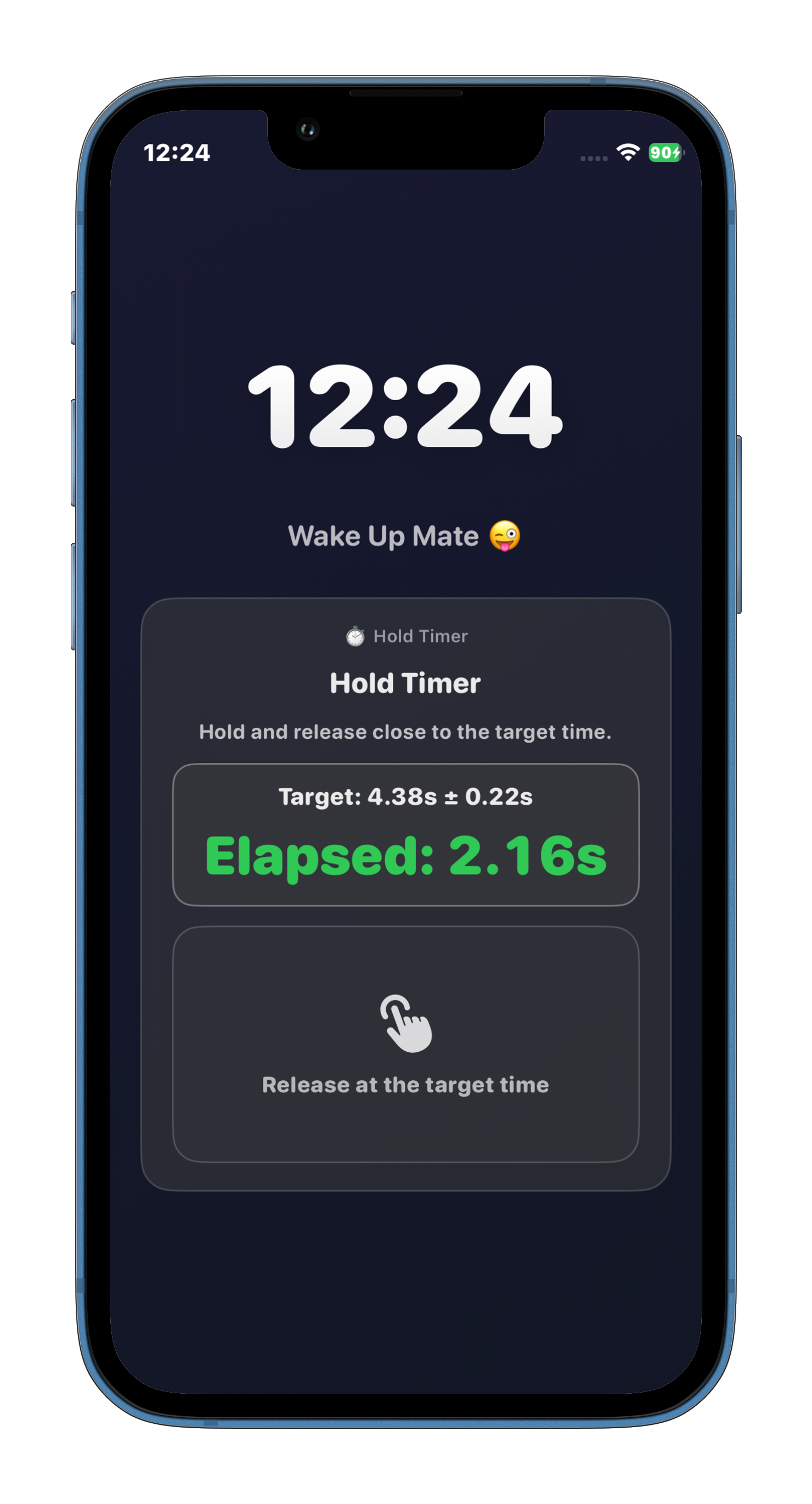
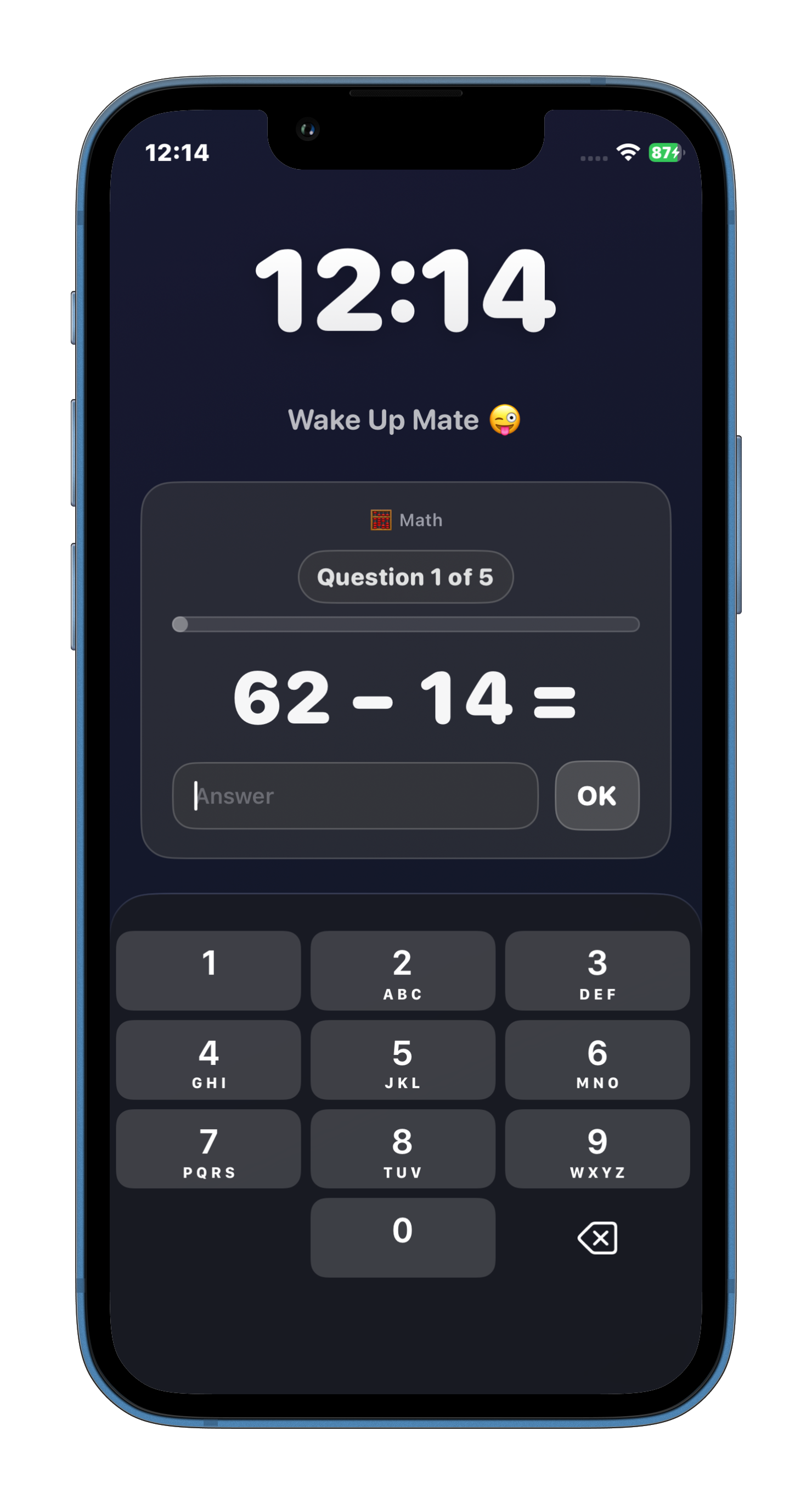
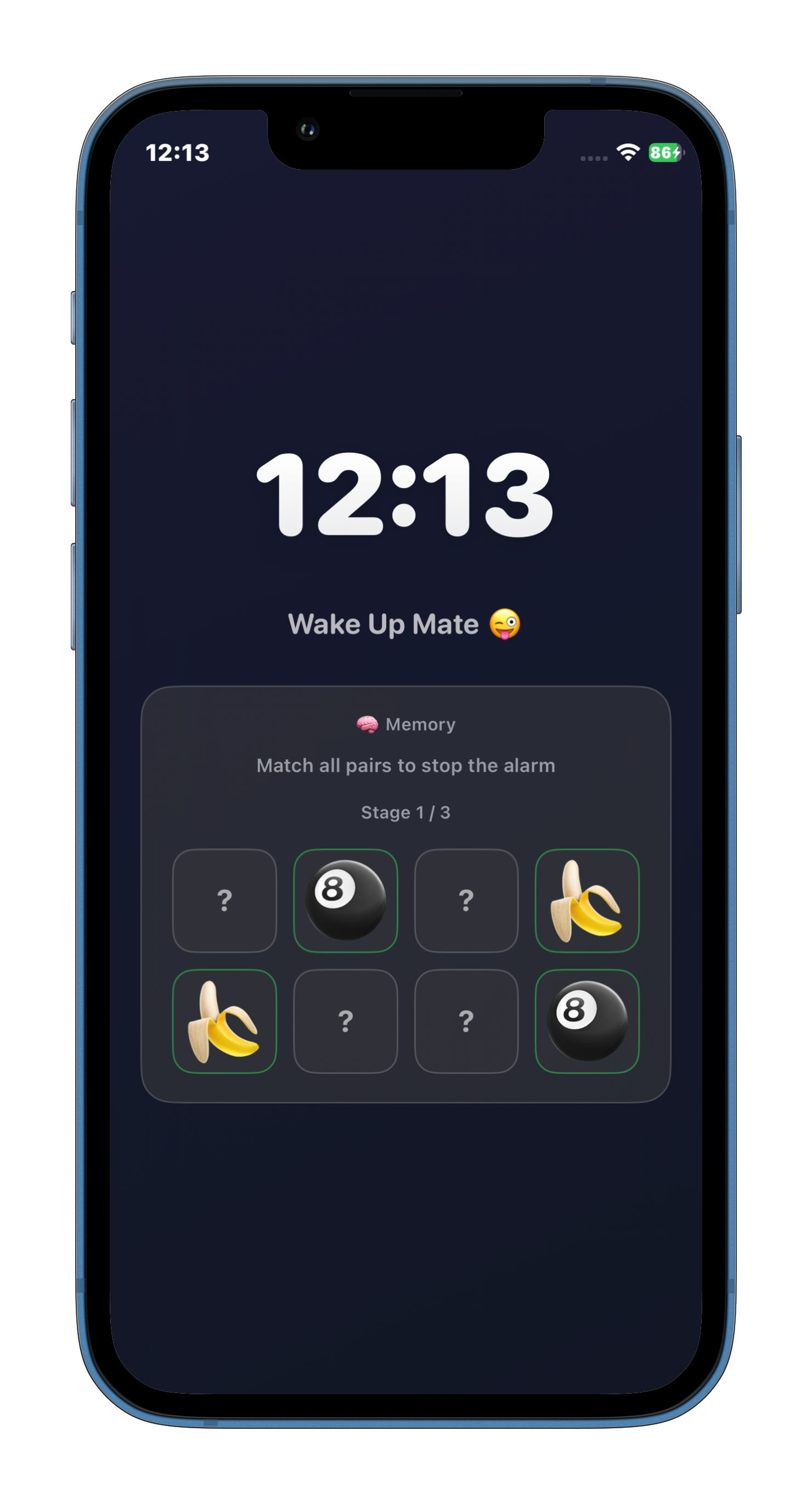
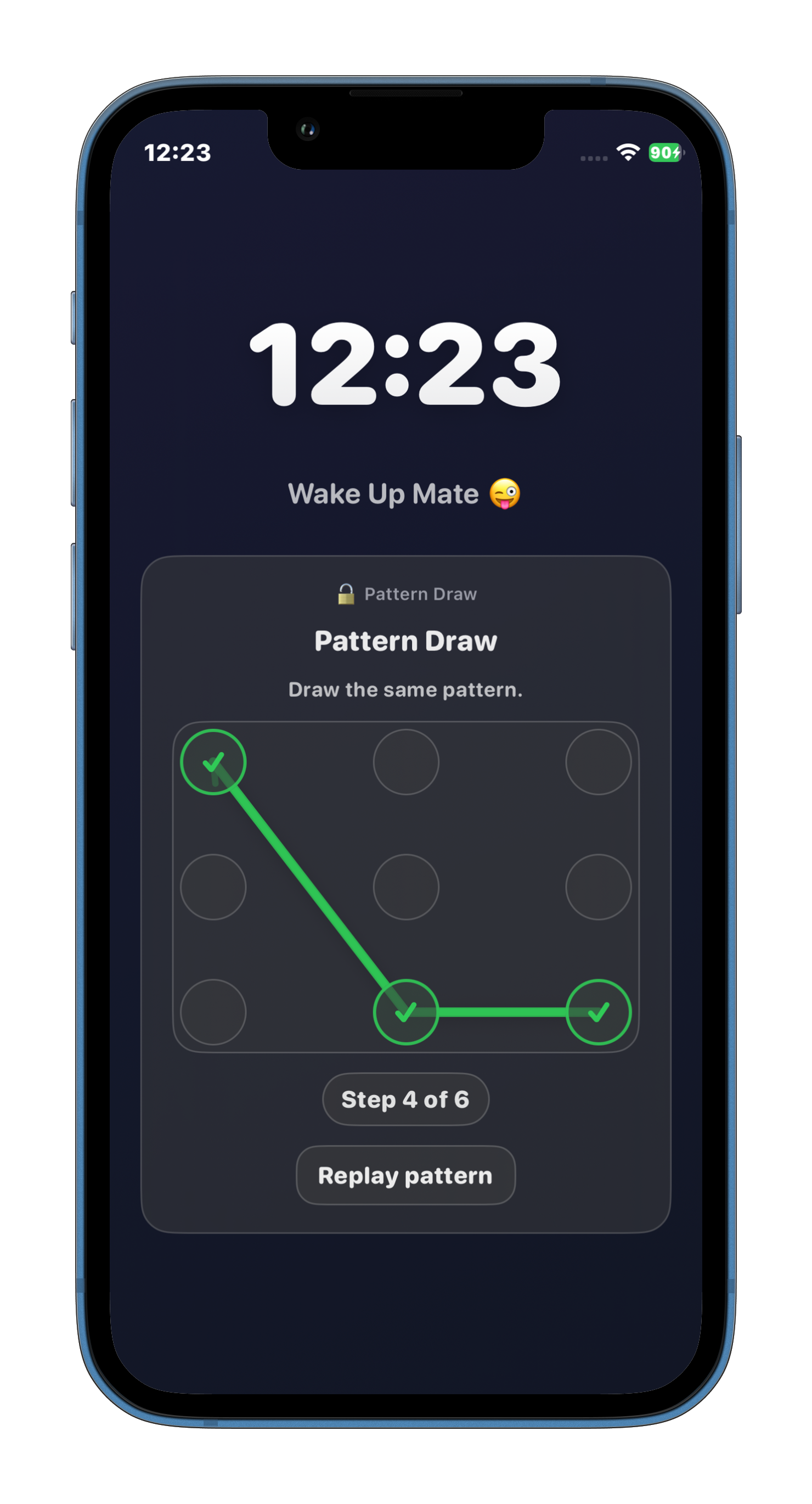
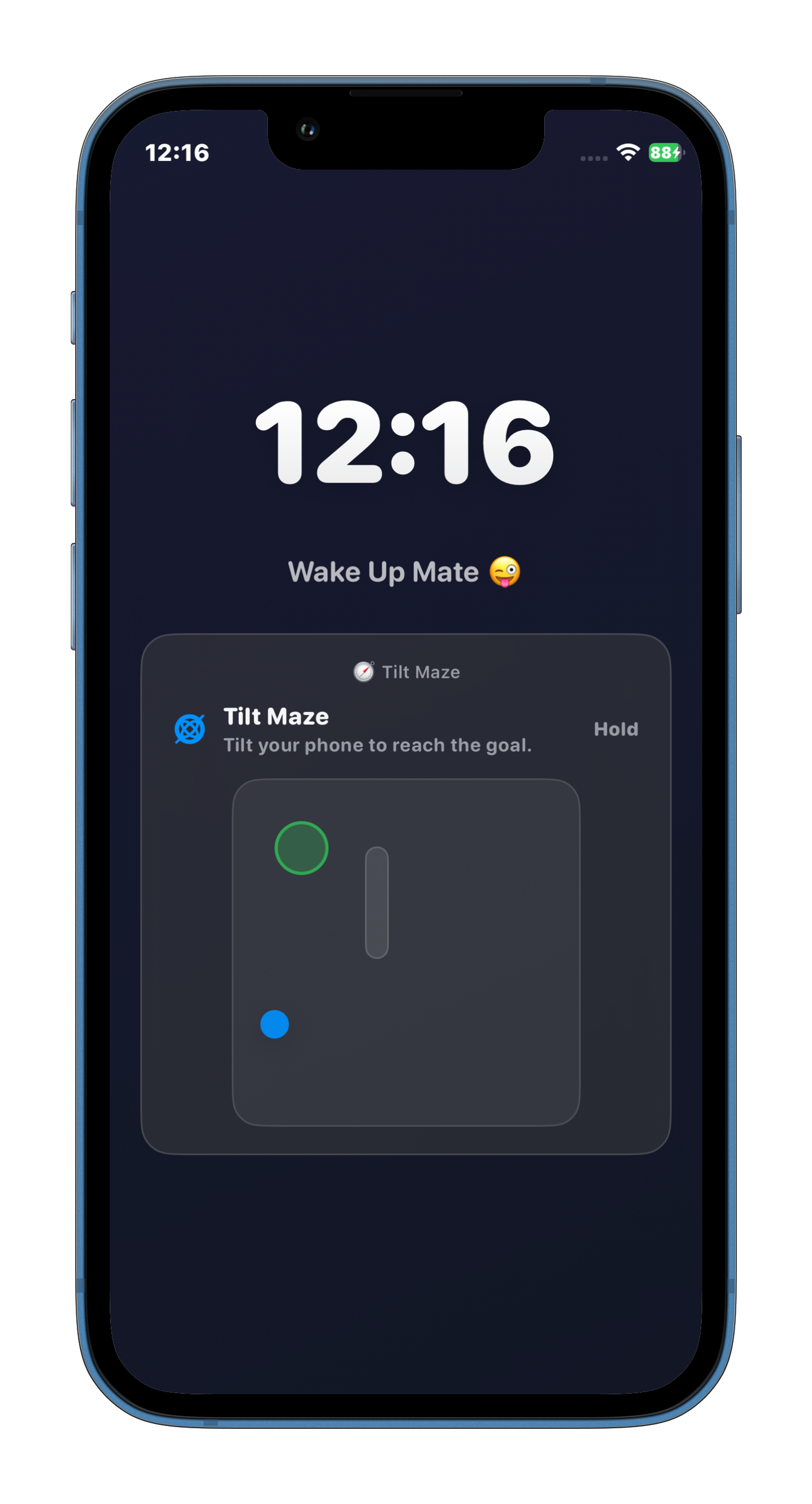
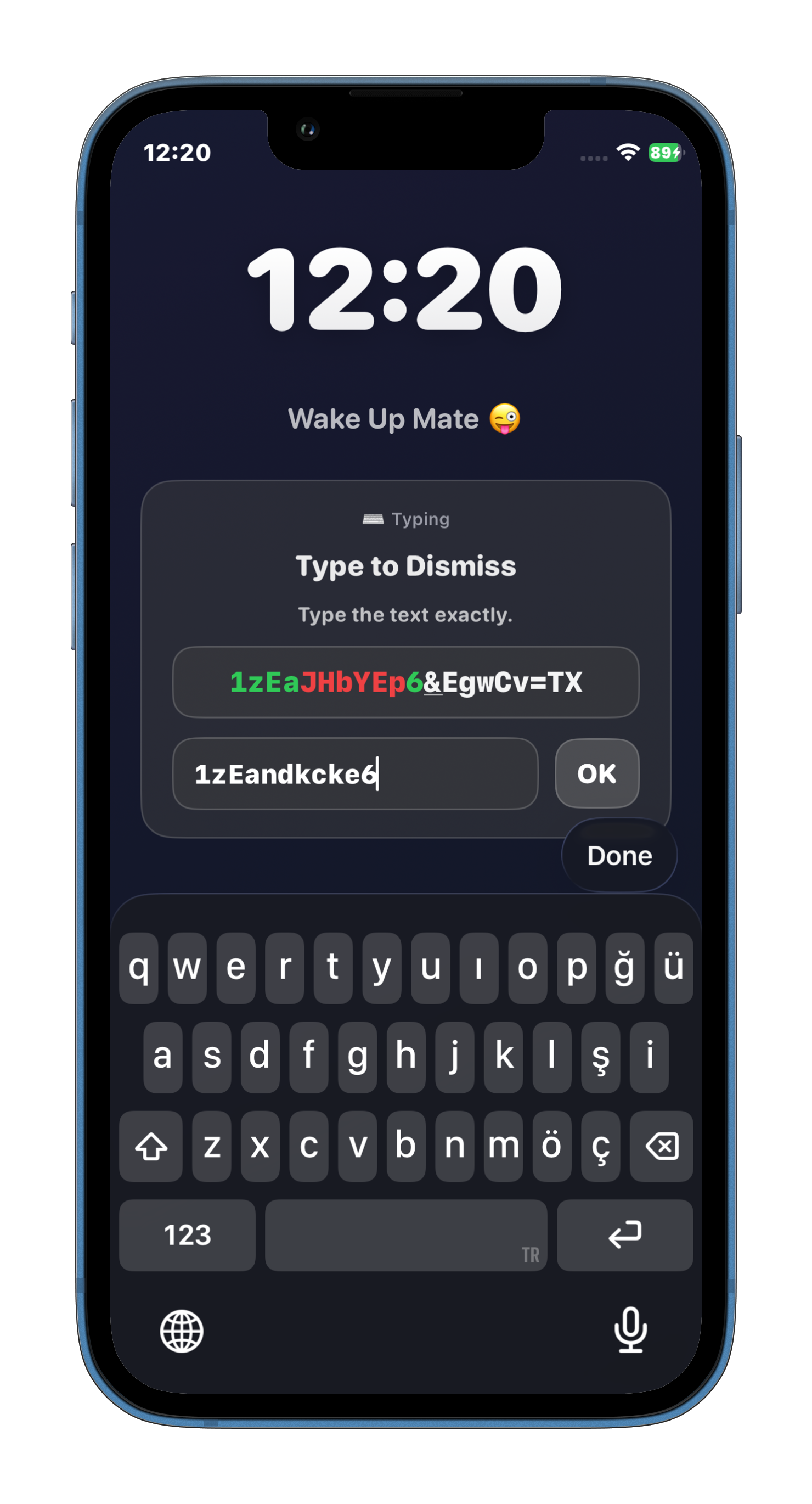
Most challenge alarm apps pick a lane: math, movement, or scan. Alarm Arcade covers all three — Math, Typing, Memory Match, Simon Says (cognitive), Shake, Tilt Maze (physical), Reaction Grid, Swipe Pattern, Pattern Draw, Hold Timer (reaction). When one category becomes automatic, rotate to another.
One-time price vs subscription — no monthly reevaluation
Challenge alarm apps with subscriptions force a monthly value check you don't want at 6 AM. Alarm Arcade's Pro is $1.49 once. Pay it once, the full mission library is yours indefinitely, and you never have to justify the cost to yourself again.
Offline-first, no account, no data
Some challenge alarms require connectivity for cloud-synced settings or account features. Alarm Arcade runs entirely on-device with no sign-up and no network dependency. It fires when it's supposed to regardless of Wi-Fi or signal.
Alarm Arcade vs challenge-based alarm apps — Feature Comparison
| Feature | Alarm Arcade | Alarmy | iPhone Clock |
|---|---|---|---|
| No subscription required | ✓ | ✗ | ✓ |
| Game-based dismissal | ✓ | ✓ | ✗ |
| Works offline (no account) | ✓ | ✗ | ✓ |
| Pricing | $1.49 one-time | $4.99/mo | Free |
| Multiple mission types | ✓ | ✓ | ✗ |
Why single-method challenge alarms stop working
The effectiveness of any challenge alarm rests on one assumption: that the challenge requires conscious engagement. That assumption holds until habituation sets in. With a fixed challenge type — always the same math format, always the same shake count, always the same pattern — your brain builds a procedural memory for the task. Procedural memory doesn't require prefrontal cortex activity, which means you can execute it while still functionally asleep.
The solution isn't a harder version of the same challenge — it's switching challenge types entirely. Different mission types engage different neural systems. Shifting from Math (working memory and arithmetic) to Tilt Maze (spatial processing and motor control) to Reaction Grid (visual attention and response speed) prevents any single routine from taking root. That's the design logic behind Alarm Arcade's ten-mission approach.
How to switch to Alarm Arcade from your current challenge alarm
Step 1: Identify what challenge type your current app uses — cognitive (math, memory), physical (shake, scan), or reaction (tap targets). Step 2: Install Alarm Arcade and map to the nearest equivalent. If you use math, start with Math. If you use shaking, start with Shake. This keeps dismissal friction at a familiar level during the transition.
Step 3: After a week on the equivalent mission, intentionally rotate to a different category. If you started on Math, try Tilt Maze or Reaction Grid. The unfamiliar challenge type is significantly harder to complete on autopilot. Step 4: Build a two or three mission rotation you can cycle through weekly. This is the long-term maintenance approach that keeps challenge alarms effective indefinitely.
Frequently Asked Questions
The main differentiator is mission breadth: ten distinct types across cognitive, physical, and reaction categories. Most challenge alarm apps have one to three. Beyond variety, Alarm Arcade is free to download, $1.49 one-time for Pro, fully offline, no account required, and no data collected. That combination — wide variety plus low friction plus low cost — is the differentiator.
Yes. Each alarm in Alarm Arcade can be assigned its own mission type. So your weekday 6 AM alarm can use Math, your weekend 8 AM alarm can use Memory Match, and a backup alarm can use Typing. Mixing mission types across alarms ensures you're never completing the same challenge at the same time every day.
Completely. Alarm Arcade runs fully offline — no network request is made at any point during normal alarm operation. No account login, no cloud sync on dismissal, no server check. If your phone is in airplane mode, Alarm Arcade still fires and requires mission completion before stopping.
Make the decision easy — pick the one that actually wakes you up
Download Alarm Arcade free. No subscription, no account needed, works offline. Pro unlock is $1.49 one-time.
Download Alarm Arcade — Free