 Alarm Arcade
Swipe pattern alarm: Muscle memory wake-up
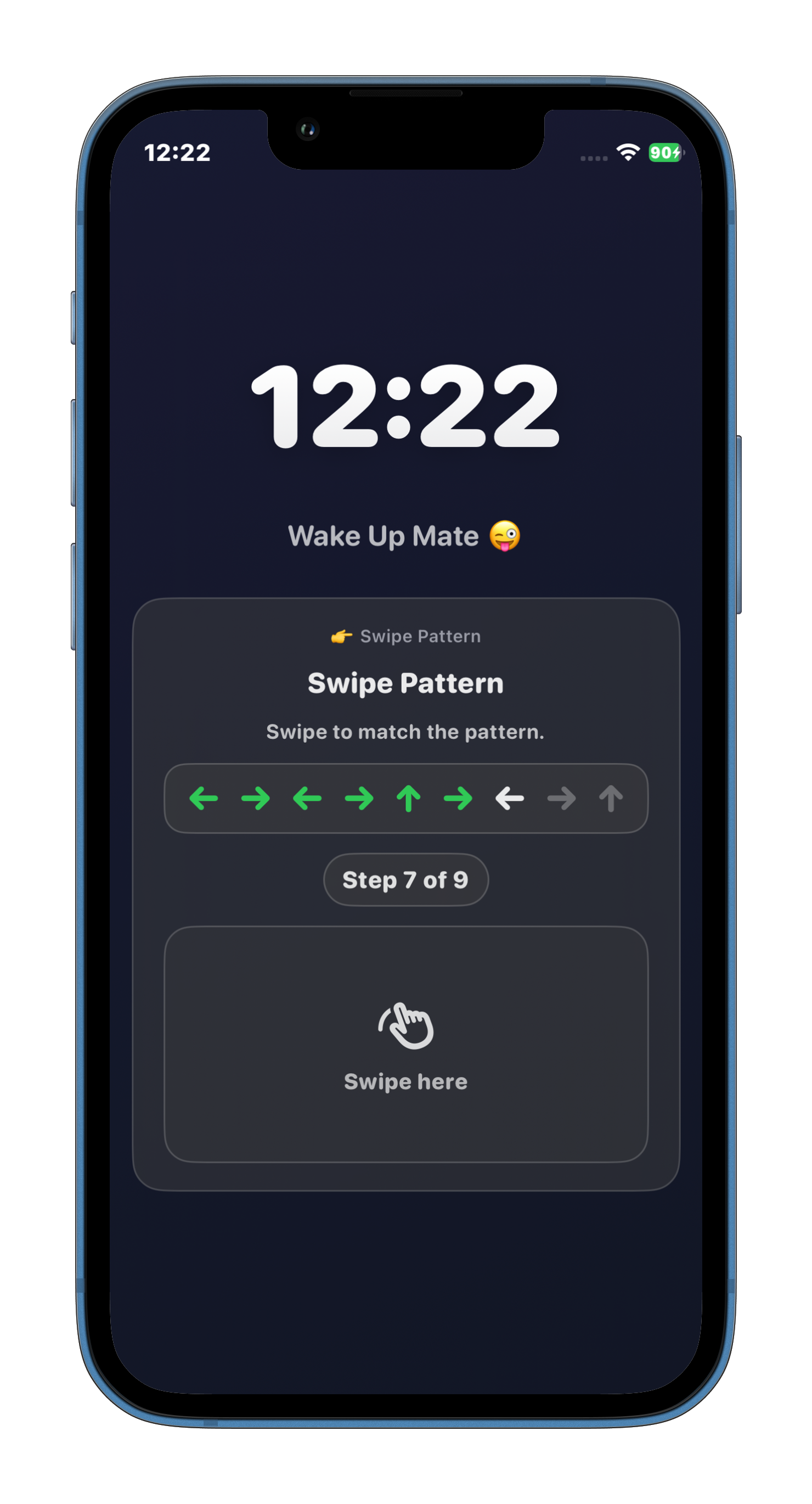
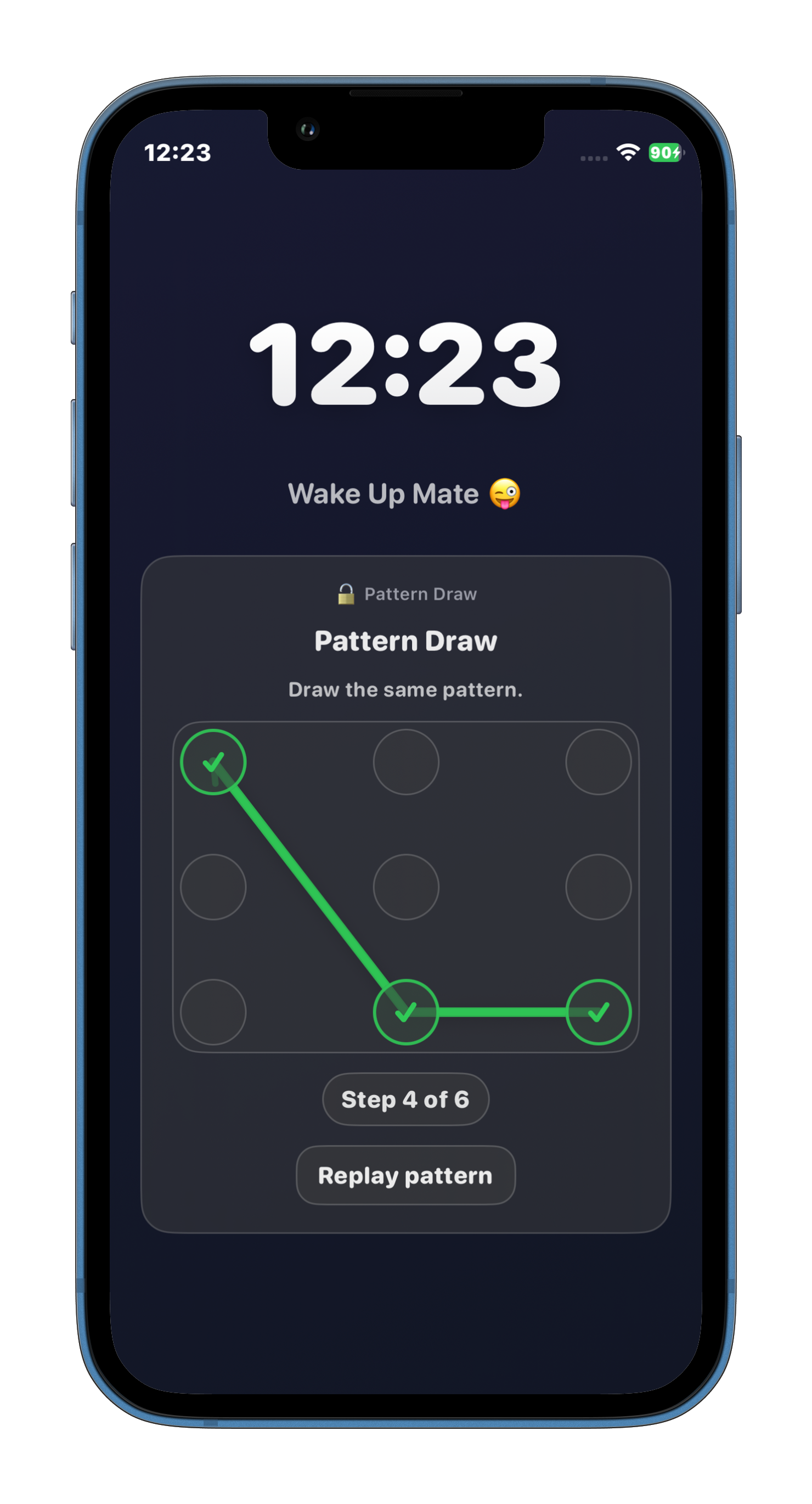
The Swipe Pattern mission displays a path or shape on screen and requires you to trace it accurately with your finger before the alarm stops. It combines visual-spatial memory with precise motor control — a pairing that's hard to execute correctly when you're still half-asleep.
When the alarm fires, a pattern is displayed on screen — a sequence of connected points, a shape, or a directional path. The pattern is shown briefly, then you trace it from memory (or with the guide visible, depending on difficulty). Your trace must match the shape within a tolerance threshold. The complexity of the pattern, the duration of the guide display, and the accuracy threshold all scale with difficulty. The alarm stops when you've traced the pattern correctly.
Swipe Pattern engages visual-spatial memory and fine motor control in combination. Spatial memory (remembering the shape and orientation of the pattern) relies on the hippocampus and parietal cortex. Fine motor precision (executing the trace accurately) requires sensorimotor coordination between the visual cortex and the motor system. Both are compromised during sleep inertia. The mission is further complicated by the accuracy requirement — a rough approximation doesn't count, which prevents completion through careless, half-asleep finger movement.
Who This Is For
- People who find cognitive missions (math, typing) mentally taxing early in the morning
- Heavy sleepers looking for a spatial and motor-based challenge
- People rotating through missions and needing a new challenge category
- Anyone who has adapted to shake-only physical missions and wants more precision
- Users who respond well to drawing and pattern-based tasks
- People who want a quiet mission that doesn't require speaking or arithmetic
Why Alarm Arcade Works for People using Swipe Pattern as their wake-up mission
Spatial memory plus precise motor control — compound challenge
Tracing a pattern requires remembering the shape and then executing it accurately. The memory component prevents completion by reflex; the accuracy requirement prevents completion by approximation. Both are necessary, and both degrade with sleep inertia.
Pattern changes each alarm — no fixed gesture to memorize
Swipe Pattern generates a different shape or path each morning. Unlike a phone unlock pattern (which you type from muscle memory every day), Alarm Arcade's pattern is new each time. Your finger has nowhere to go without first processing the visual guide.
Accuracy threshold means sloppy traces don't count
On harder difficulty settings, your trace must closely match the displayed pattern. A rough, half-asleep approximation fails and you have to try again. This prevents the mission from being completed through uncoordinated movement and ensures the motor precision component is actually engaged.
Swipe Pattern alarm vs standard alarm — Why it actually works
| Feature | Alarm Arcade | Alarmy | iPhone Clock |
|---|---|---|---|
| No subscription required | ✓ | ✗ | ✓ |
| Game-based dismissal | ✓ | ✓ | ✗ |
| Works offline (no account) | ✓ | ✗ | ✓ |
| Pricing | $1.49 one-time | $4.99/mo | Free |
| Multiple mission types | ✓ | ✓ | ✗ |
How to get the most out of the Swipe Pattern mission
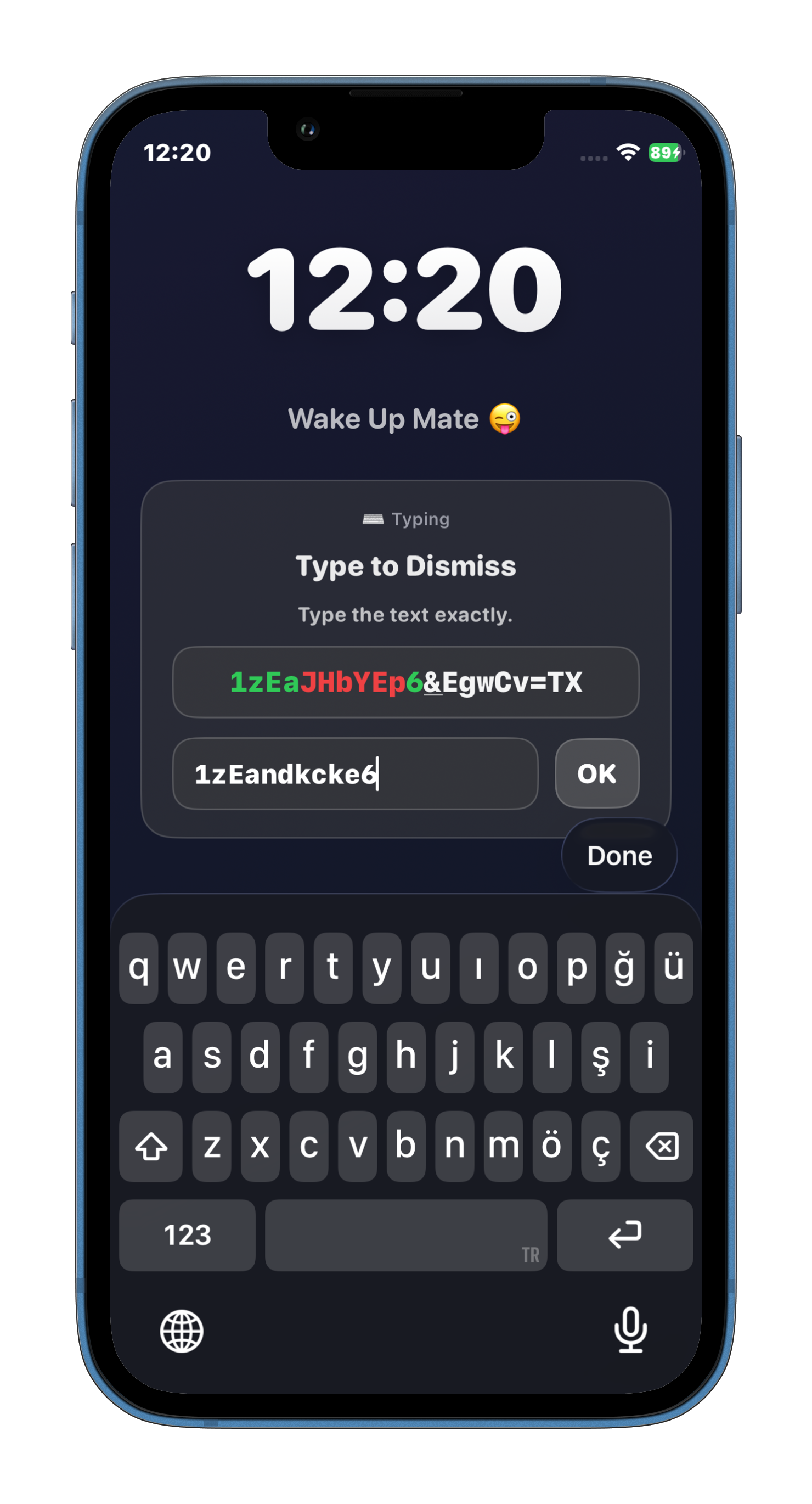
Swipe Pattern is most effective at Medium or Hard difficulty, where the guide display time is shorter and the accuracy threshold is tighter. Easy (with the guide visible throughout) is primarily useful for evaluating the mission or for nights when you expect to be very tired. At Medium and above, you need to internalize the pattern before you can trace it, which requires the visual memory component to be active.
Swipe Pattern is a good rotation partner for both cognitive and physical missions. It sits between them — more physically precise than math, more cognitively demanding than shaking. Use it when you want something different from both categories. It's also effective as a mid-week change within a cognitive rotation: Math Monday, Typing Wednesday, Swipe Pattern Friday creates a rotation that never lets any one system dominate.
Combine Swipe Pattern with other missions for maximum effect
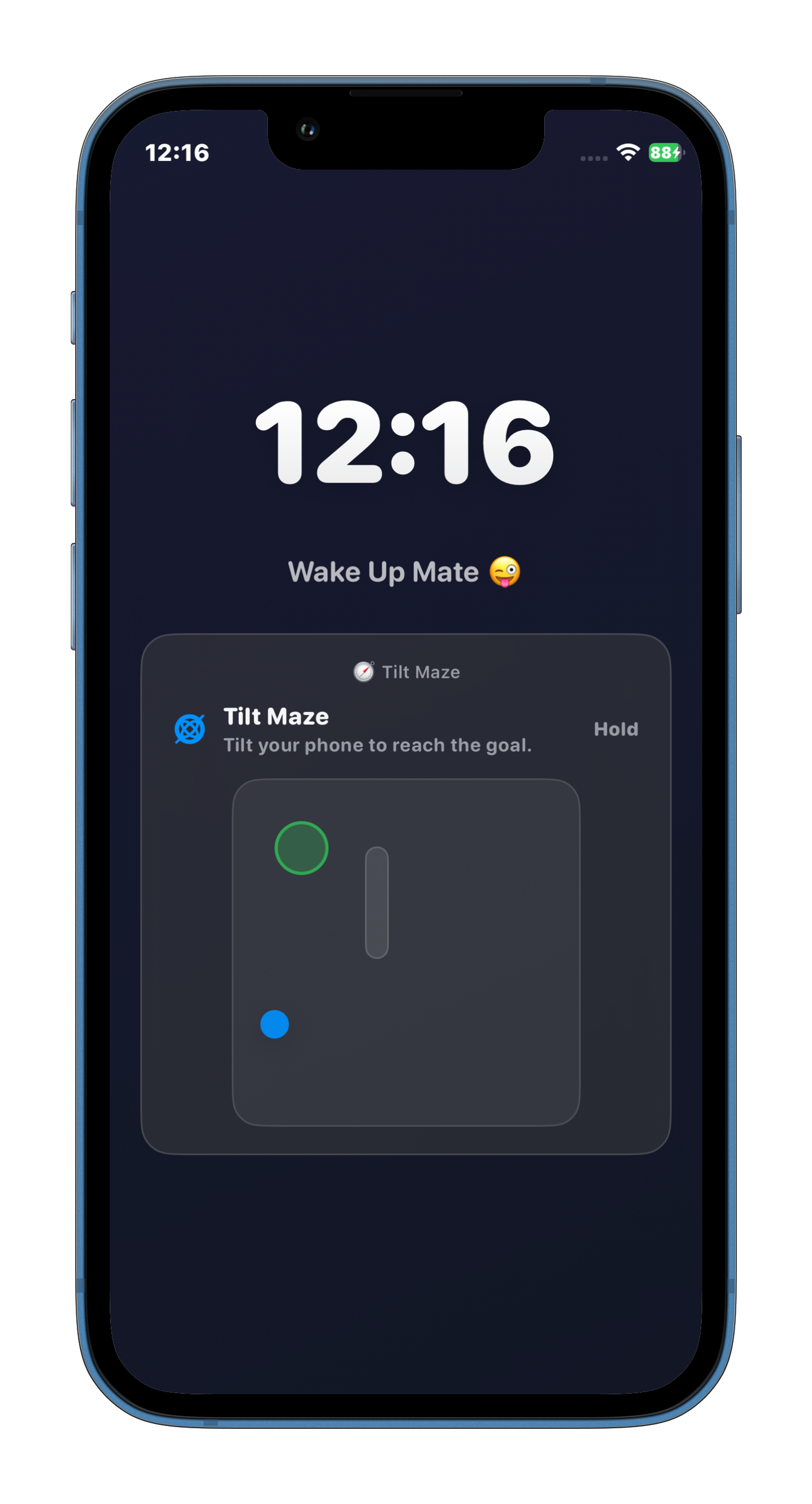
Rotation 1 — Spatial trio: Swipe Pattern + Pattern Draw + Tilt Maze. All three missions involve spatial cognition and motor control but through different mechanics — tracing a flat path, reproducing a drawn shape, and tilting a ball through a maze. This is the most spatially varied rotation available and is ideal for people who prefer physical-cognitive hybrid challenges over pure arithmetic.
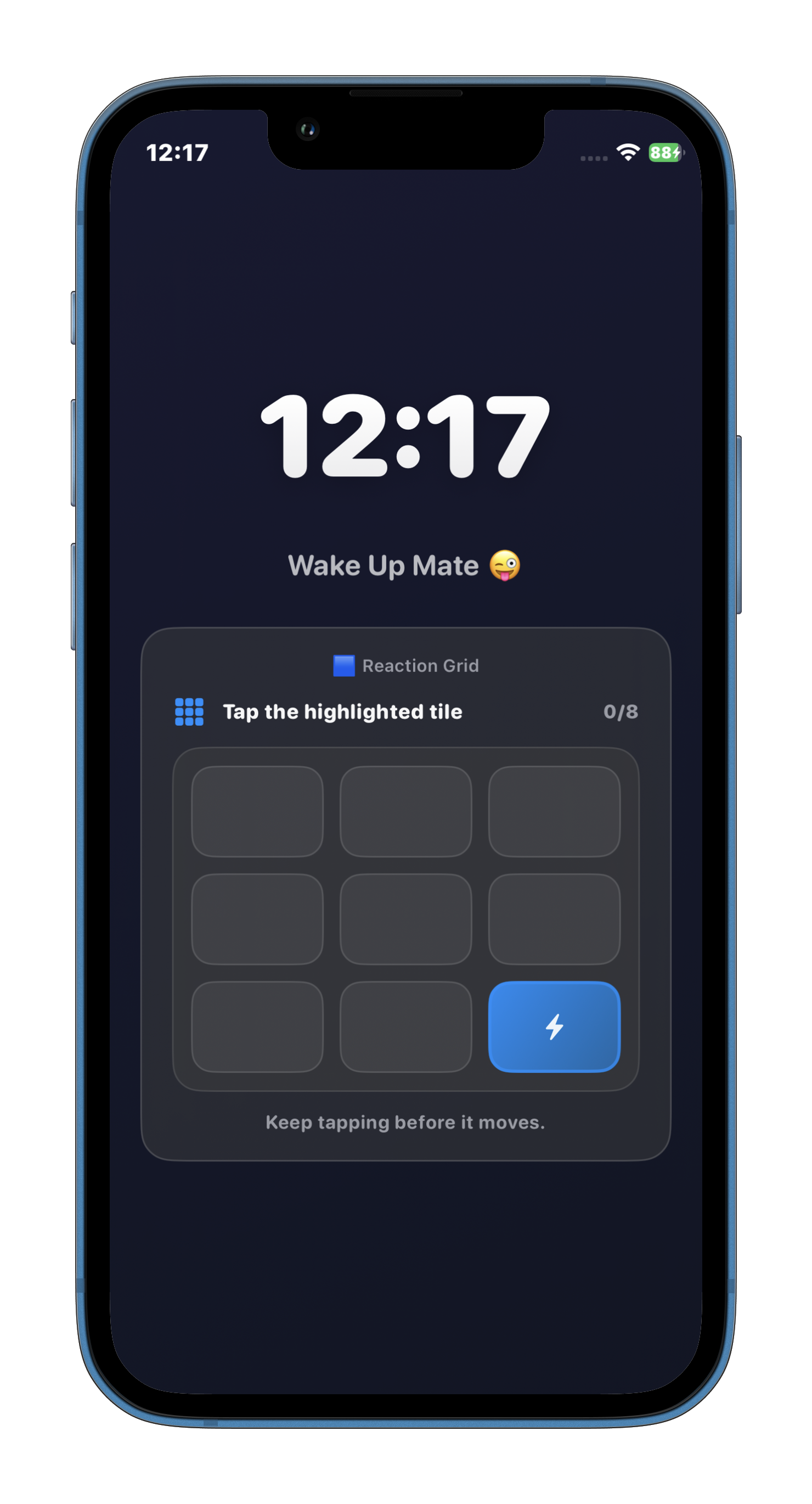
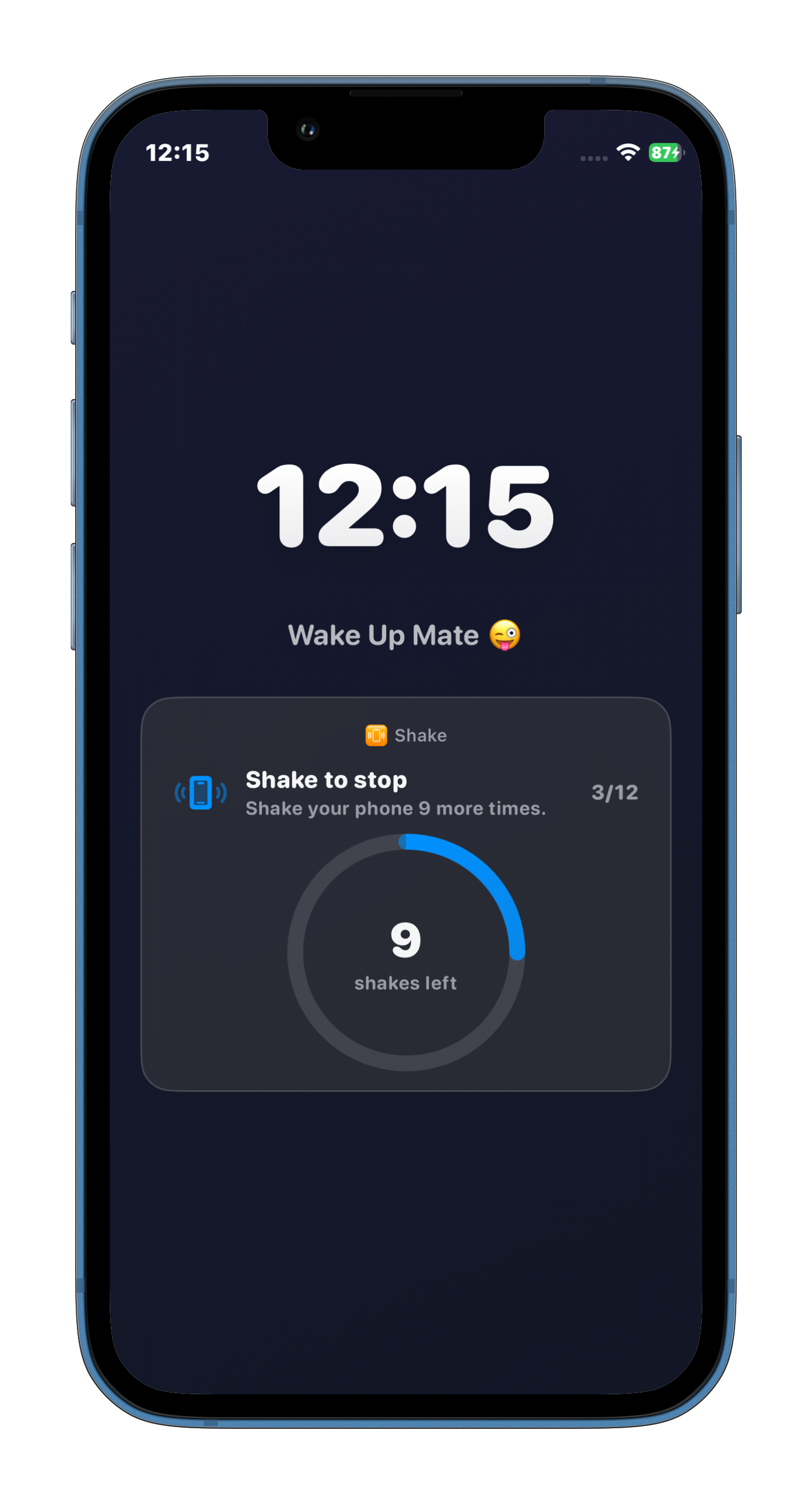
Rotation 2 — Reaction plus spatial: Swipe Pattern + Reaction Grid. Reaction Grid tests visual attention and response speed; Swipe Pattern tests spatial memory and precision. Both are reaction-based but through different mechanisms. This pairing is fast-paced and engaging without requiring arithmetic or reading. Rotation 3 — Physical to precision: Shake + Swipe Pattern. Start the week with vigorous physical shaking (high energy, movement-focused), then shift to precise pattern tracing (controlled, focused). The contrast between the two missions keeps both feeling distinct and challenging.
Frequently Asked Questions
Complexity scales with difficulty. Easy uses simple shapes — straight lines, basic angles, short paths. Hard uses longer, more complex paths with more directional changes. The patterns are designed to be traceable (not random noise) but complex enough at higher difficulties to require genuine spatial attention to reproduce accurately.
It depends on difficulty. On Easy, the guide may remain visible throughout, so you trace while looking at it. On Medium and Hard, the guide is displayed briefly and then fades, requiring you to trace from memory. The memory component is what makes it most effective as a wake-up challenge — seeing and tracing simultaneously is easier than encoding and then reproducing.
Both involve spatial pattern tasks, but they differ in mechanics. Swipe Pattern presents a path of connected points or a directional sequence — more like tracing a route. Pattern Draw presents a shape or drawing and asks you to recreate it freehand — more like copying artwork. Swipe Pattern is more sequential (following a path); Pattern Draw is more holistic (reproducing a complete shape). Both engage spatial memory and motor control but through different processes, making them effective rotation partners.
Wake up with your brain switched on
This mission is free to try. Download Alarm Arcade and set it as your alarm tonight.
Download Alarm Arcade — Free