 Alarm Arcade
Shake to dismiss alarm: How it actually wakes you up
The Shake mission requires you to physically shake your iPhone a set number of times before the alarm stops. Repetitive vigorous movement elevates heart rate and triggers your vestibular system — two things that work against staying asleep, regardless of how tired you are.
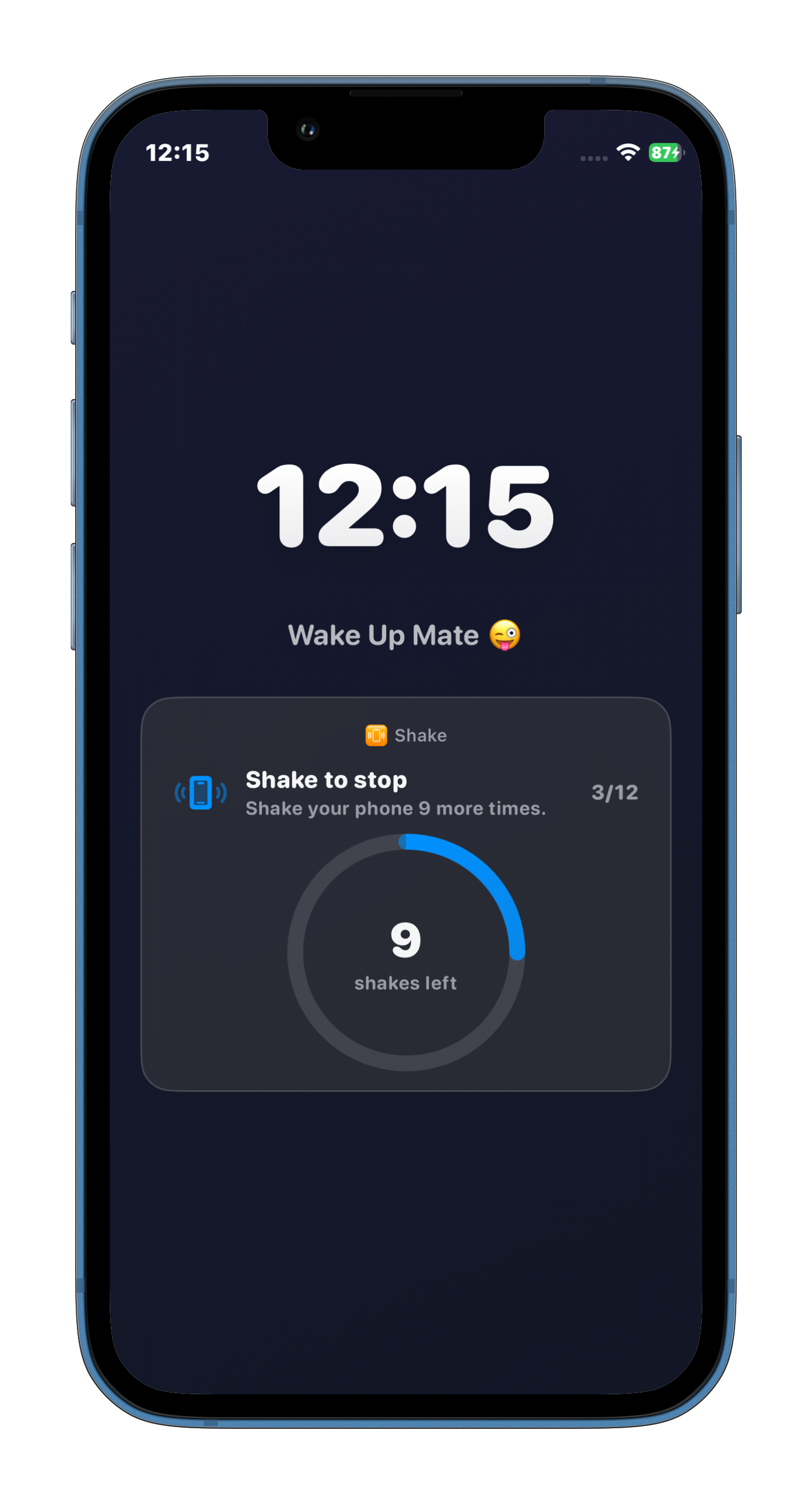
When the alarm fires, a counter appears on screen showing how many shakes remain. You hold the phone and shake it — the accelerometer counts each shake. Progress is visible in real time. The counter decrements with each valid shake, and the alarm stops only when it reaches zero. The number of required shakes scales with difficulty. The phone must be moving with enough force for the shake to register, which prevents slow, half-hearted rocking from counting.
Physical movement at wake-up works through several mechanisms simultaneously. Vigorous motion activates the vestibular system — the balance and orientation network that does not operate during sleep. Repetitive physical effort also increases heart rate and core body temperature, both of which signal wakefulness to the brain. Unlike cognitive tasks that can theoretically be executed in a semi-conscious state, sustained physical activity is harder to perform without some level of arousal. The combination of movement, exertion, and the need to maintain the motion reliably disrupts the sleep-inertia loop.
Who This Is For
- People who respond better to physical activity than mental puzzles in the morning
- Heavy sleepers who need something their whole body participates in to wake up
- People using cognitive missions as their primary but wanting a physical rotation
- Athletes or physically active people who already have a movement-based morning mindset
- Anyone who finds their alarm silent before they remember dismissing it
- People who want to combine physical dismissal with getting out of bed (shake standing up)
Why Alarm Arcade Works for People using shake as their dismissal mission
Physical movement activates the vestibular system — sleep doesn't
The vestibular system (balance and spatial orientation) is suppressed during sleep. Vigorous shaking engages it directly. This physical signal is harder for your body to process without genuinely waking — it's not a reflex that can be completed in the same semi-conscious state as a tap or swipe.
Elevates heart rate before you're out of bed
Repeated shaking is mild physical exertion. Even 30 seconds of it raises your heart rate enough to trigger the physiological cascade associated with waking up. A higher heart rate in the first minute of consciousness makes going back to sleep measurably harder.
Adjustable shake count — scale with your sleep depth
Easy requires fewer shakes at lower intensity; Hard requires sustained vigorous shaking that constitutes real physical effort. If you find yourself completing Easy shakes while still lying down, increase to Hard — the additional exertion makes a real difference.
Shake to dismiss vs standard alarm — Why it actually works
| Feature | Alarm Arcade | Alarmy | iPhone Clock |
|---|---|---|---|
| No subscription required | ✓ | ✗ | ✓ |
| Game-based dismissal | ✓ | ✓ | ✗ |
| Works offline (no account) | ✓ | ✗ | ✓ |
| Pricing | $1.49 one-time | $4.99/mo | Free |
| Multiple mission types | ✓ | ✓ | ✗ |
How to get the most out of the Shake mission
The Shake mission's effectiveness is directly related to how vigorously you shake and whether you're standing up or lying down. If you can complete it flat on your back, increase the difficulty or make a rule: stand up before shaking. Standing while completing any mission makes returning to bed require a deliberate decision, which is much harder to make automatically than rolling over and closing your eyes.
Shake is most effective as a rotation partner for cognitive missions. Use it after two to three days on Math or Typing — the physical nature of the challenge means your brain can't build a cross-mission cognitive routine. The variety also prevents the specific habituation problem of shake alarms: using the same physical motion every single day eventually allows your body to execute it procedurally. Rotating away prevents that.
Combine Shake with other missions for maximum effect
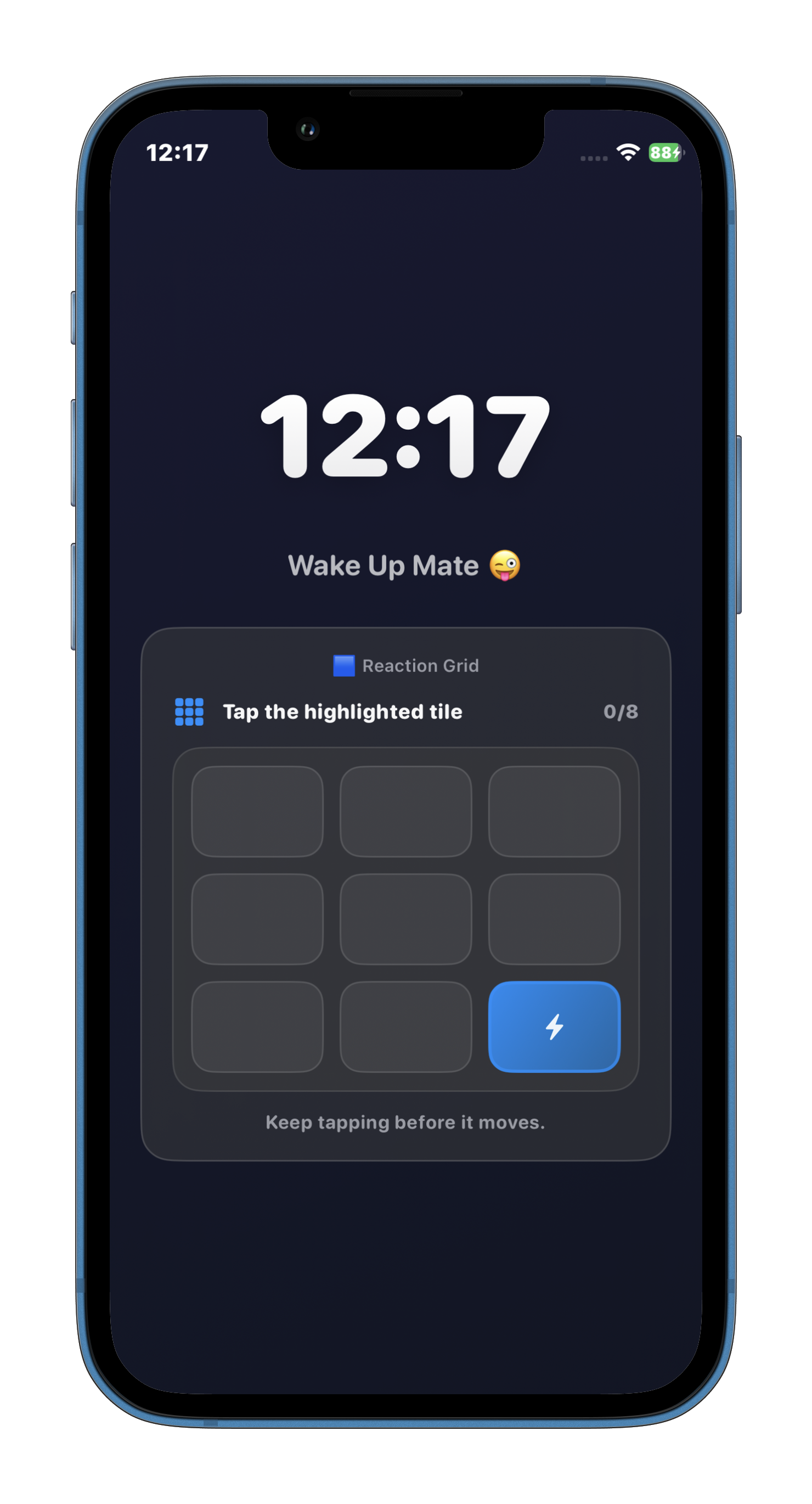
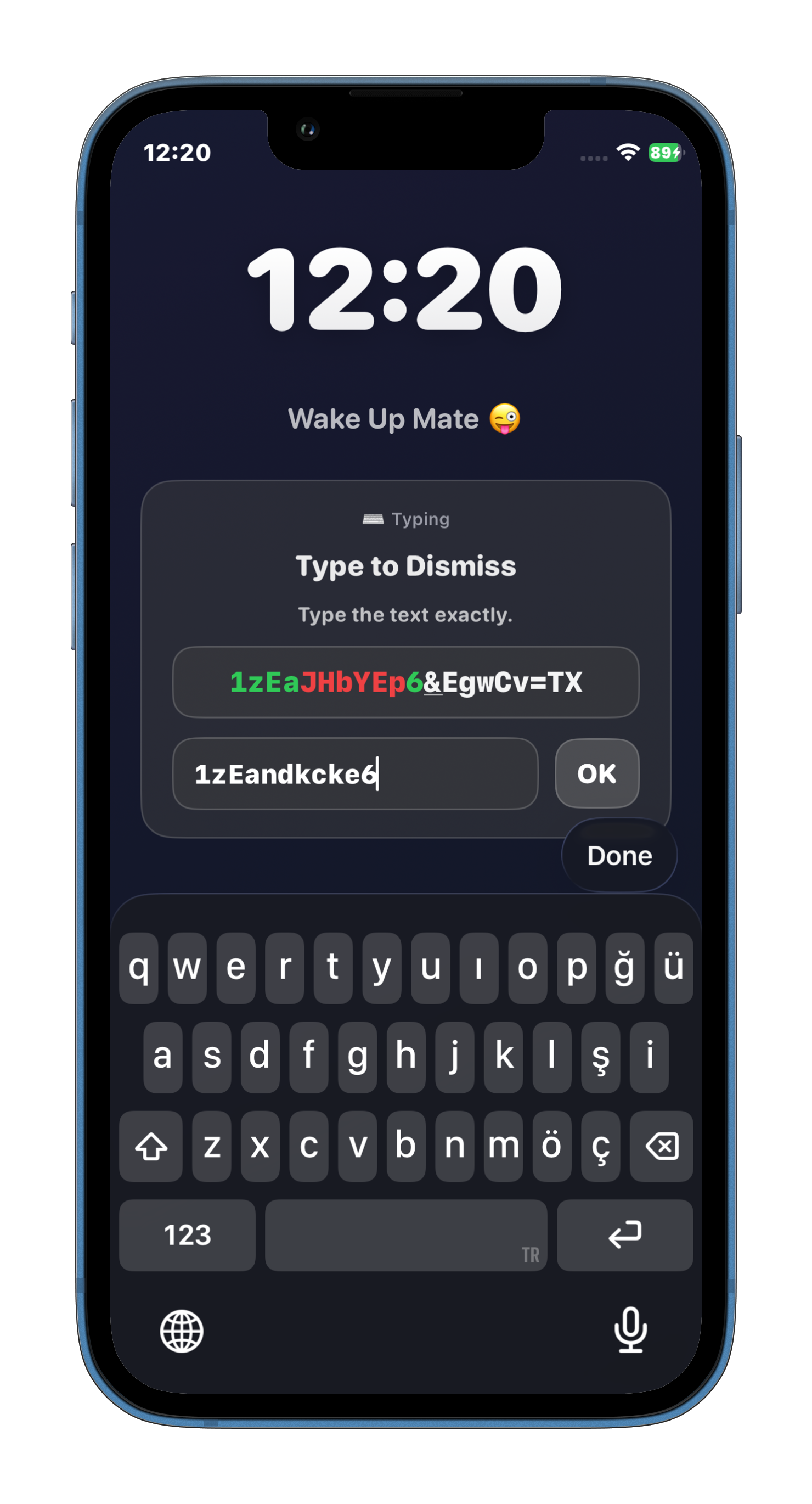
Rotation 1 — Physical plus cognitive: Shake + Math or Typing. Alternate on a two-to-three day cycle. The physical mission elevates heart rate and engages your vestibular system; the cognitive mission activates working memory. Neither becomes automatic when regularly alternated with the other. This is one of the most effective cross-category rotations.
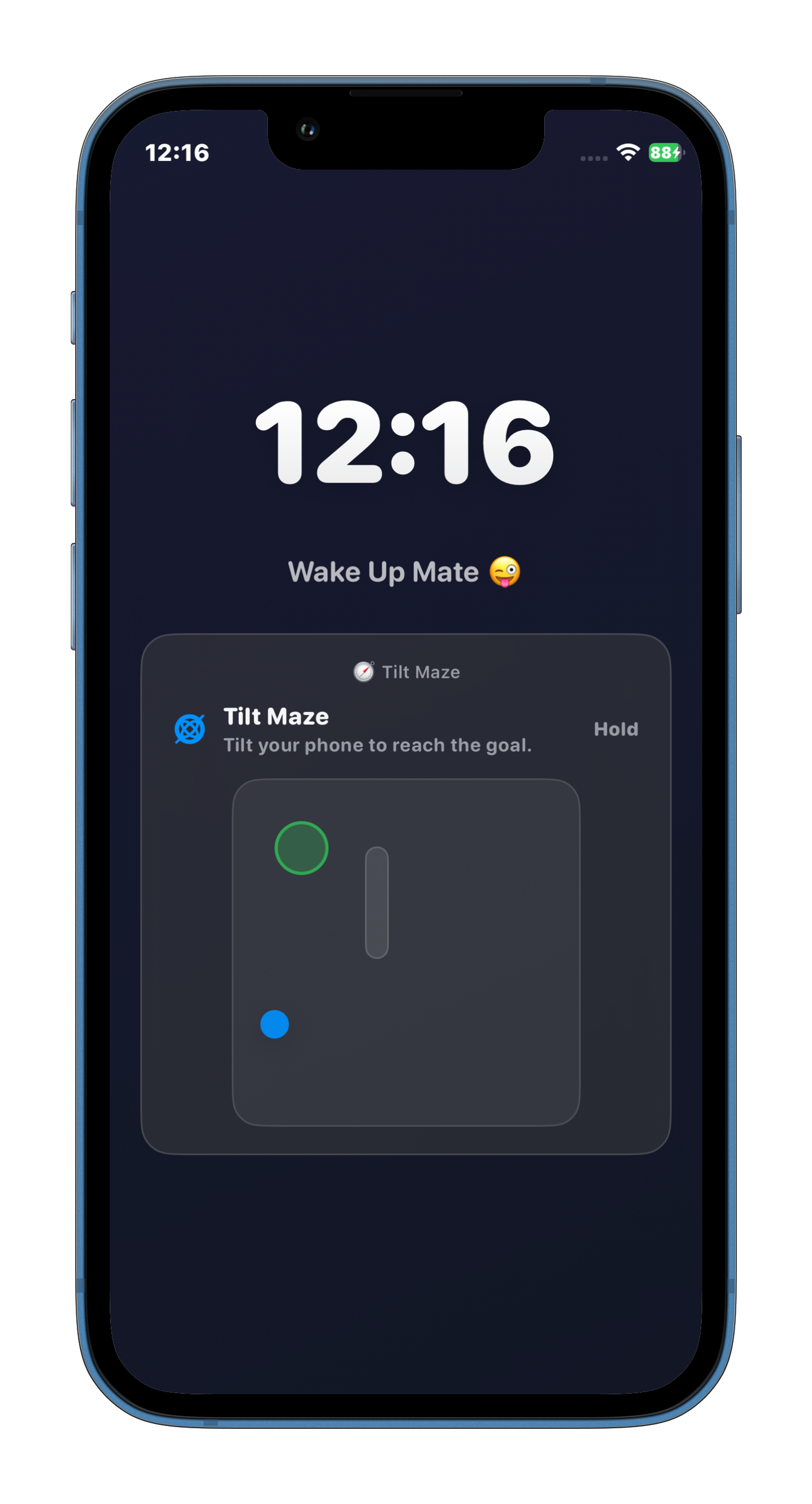
Rotation 2 — Double physical: Shake + Tilt Maze. Both require physical engagement but through different mechanisms — shaking versus controlled tilting. Tilt Maze adds a spatial reasoning component on top of the physical interaction, making it more cognitively demanding than Shake alone. Use this rotation if you specifically want to avoid screen-based cognitive tasks first thing in the morning. Rotation 3 — Physical anchor plus reaction: Shake + Reaction Grid. Start the week with Shake (physical exertion) and shift to Reaction Grid (visual attention and motor response) mid-week. The reaction mission is mentally engaging without requiring arithmetic, which is useful if you find math frustrating early in the morning.
Frequently Asked Questions
The accelerometer requires a shake with enough force to differentiate from incidental movement. A gentle rock or slow tilt won't count. A deliberate, brisk shake in any direction registers. The threshold is calibrated so that slow, half-asleep rocking doesn't accidentally complete the mission — you need to be actively shaking the phone.
Technically yes, if you shake with enough force. In practice, vigorous shaking while lying down is uncomfortable enough that most people sit up or stand. For maximum effectiveness, make a deliberate rule: get your feet on the floor before starting the shake. The physical position reinforces the cognitive signal that it's time to be awake.
The alarm continues until you complete the required number of shakes — there's no separate time limit. The mission ends when the counter reaches zero. This means you can't run out the clock; you have to actually complete the physical task. The duration is determined by your shaking speed and the difficulty setting.
Wake up with your brain switched on
This mission is free to try. Download Alarm Arcade and set it as your alarm tonight.
Download Alarm Arcade — Free