 Alarm Arcade
Reaction grid alarm: Tap the light, wake up fast
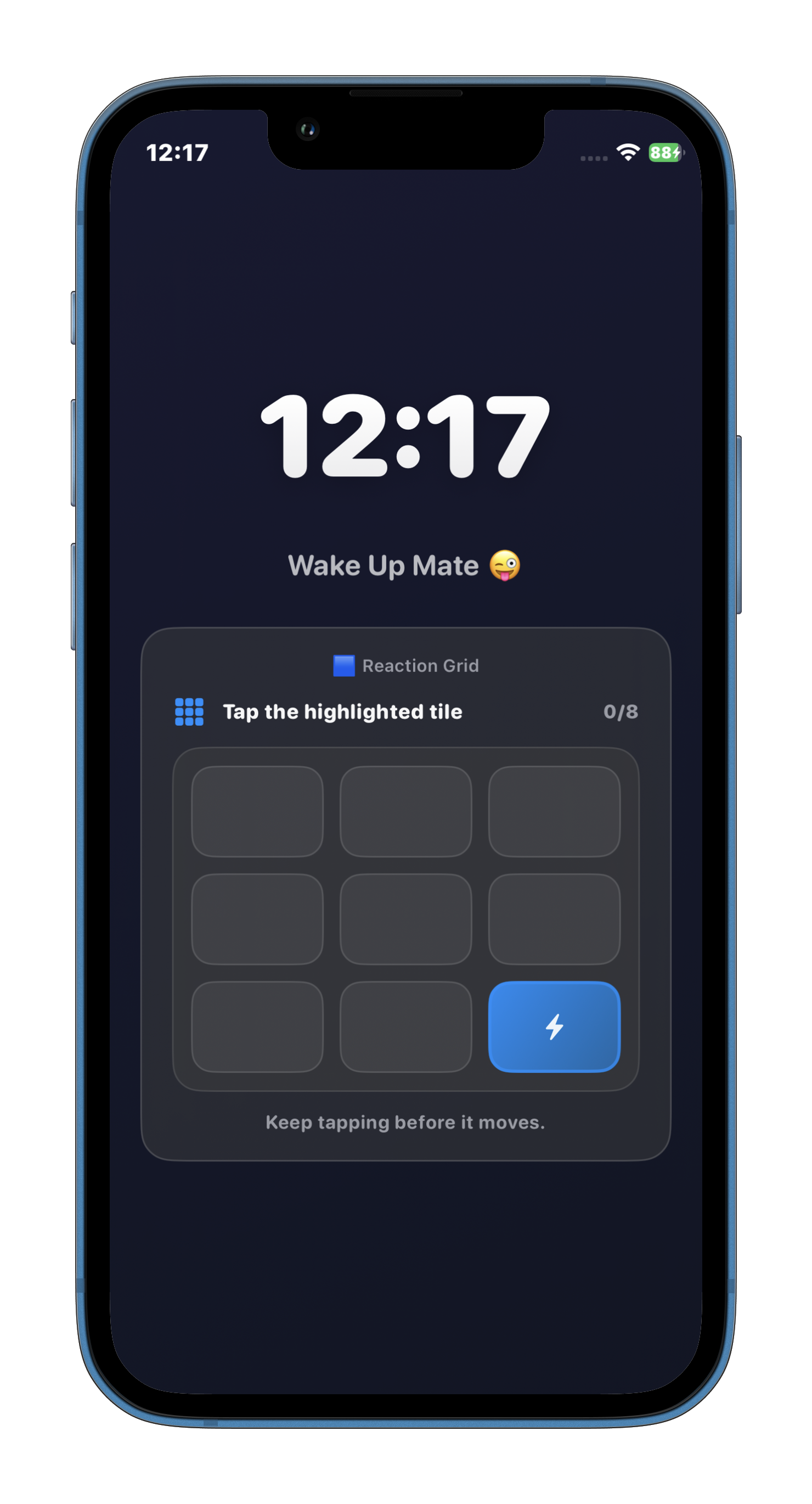
The Reaction Grid mission displays a grid of squares and lights them up one at a time. You tap each lit square before it goes dark and the next one appears. It's fast, visual, and demands the kind of sustained attention that sleep inertia directly suppresses.
When the alarm fires, a grid of squares appears on screen. Squares light up in sequence — or at random, depending on difficulty — and you must tap each one while it's active. Miss a tap or tap too slowly and you have to continue until you've hit the required number of successful taps. The grid size, illumination speed, and sequence predictability all scale with difficulty. The alarm stops when you've completed the required number of accurate taps.
Reaction Grid targets visual attention and response speed — two capacities that are heavily suppressed during sleep inertia. The dorsal attention network, which tracks moving and appearing stimuli and coordinates rapid responses, is one of the last systems to come fully online after waking from deep sleep. A task that requires sustained visual tracking and rapid tapping engages this network directly. Unlike reflexive actions (tapping a fixed target in a known location), a variable grid with unpredictable illumination requires active visual scanning and real-time response — which is precisely what your half-asleep brain struggles to do.
Who This Is For
- People who find cognitive tasks (math, memory) frustrating when half-asleep
- Heavy sleepers who want a fast, visually engaging challenge
- People who respond well to urgency and speed-based tasks
- Anyone building a rotation and needing a reaction-category mission
- Gamers who enjoy rapid-response mechanics and find them engaging
- People who want a mission that doesn't require reading or arithmetic
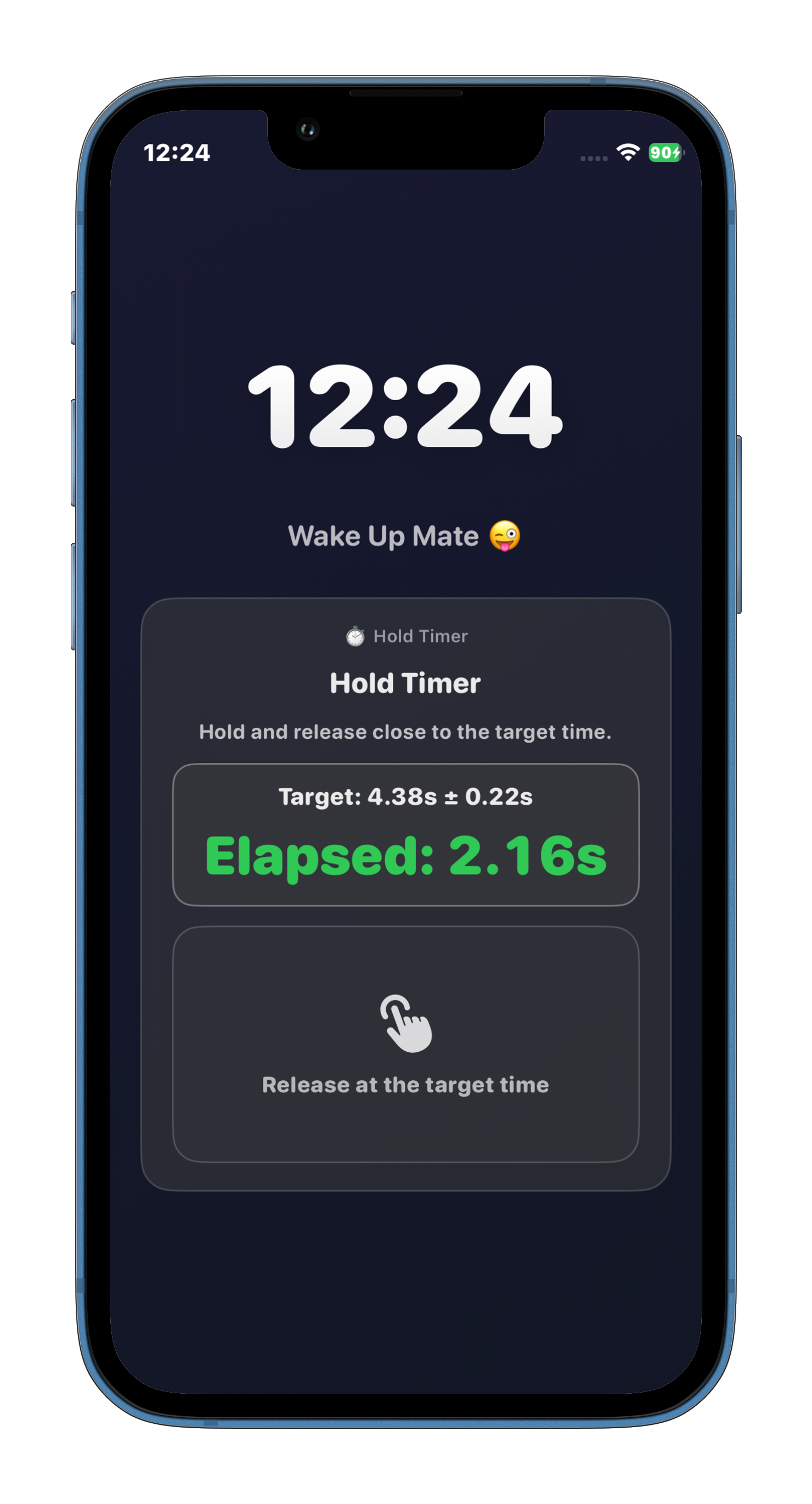
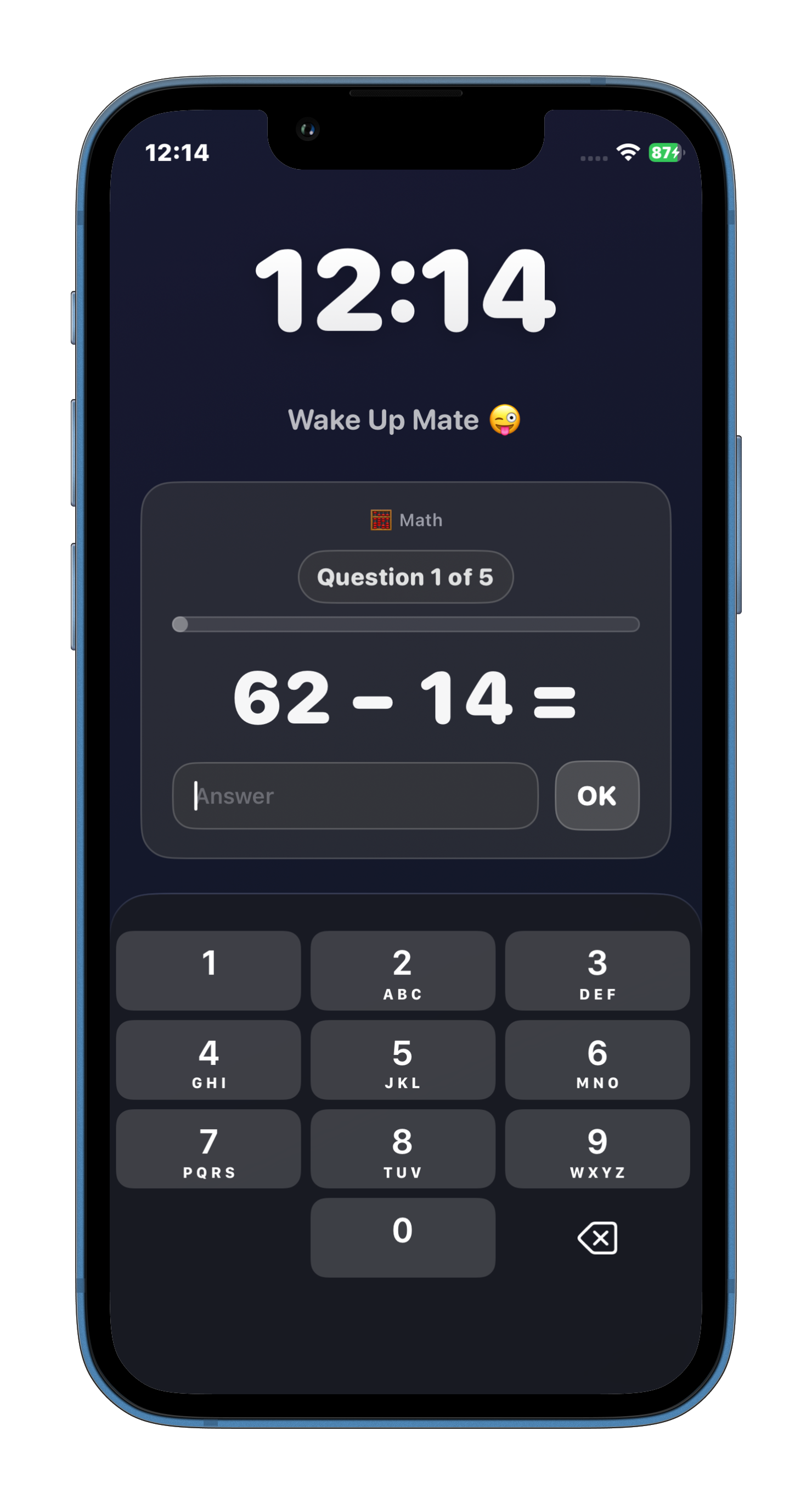
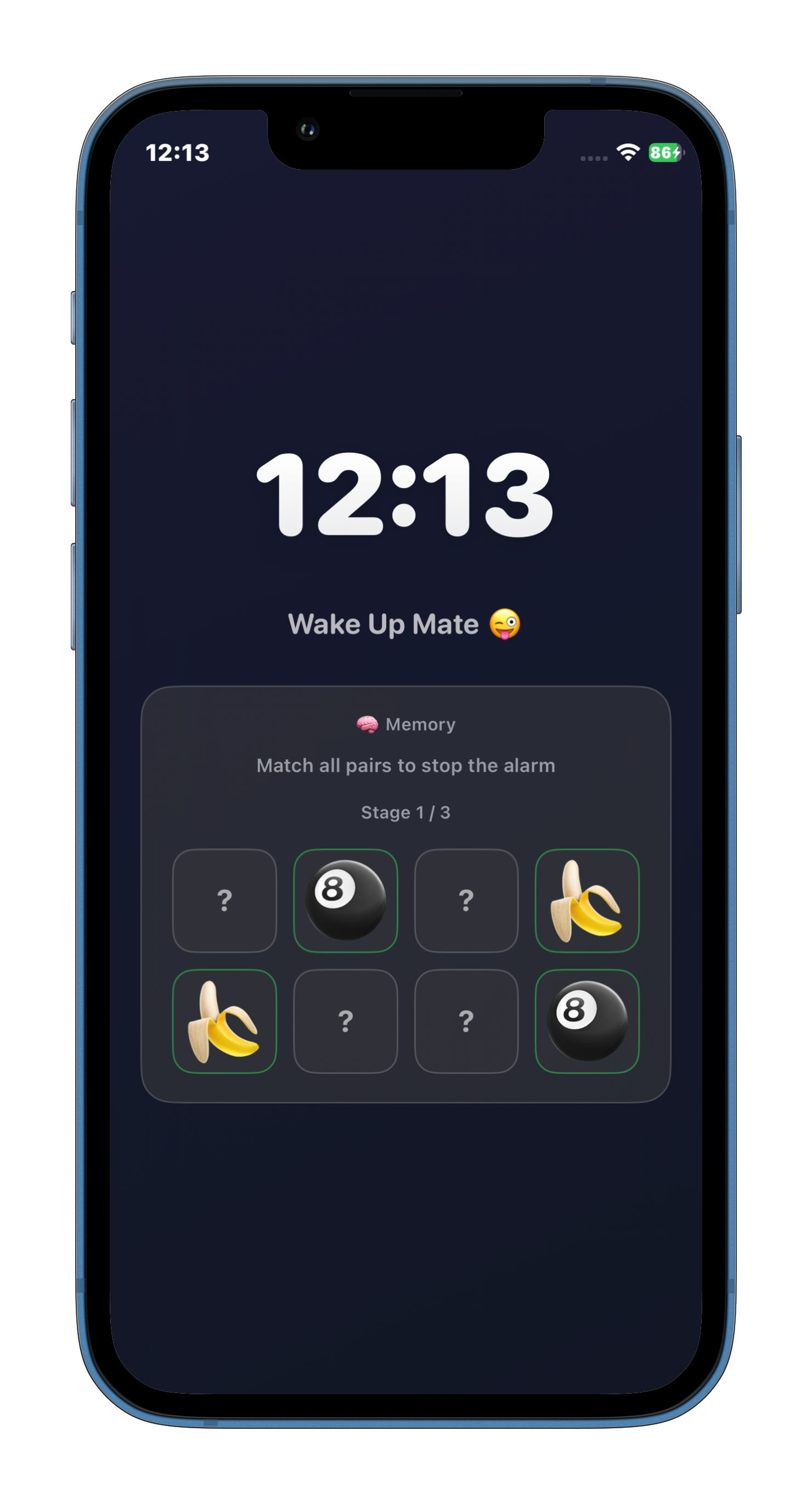
Why Alarm Arcade Works for People using Reaction Grid as their wake-up mission
Requires sustained visual attention — not available during sleep inertia
The dorsal attention network that drives rapid visual tracking and response is one of the slowest systems to recover after deep sleep. Reaction Grid targets it directly. You can't tap a moving target by reflex — you have to see it, identify it, and respond, all in sequence.
Fast and short — usually complete in under 30 seconds when awake
Reaction Grid is designed to be quick once you're genuinely alert — 20 to 30 seconds of focused tapping. That speed makes it less frustrating than longer tasks, while the intensity of those seconds is enough to break through sleep inertia. You're not dragged through a slow puzzle; you're snapped to attention.
Unpredictable illumination — no pattern to memorize
On harder difficulty settings, the grid lights up in random order rather than a fixed sequence. This prevents your brain from learning the pattern and tapping locations in advance. Each alarm requires fresh visual tracking, not execution of a memorized route.
Reaction Grid alarm vs standard alarm — Why it actually works
| Feature | Alarm Arcade | Alarmy | iPhone Clock |
|---|---|---|---|
| No subscription required | ✓ | ✗ | ✓ |
| Game-based dismissal | ✓ | ✓ | ✗ |
| Works offline (no account) | ✓ | ✗ | ✓ |
| Pricing | $1.49 one-time | $4.99/mo | Free |
| Multiple mission types | ✓ | ✓ | ✗ |
How to get the most out of the Reaction Grid mission
Start at Medium difficulty. Easy may use a smaller grid with predictable sequencing — good for evaluating the mission or for mornings after poor sleep. Hard uses a larger grid with faster illumination and random ordering, which requires genuine visual attention and rapid response. If you complete the mission on autopilot within a few seconds, increase difficulty or rotate to a different mission type.
Reaction Grid works particularly well for people who find cognitive tasks (math, typing) frustrating when they're groggy. The reaction mechanic is engaging without requiring arithmetic or reading, making it a lower-friction alternative for mornings when your brain feels slow. Use it as an anchor in your rotation for days when you need to wake up fast but don't want to wrestle with complex problems.
Combine Reaction Grid with other missions for maximum effect
Rotation 1 — Reaction plus cognitive: Reaction Grid + Math or Typing. The reaction mission is fast and visual; the cognitive missions are slower and language/arithmetic-based. Alternating between them means your brain engages different systems on different mornings and never builds a unified wake-up routine. This is a very effective weekday rotation.
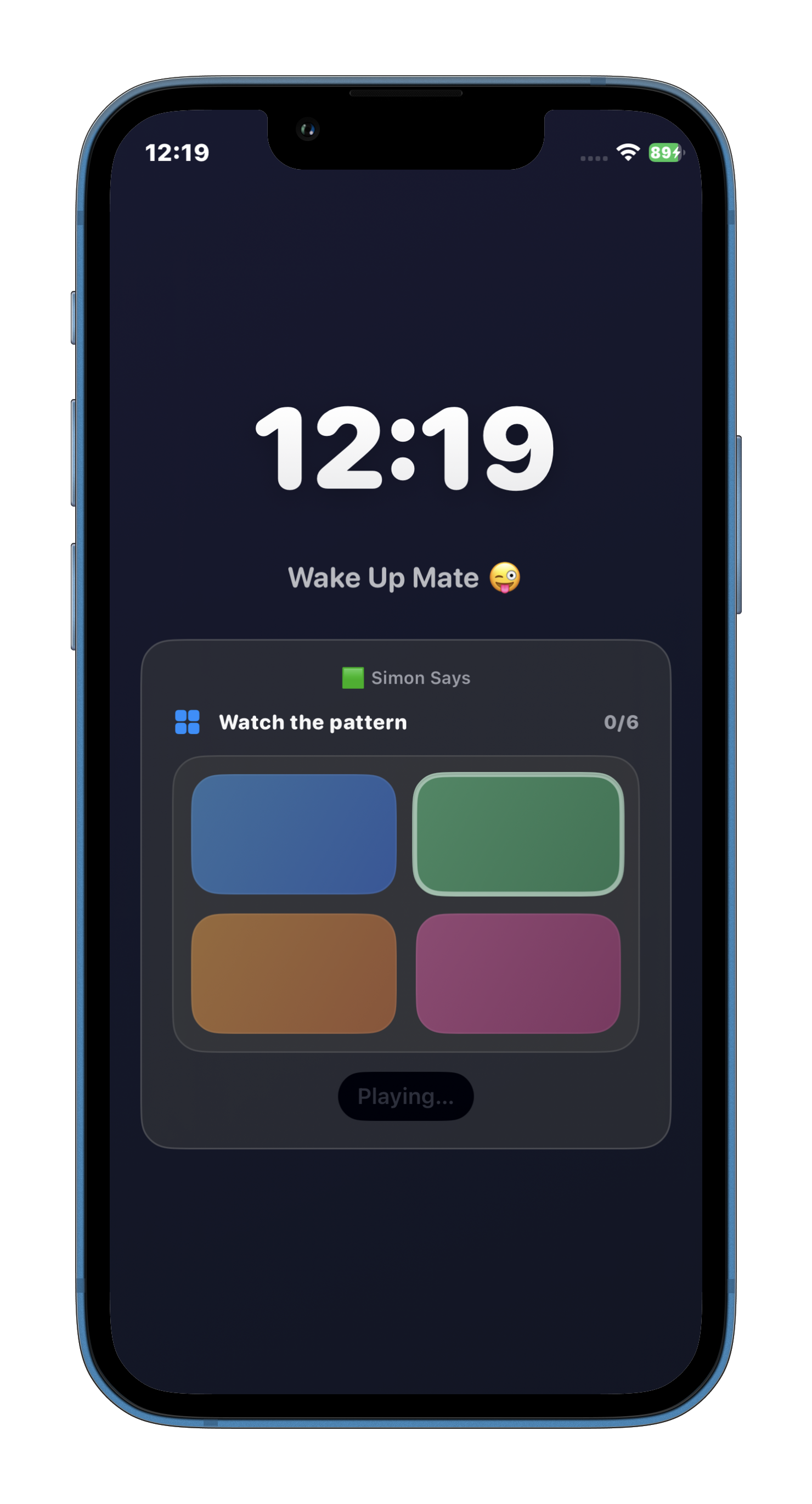
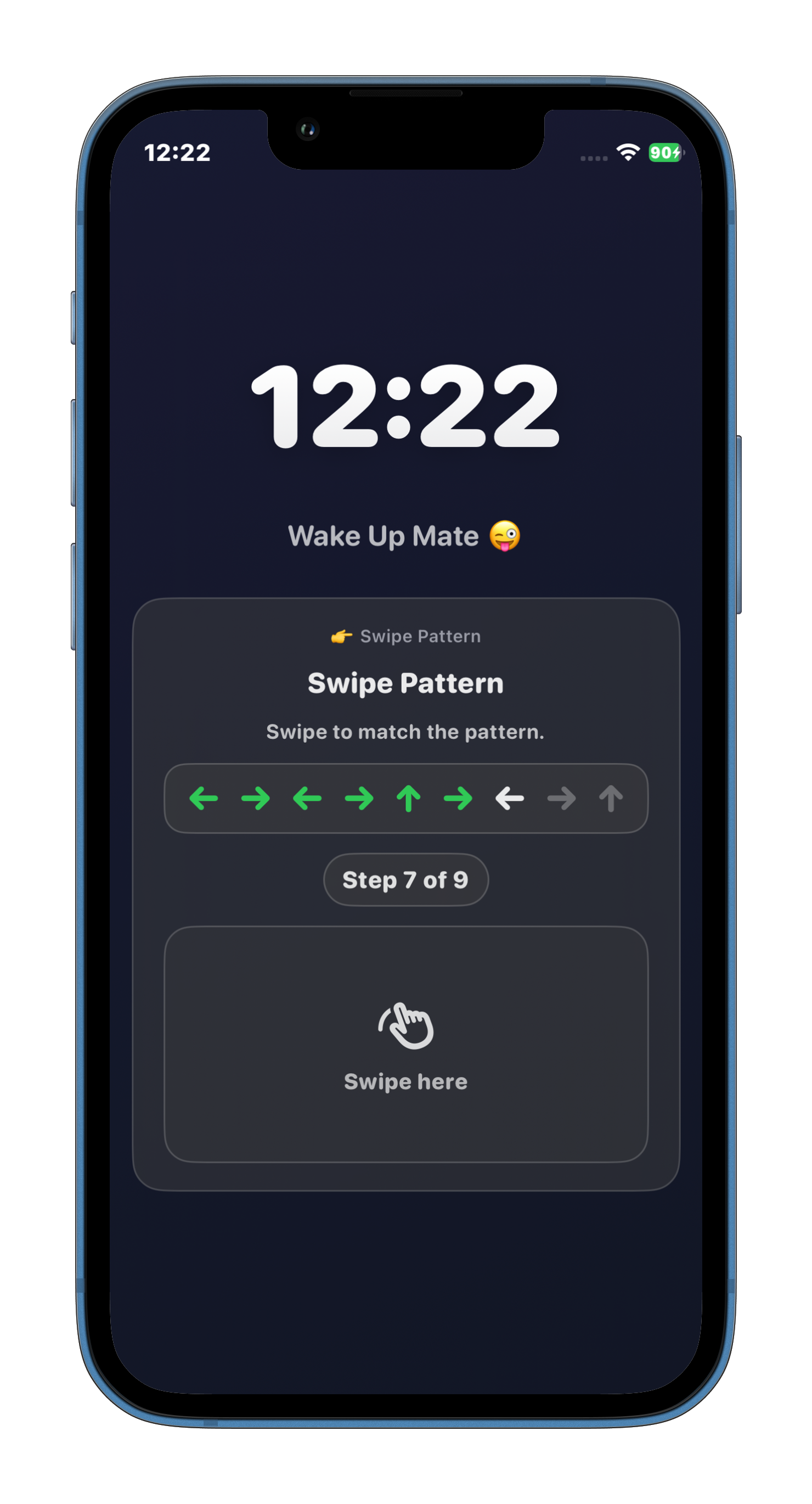
Rotation 2 — Full reaction category: Reaction Grid + Swipe Pattern. Both are reaction-based missions but Swipe Pattern requires tracing a displayed pattern rather than tapping individual squares — different spatial and motor demands. Rotating between them within the reaction category extends the effectiveness of reaction-based dismissal. Rotation 3 — Speed plus memory: Reaction Grid + Simon Says. Reaction Grid tests visual attention speed; Simon Says tests sequential memory. Neither system overlaps with the other, making them an efficient two-mission rotation that covers attention and memory simultaneously.
Frequently Asked Questions
Illumination speed scales with difficulty. Easy is slow enough to tap comfortably even when groggy. Hard fires quickly enough that you have to be actively paying attention to keep up — tapping a square a half-second late may count as a miss depending on settings. The target experience is that Easy is completable half-awake and Hard is not.
A tap registers as successful when you touch an illuminated square while it's still lit. Tapping a dark square (too early or too late) doesn't count. The mission tracks cumulative successful taps until you've hit the required number, so missed taps extend the mission rather than resetting it.
Yes. The skill requirement is low — you're tapping lit squares, not executing complex sequences. The challenge comes from the speed and unpredictability, not from gaming ability. On Easy difficulty, almost anyone can complete it; the question is whether you can do it while still groggy. That difficulty gradient is exactly what makes it effective as an alarm mission.
Wake up with your brain switched on
This mission is free to try. Download Alarm Arcade and set it as your alarm tonight.
Download Alarm Arcade — Free