 Alarm Arcade
Pattern draw alarm: Draw the lock, start your day
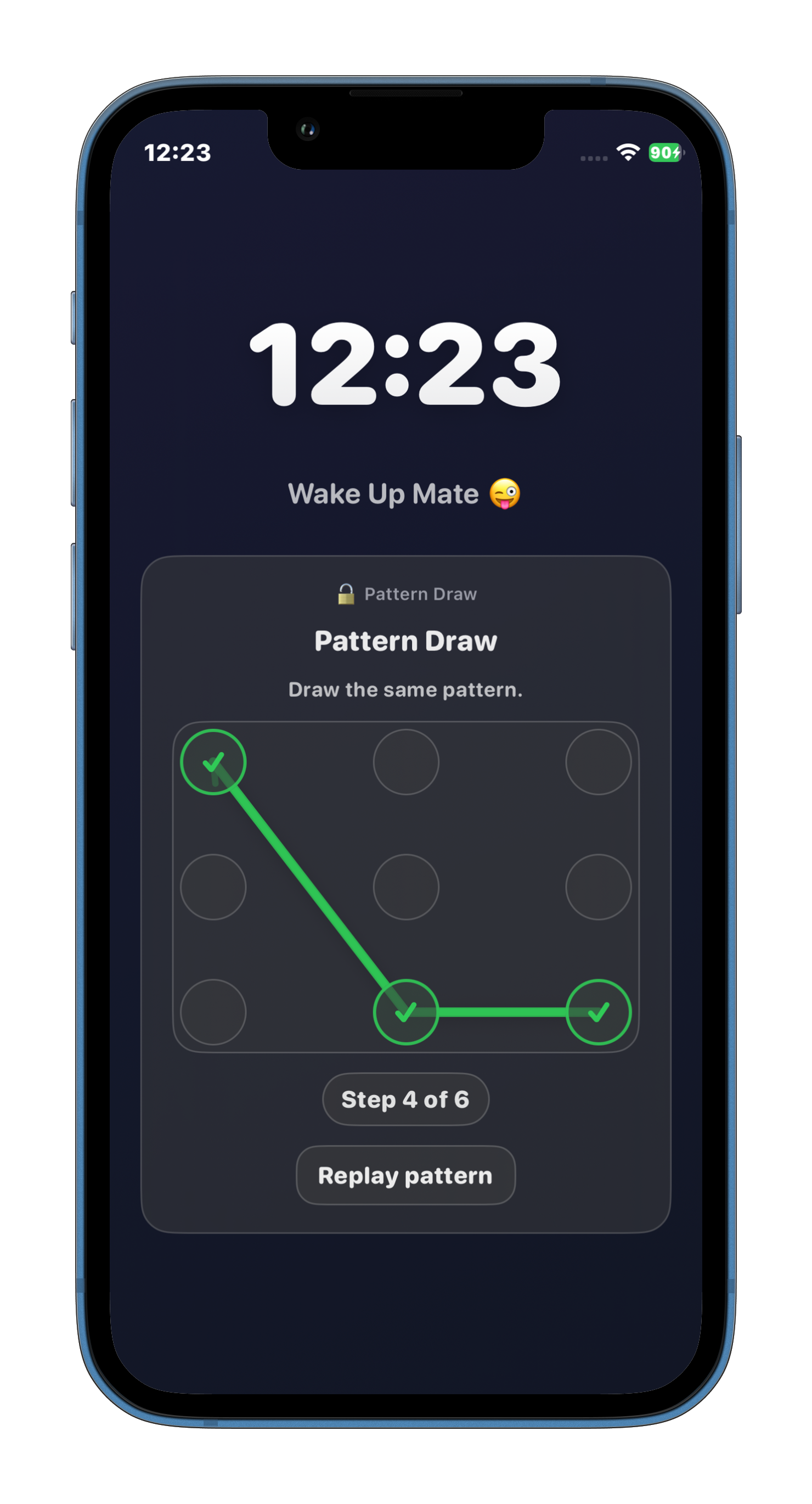
The Pattern Draw mission shows you a shape or design and requires you to reproduce it freehand before the alarm stops. Reproducing a visual pattern from memory demands spatial cognition, visual-motor coordination, and working memory — none of which function reliably during sleep inertia.
When the alarm fires, a shape or design is displayed on screen. You study it, then draw it freehand in a blank canvas area. Your drawing is compared against the original for similarity — the closer the match, the higher the score, and above a threshold the alarm stops. Difficulty scales with shape complexity, the duration of the reference display, and the similarity threshold required to pass. Simple shapes are shown longer; complex shapes are displayed briefly.
Pattern Draw combines three cognitive operations: visual encoding (studying and mentally storing the shape), spatial reconstruction (translating the stored image into a motor plan), and motor execution (drawing the shape accurately enough to pass the threshold). Visual encoding is an explicit memory task handled by the hippocampus. Spatial reconstruction requires parietal lobe processing. Motor execution requires coordinated output from the motor cortex. All three are compromised by sleep inertia, and all three are required to complete the mission. This compound demand is what makes the mission genuinely difficult to fake.
Who This Is For
- People who enjoy visual and artistic tasks and want their morning mission to feel engaging
- Heavy sleepers who want a visual-spatial challenge unlike math or reaction missions
- People rotating from Swipe Pattern who want a related but different spatial task
- Users who find arithmetic or typing frustrating when half-asleep
- Anyone building a spatial-focused mission rotation
- People who want a calm, deliberate challenge rather than a fast-paced reaction task
Why Alarm Arcade Works for People using Pattern Draw as their wake-up mission
Visual memory plus freehand motor control — compound spatial demand
Drawing from memory requires encoding the shape visually and then physically reproducing it. Neither step can be skipped, and both are disrupted by sleep inertia. You can't complete the mission by executing a habitual gesture — every shape is different and requires fresh visual recall.
Shapes vary each alarm — no repeating pattern to learn
The displayed shape changes every morning. Your hand has no learned response to draw from because there's no fixed shape. You must look, remember, and reproduce — which requires your visual and spatial memory systems to be active before anything else.
Similarity threshold — rough approximations don't pass
Your drawing must match the original above a similarity threshold. Careless, approximate drawing fails and you try again. This accuracy requirement ensures the motor precision component is genuine — you have to be aware enough to produce a reasonably faithful copy.
Pattern Draw alarm vs standard alarm — Why it actually works
| Feature | Alarm Arcade | Alarmy | iPhone Clock |
|---|---|---|---|
| No subscription required | ✓ | ✗ | ✓ |
| Game-based dismissal | ✓ | ✓ | ✗ |
| Works offline (no account) | ✓ | ✗ | ✓ |
| Pricing | $1.49 one-time | $4.99/mo | Free |
| Multiple mission types | ✓ | ✓ | ✗ |
How to get the most out of the Pattern Draw mission
Pattern Draw works best when you take a full second to study the reference shape before drawing. The most common failure mode is starting to draw before fully encoding the shape — which leads to a failed attempt and another round of encoding. At Medium and Hard difficulty, the reference display time is shorter, making this encoding phase more critical.
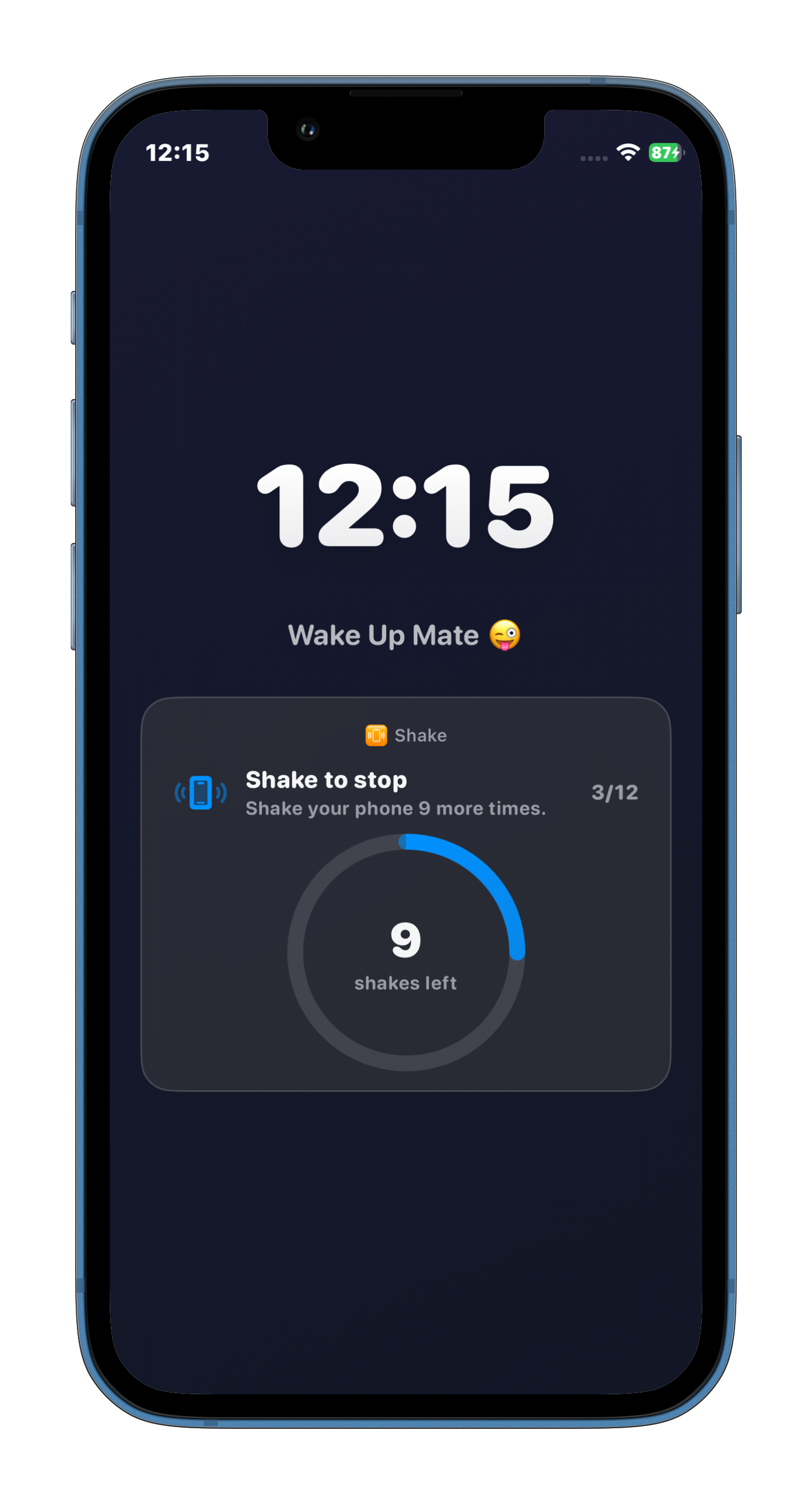
Pattern Draw is a calm, deliberate mission compared to fast-paced reaction tasks. This makes it particularly good for mornings when you're genuinely tired and don't want a frantic mission, but still need enforced dismissal. Pair it with a faster mission (Reaction Grid, Shake) for variety — the contrast between deliberate spatial drawing and fast physical response keeps both missions feeling different.
Combine Pattern Draw with other missions for maximum effect
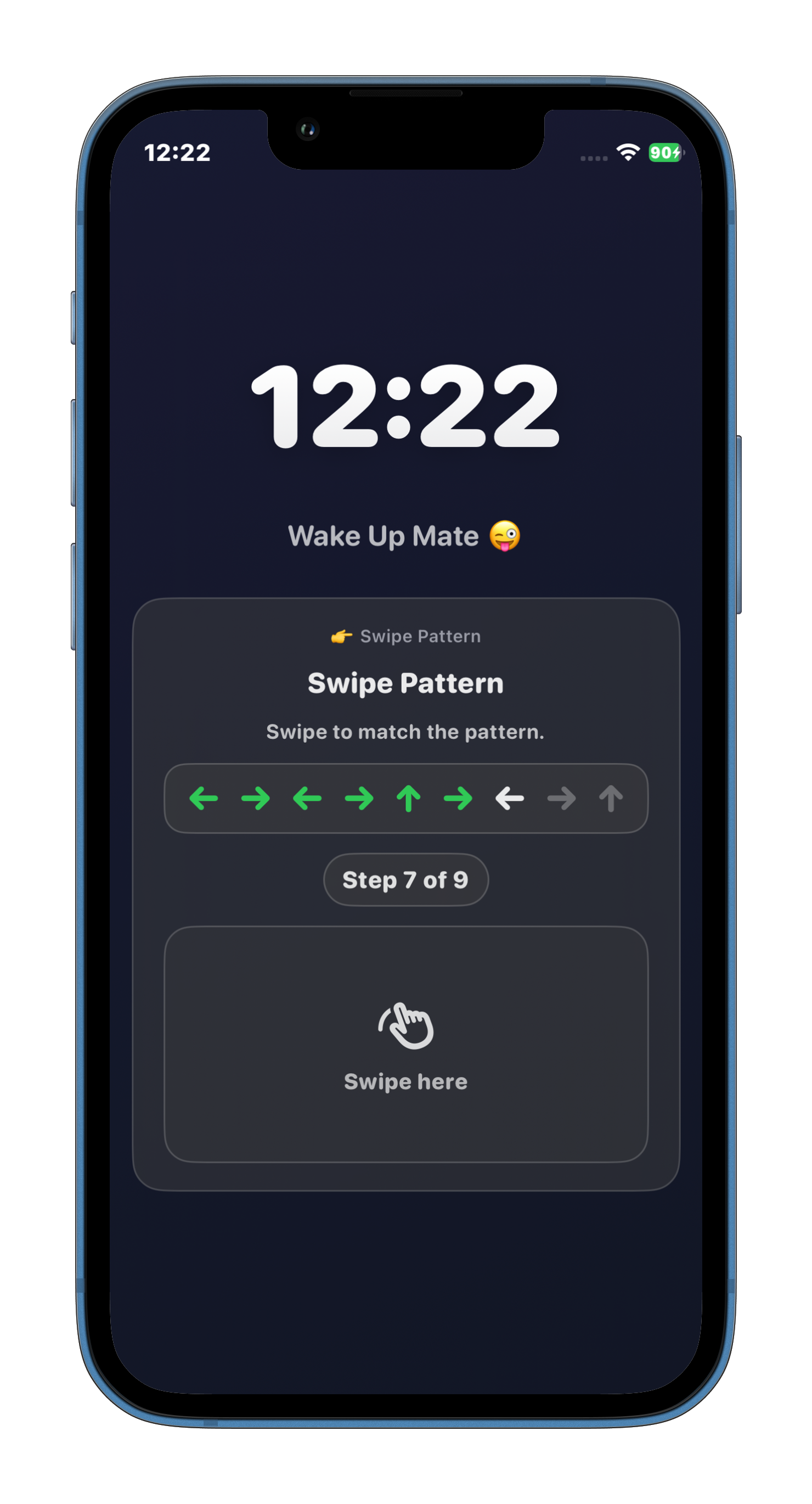
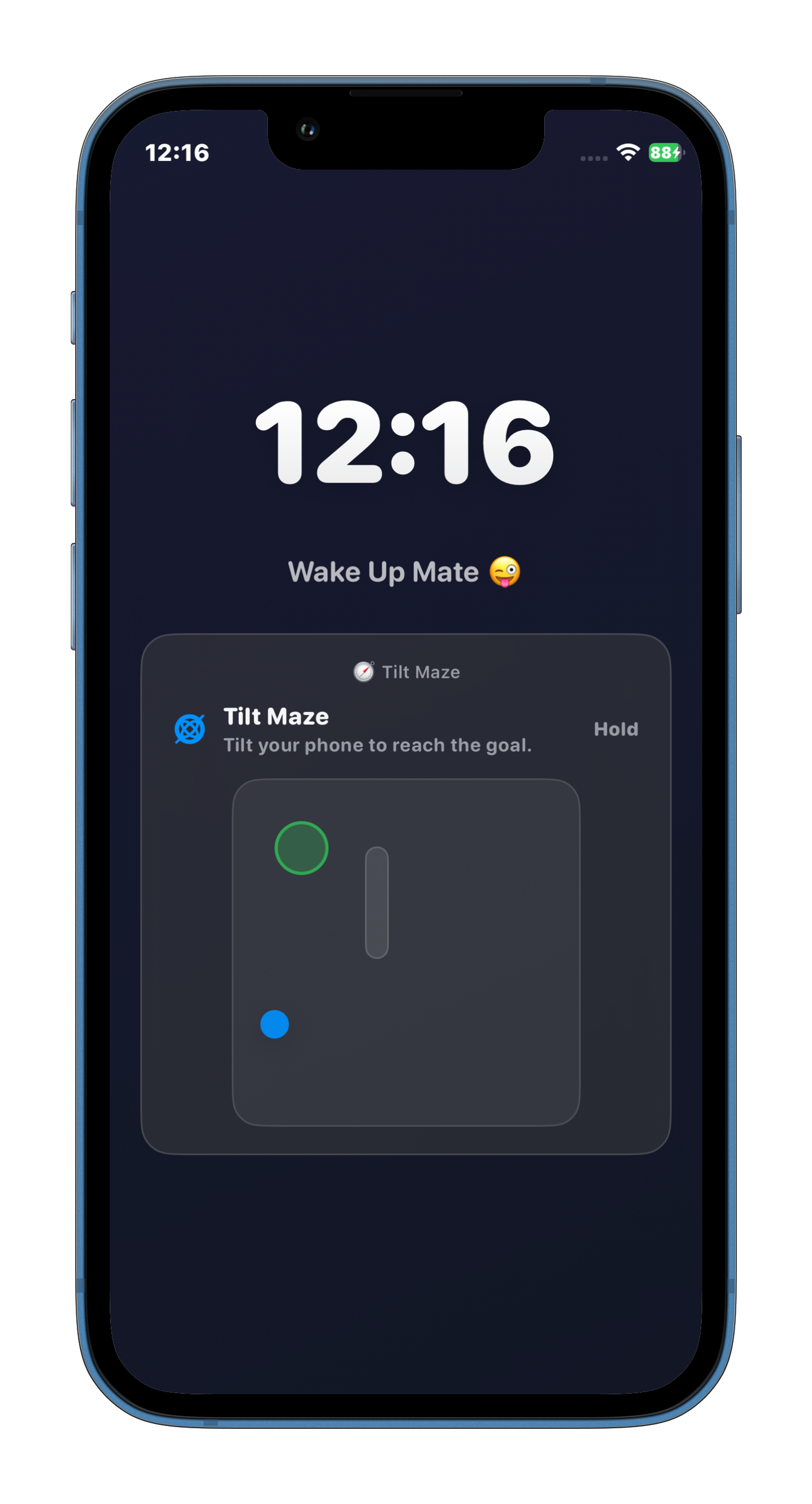
Rotation 1 — Spatial focus: Pattern Draw + Swipe Pattern + Tilt Maze. Three spatially focused missions that never repeat the same motor mechanic. Pattern Draw is holistic (reproduce a shape); Swipe Pattern is sequential (trace a path); Tilt Maze is dynamic (navigate a moving ball). This rotation is the best option for people who strongly prefer physical-spatial challenges over cognitive-verbal ones.
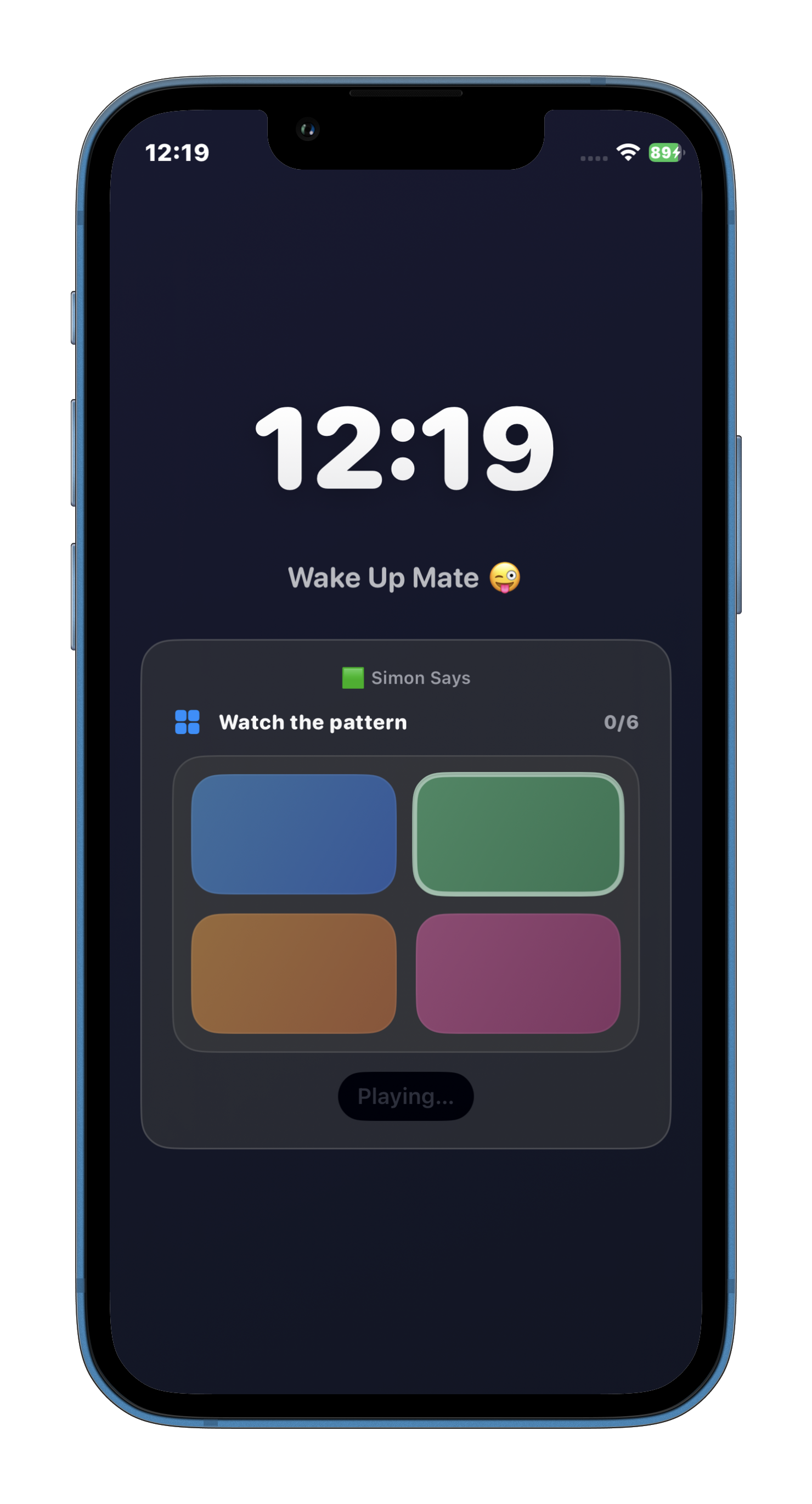
Rotation 2 — Calm plus fast: Pattern Draw + Reaction Grid. Pattern Draw is slow and deliberate; Reaction Grid is fast and urgent. The contrast between these two pacing styles makes both more effective — each feels distinctly different from the other, preventing unified adaptation. Rotation 3 — Full visual rotation: Pattern Draw + Memory Match + Simon Says. All three missions are primarily visual and avoid arithmetic. Pattern Draw uses spatial memory; Memory Match uses object/card recognition; Simon Says uses color-sequence recall. A complete visual memory rotation that covers spatial, recognition, and sequential memory systems.
Frequently Asked Questions
The similarity threshold scales with difficulty. Easy accepts a rough approximation — general shape and proportions are sufficient. Hard requires a closer match in terms of line accuracy, proportions, and spatial positioning. The threshold is never set so high that a perfectly awake person would struggle — it's calibrated to fail people who are genuinely not paying attention and pass people who are.
Shapes range from simple geometric forms (triangles, irregular polygons, basic curves) at Easy difficulty to more complex composite shapes at Hard. They're all reproducible by hand — the point isn't artistic skill but spatial attention and motor control. No shape requires fine artistic ability to pass the threshold.
It's slower than reaction missions like Reaction Grid or Shake, but the deliberateness is part of its design. The encoding phase (studying the shape) forces sustained visual attention. The drawing phase forces sustained motor coordination. A 20–30 second mission of deliberate, focused effort can be more effective at establishing genuine wakefulness than 10 seconds of frantic tapping — it depends on your sleep patterns and cognitive style.
Wake up with your brain switched on
This mission is free to try. Download Alarm Arcade and set it as your alarm tonight.
Download Alarm Arcade — Free