 Alarm Arcade
Best math alarm apps compared
Math alarms work because arithmetic is hard to fake while half-asleep — your brain actually has to engage before it can solve even a simple equation. This page compares the best math alarm apps for iPhone and explains why having math as one option among many is more effective than math alone.
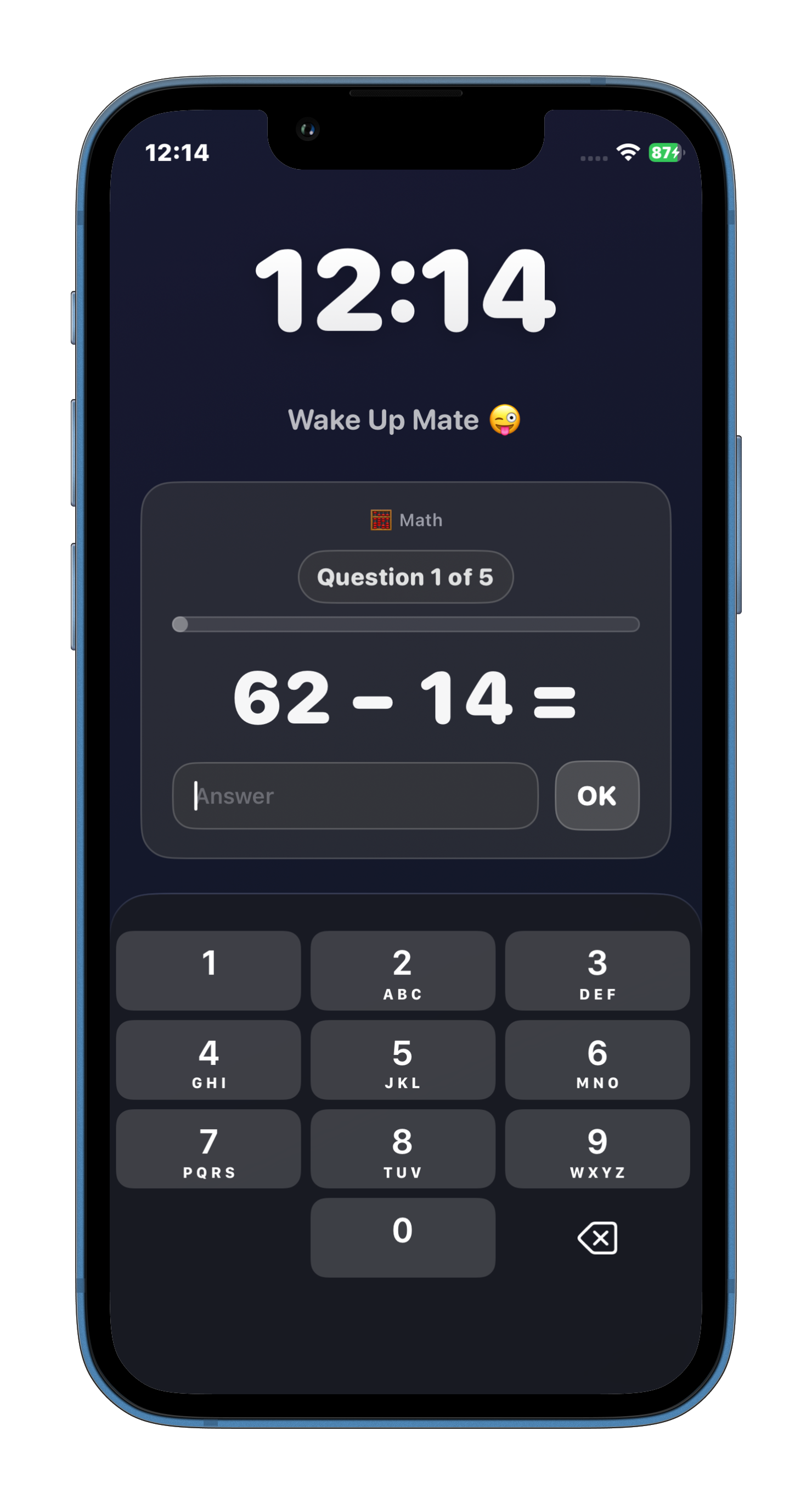
Several iPhone alarm apps use math as their dismissal mechanic — you solve an arithmetic problem before the alarm stops. Alarm Arcade includes Math as one of ten mission types, which means you can use it when it's working and switch to Typing, Reaction Grid, or Tilt Maze when your brain starts solving equations on autopilot.
If you're specifically searching for a math alarm app, Alarm Arcade is the best iOS option that includes it — because it doesn't stop at math. Ten missions total, free to download, Pro is $1.49 once, no account, works offline.
Who This Is For
- Math alarm users who've started solving problems in their sleep
- People who want arithmetic challenges but with backup options
- Students who respond well to cognitive tasks at wake-up
- Heavy sleepers who've already tried single-method alarm apps
- iOS users comparing all math alarm options before downloading
- People who want a varied challenge so they can't game the system
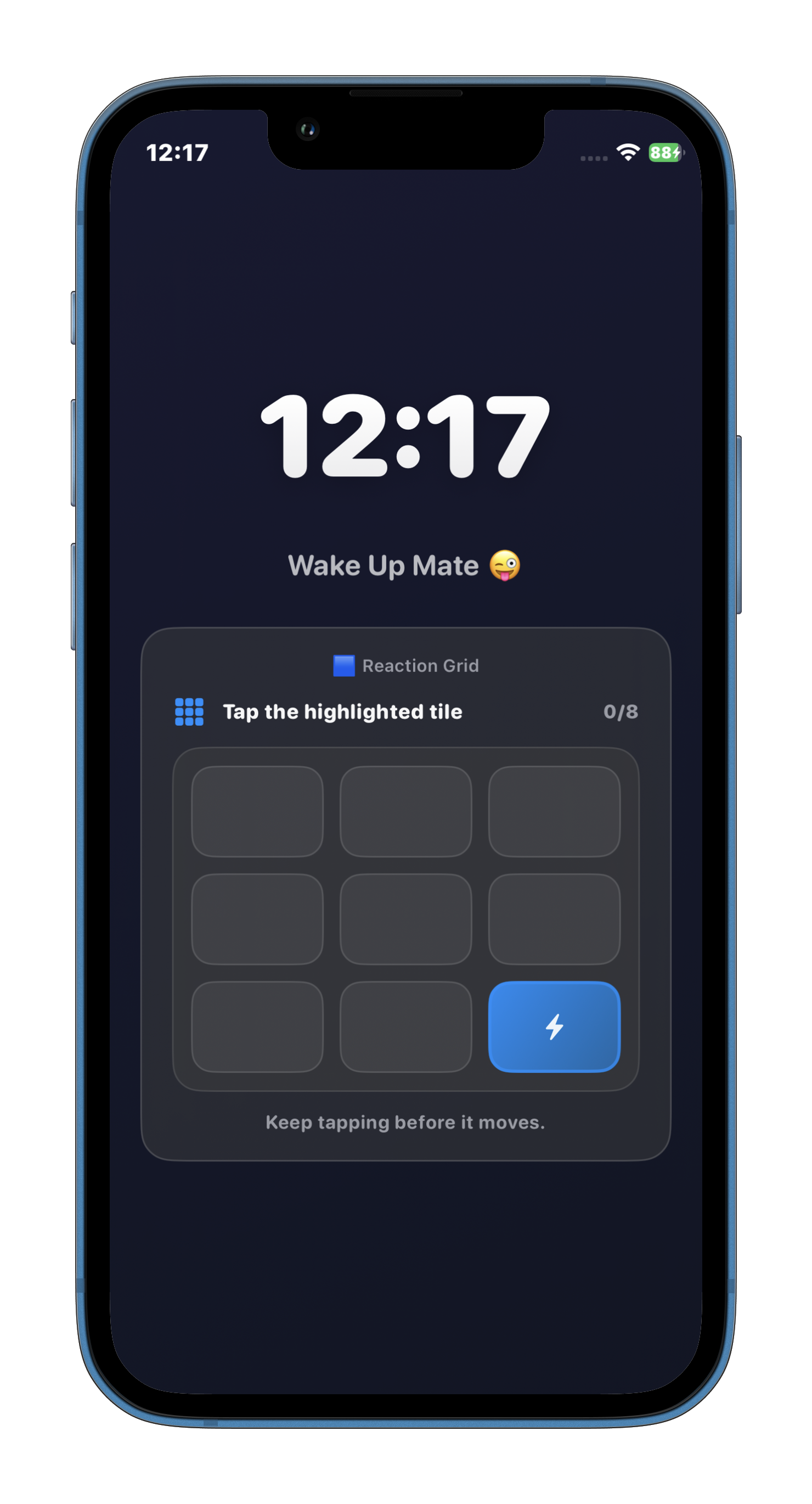
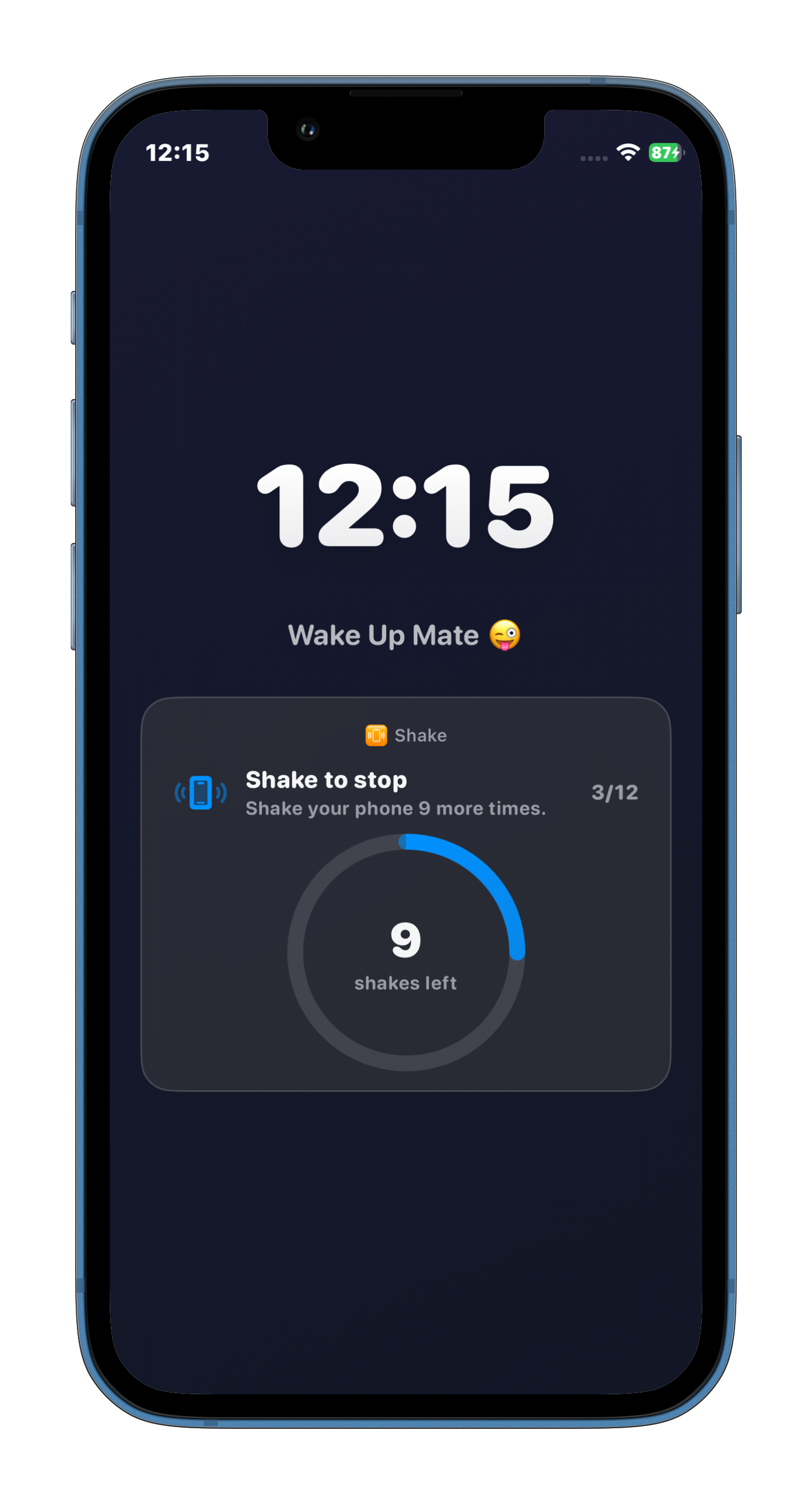
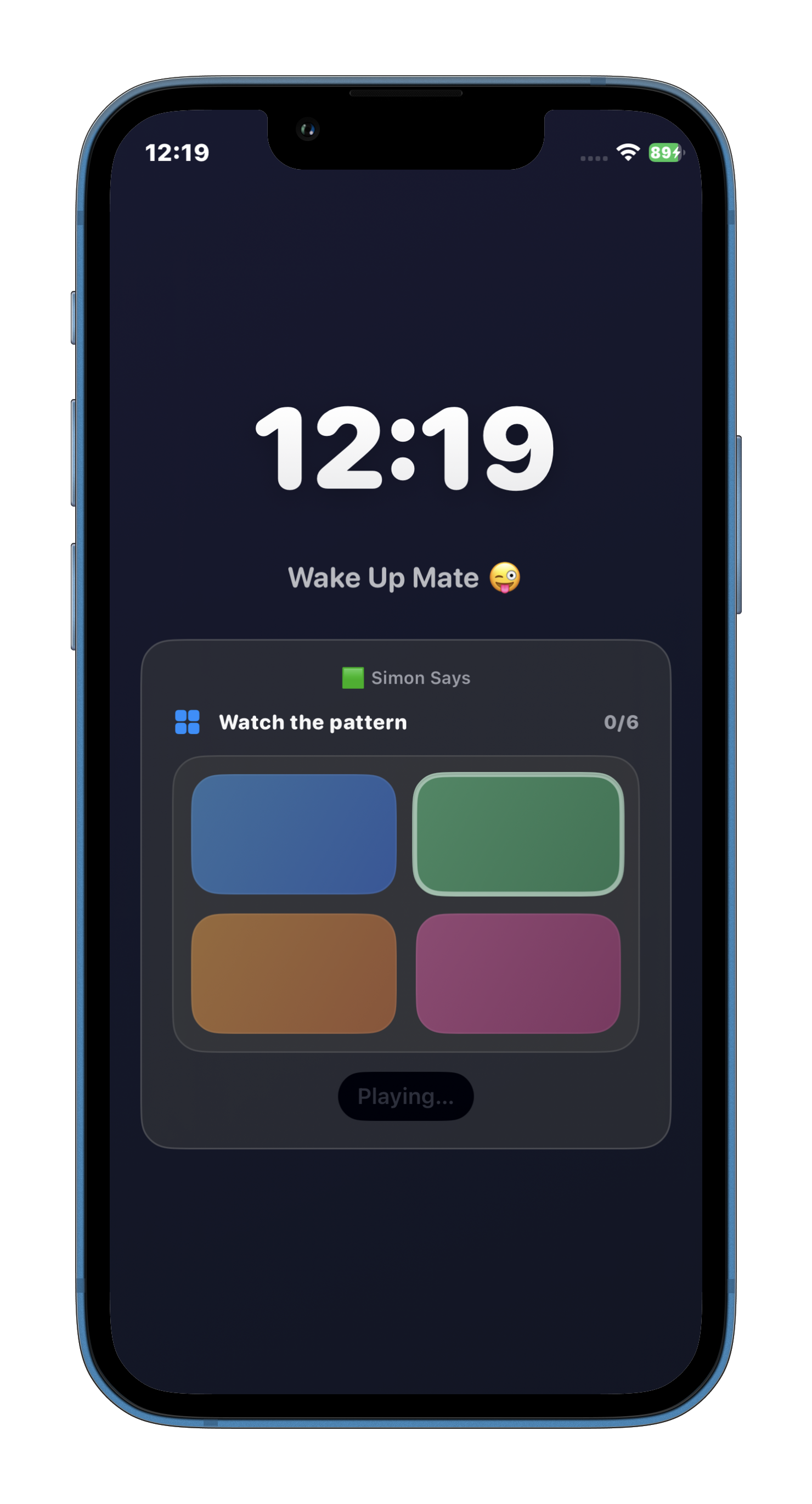
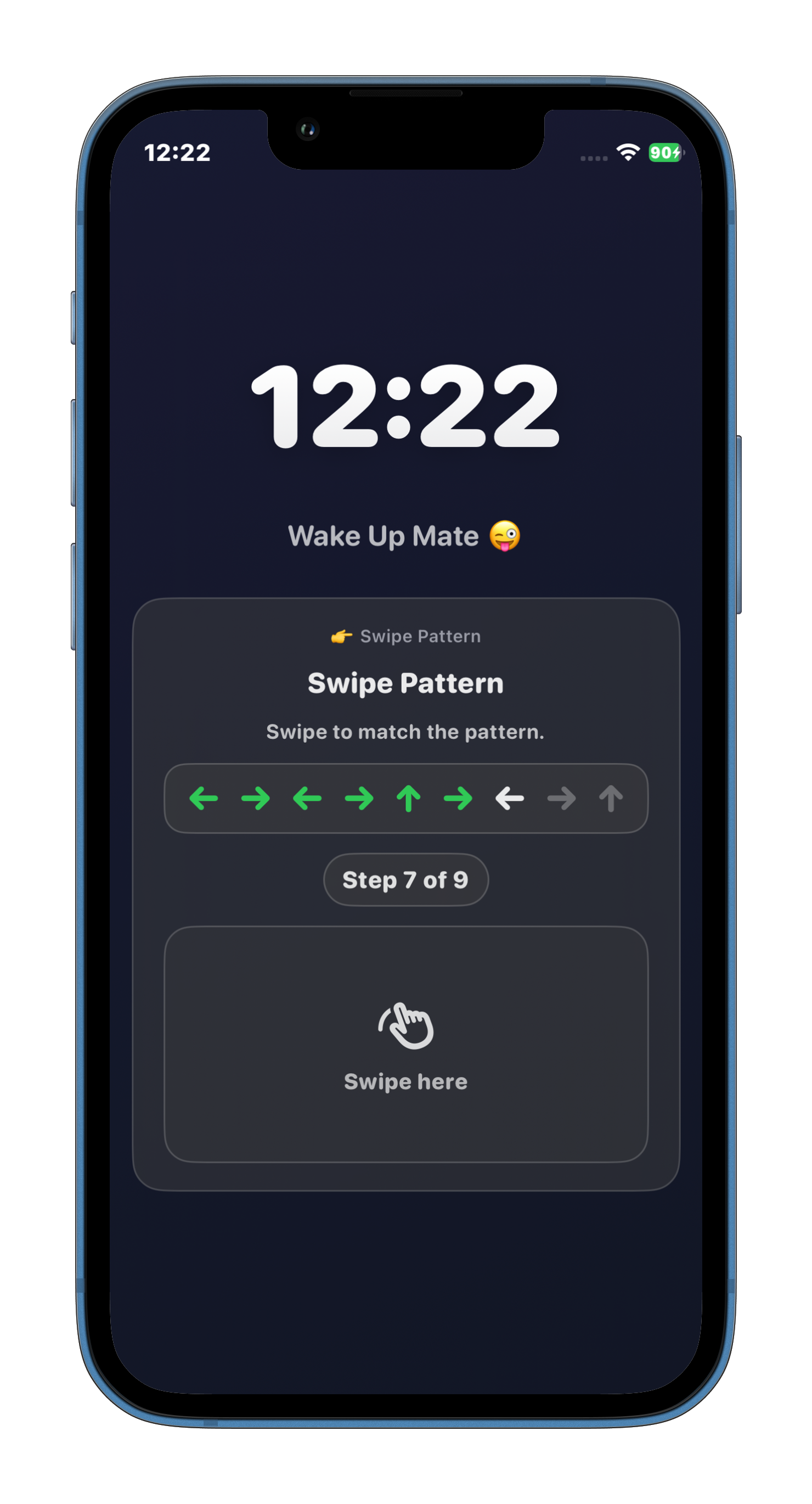
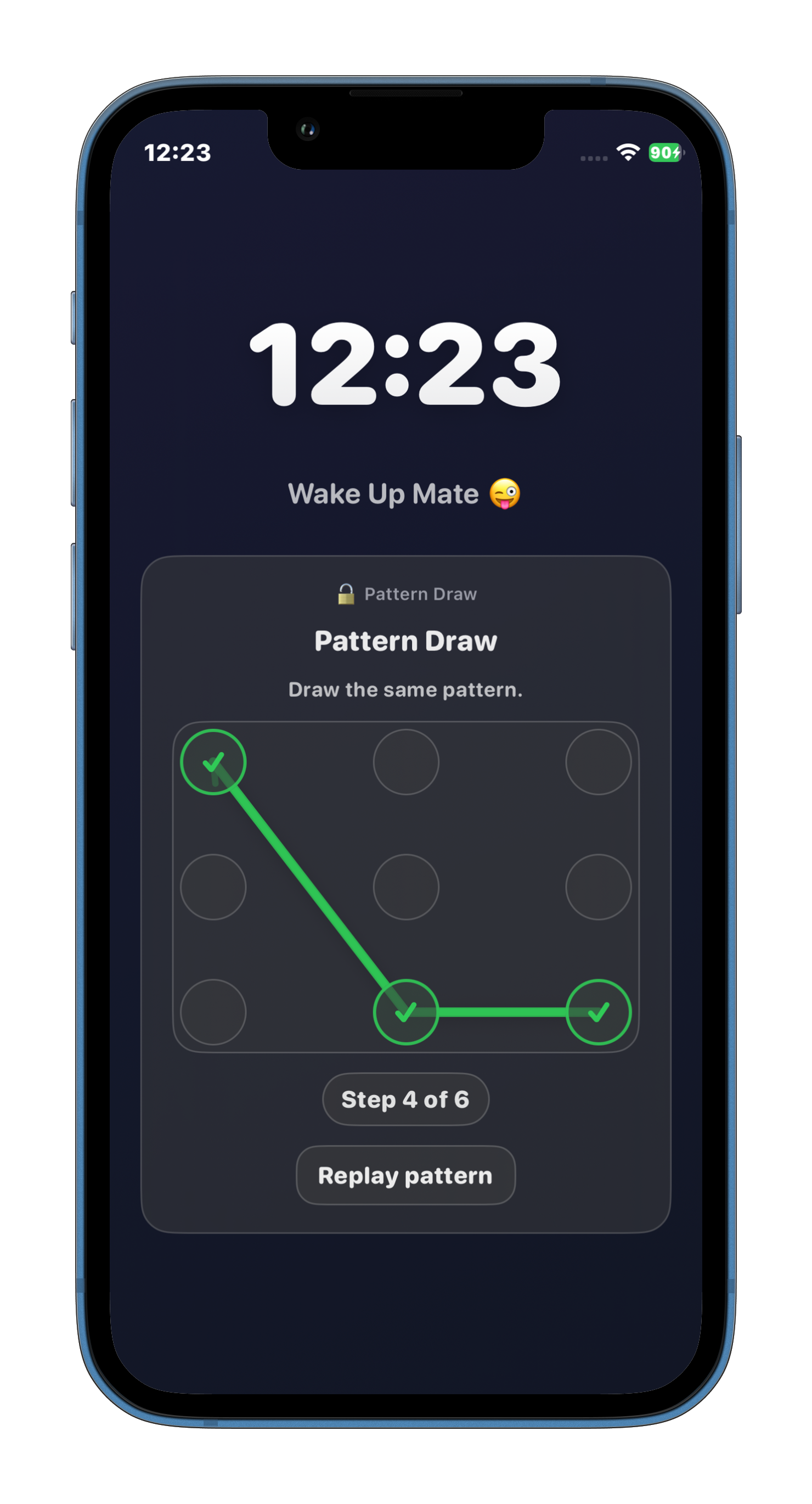
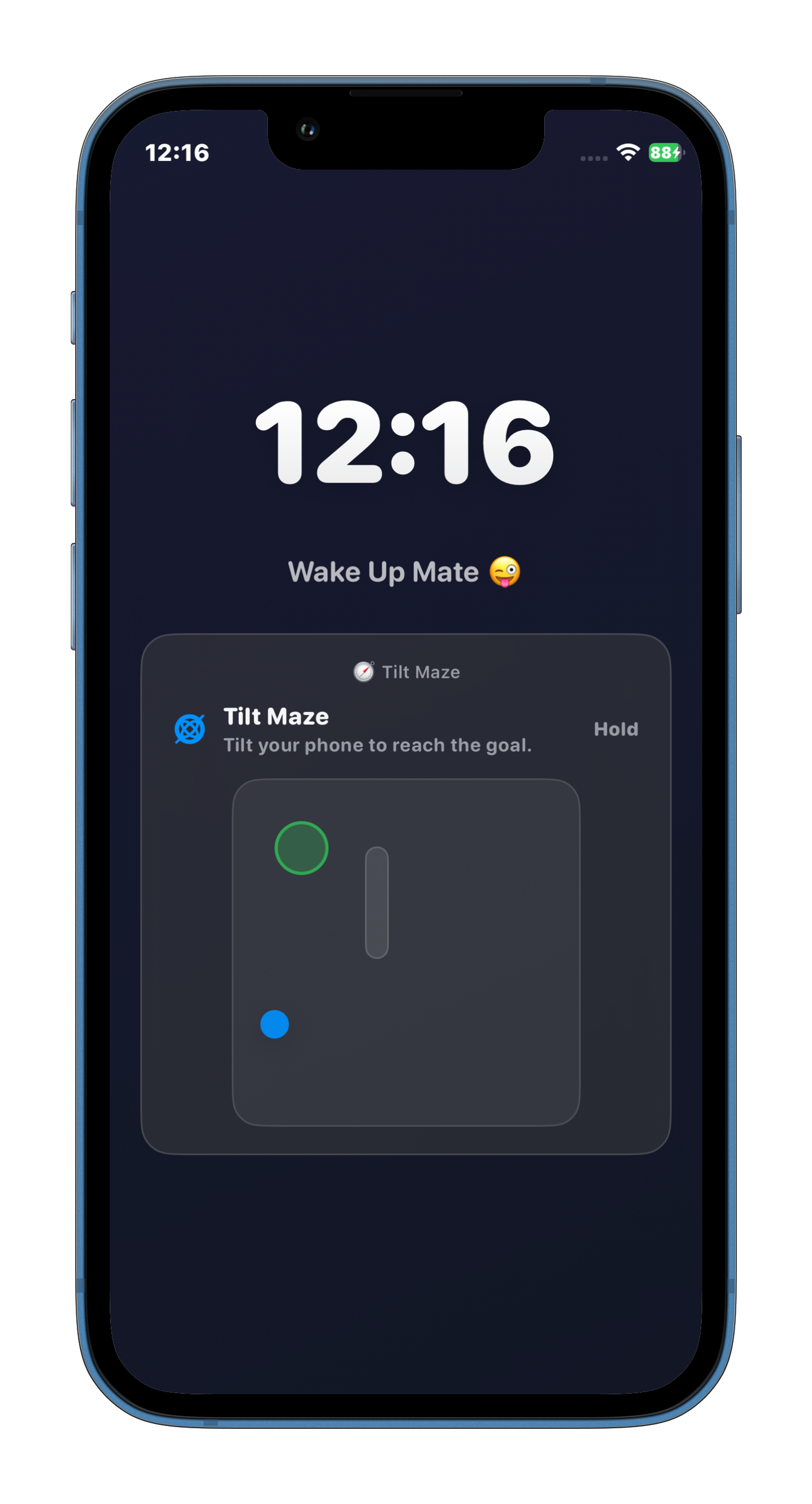
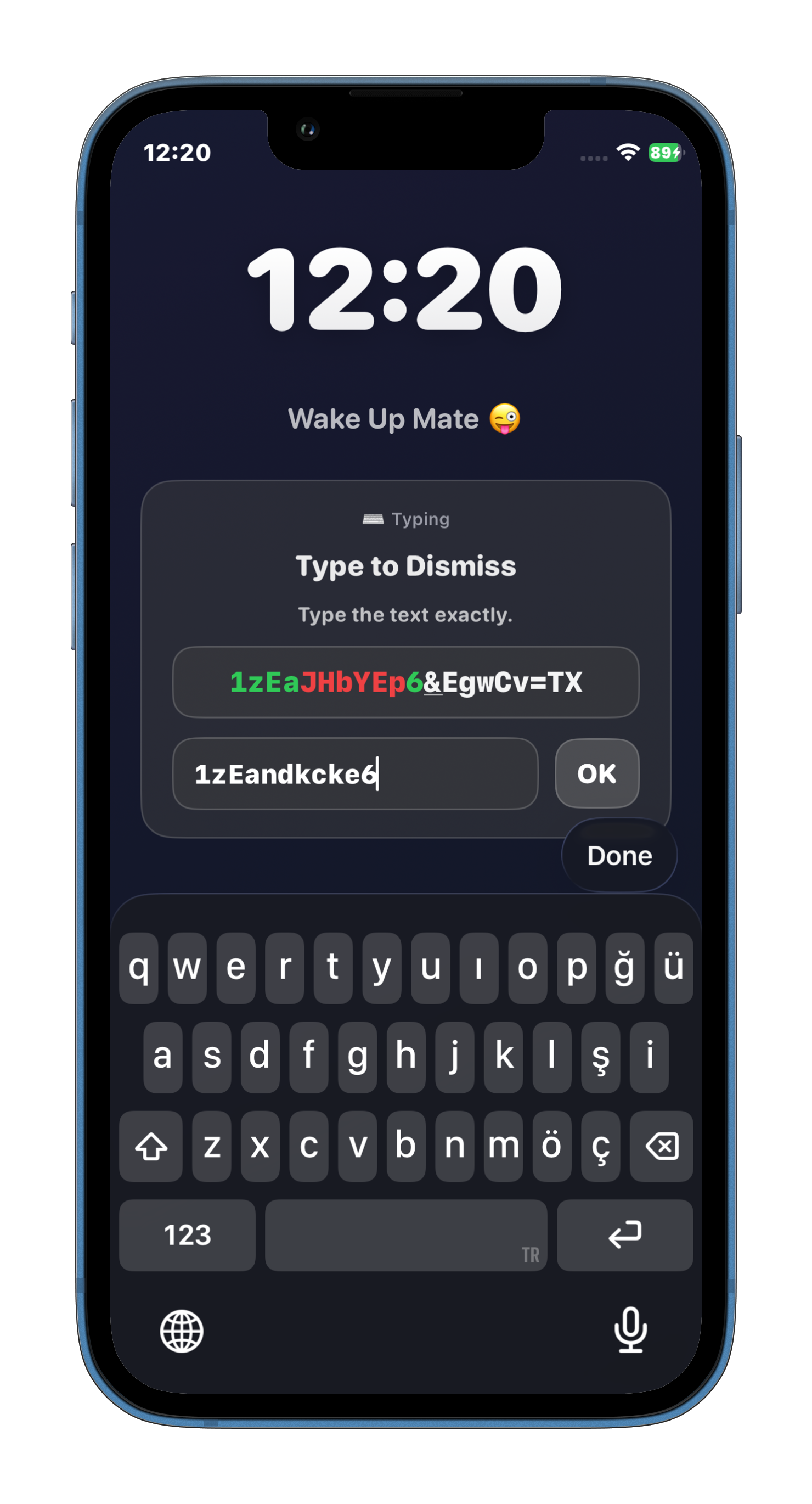
Why Alarm Arcade Works for Math alarm app users looking for more variety
Math is one of ten missions — use it when it works, switch when it doesn't
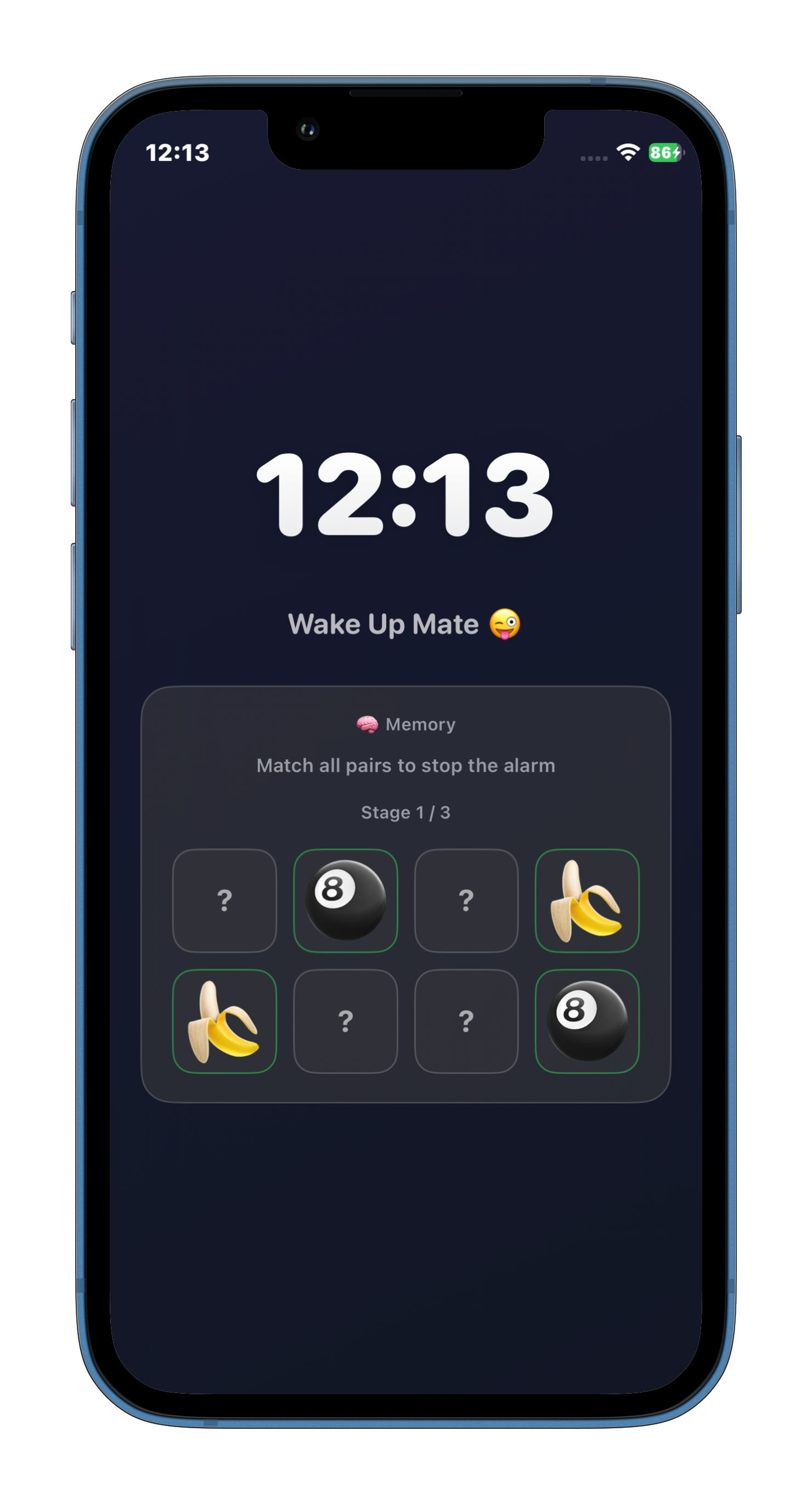
Apps that only offer math dismissal have a ceiling: once your sleepy brain memorizes the process, you complete equations without waking up. Alarm Arcade's Math mission is fully effective — and when it stops challenging you, you switch to Memory Match, Typing, Reaction Grid, or any of the other seven missions.
Adjustable difficulty so math stays challenging
Alarm Arcade's Math mission scales in difficulty — you're not stuck at the same equation complexity forever. As basic addition becomes automatic, increase the difficulty to multi-step problems that require real concentration. The goal is to stay in the zone where completion requires genuine attention.
No subscription — $1.49 one-time for the full mission set
Most math alarm apps with multiple difficulty levels charge monthly. Alarm Arcade is free to download with a $1.49 one-time Pro unlock for the full mission library. You get Math plus nine other challenge types without any recurring fee.
Best math alarm apps for iPhone — Feature Comparison
| Feature | Alarm Arcade | Alarmy | iPhone Clock |
|---|---|---|---|
| No subscription required | ✓ | ✗ | ✓ |
| Game-based dismissal | ✓ | ✓ | ✗ |
| Works offline (no account) | ✓ | ✗ | ✓ |
| Pricing | $1.49 one-time | $4.99/mo | Free |
| Multiple mission types | ✓ | ✓ | ✗ |
Why a math-only alarm eventually stops working
Math works as an alarm mechanic because arithmetic activates the prefrontal cortex — the part of your brain that comes back online last during sleep inertia. A simple addition problem that takes a conscious adult two seconds can take a half-asleep person fifteen seconds or more, which is enough time for actual waking to occur. This is real and it works.
The limitation is habituation. Your brain is efficient: if you solve the same type of math problem every morning at the same time, it builds a routine. Within a few weeks, many people find themselves solving arithmetic while still functionally asleep. The solution isn't harder math (though that helps) — it's switching to a different challenge type entirely. Memory Match, Reaction Grid, and Typing engage different cognitive systems, making them harder to automate after you've built a math routine.
How to use Alarm Arcade's math mission effectively
Step 1: Start with Medium difficulty math. Easy is too simple for most adults; Hard can be frustrating when genuinely groggy. Medium — two-step operations, moderate numbers — is usually the right starting point. Step 2: Set the phone out of reach so you have to sit up or stand to complete the problem. The physical component reinforces the cognitive one.
Step 3: After one to two weeks, if Math is feeling automatic, switch to Memory Match or Typing for a few days. Return to Math after the break — it will feel challenging again. Step 4: If you want to keep Math as your primary but need it harder, increase to Hard difficulty and enable multi-step problems. The combination of physical distance, cognitive engagement, and occasional mission rotation is the most reliable long-term setup.
Frequently Asked Questions
Difficulty is adjustable across Easy, Medium, and Hard. Easy involves single-step addition and subtraction. Medium adds multiplication and two-step operations. Hard includes multi-step problems and larger numbers that require genuine concentration even when fully awake. Most users start at Medium and increase once Easy-level problems become automatic.
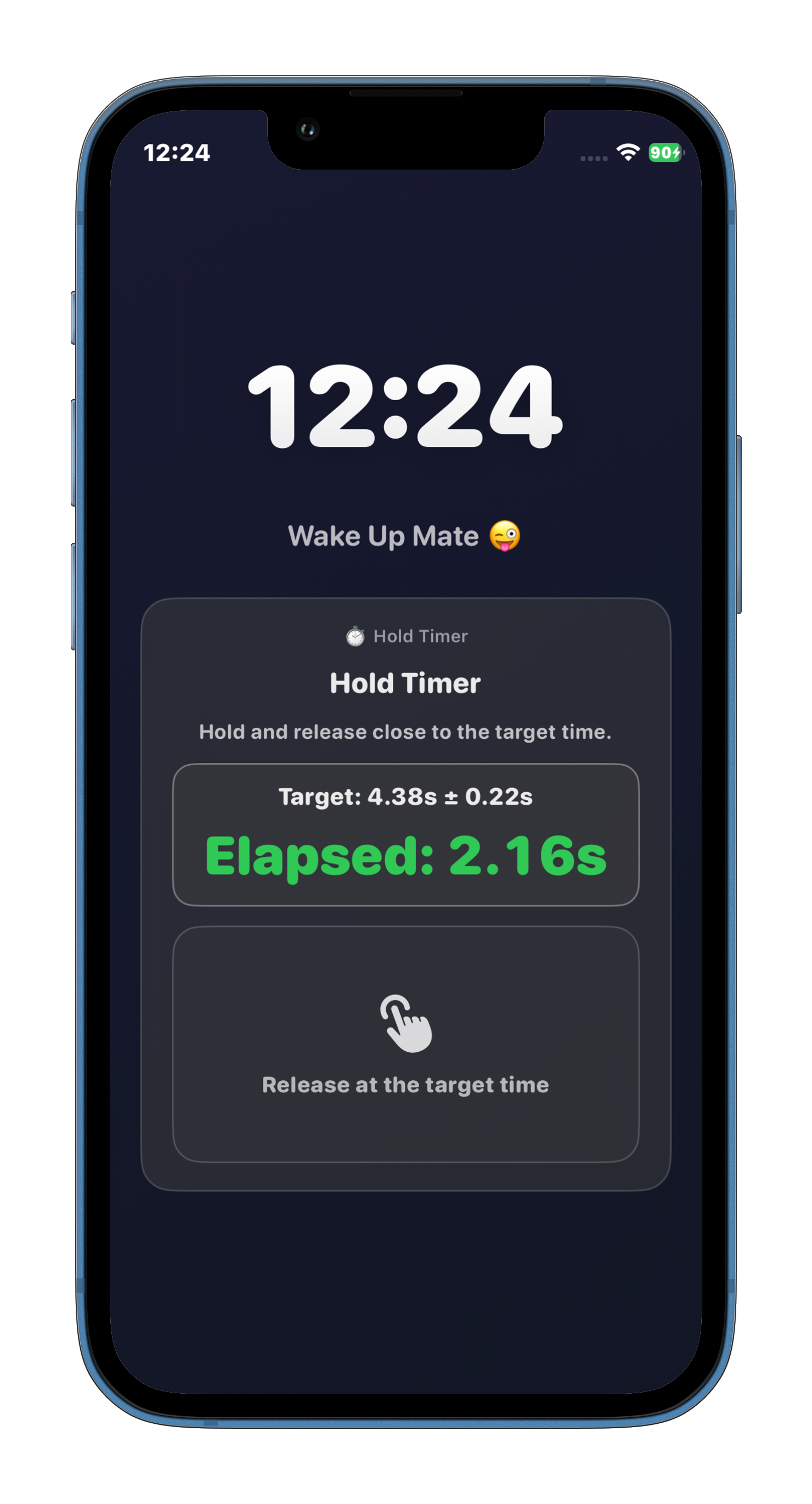
Nine others: Memory Match (flip-card memory game), Shake (shake the phone a set number of times), Tilt Maze (tilt the phone to navigate a ball), Reaction Grid (tap targets in sequence), Simon Says (replicate color sequences), Typing (type a displayed phrase), Swipe Pattern (trace a pattern on screen), Pattern Draw (recreate a drawn pattern), and Hold Timer (hold a button for a set duration). All are available with the Pro unlock.
The free version includes core mission access to get you started. The full Math mission library including all difficulty levels, plus all nine other mission types, is available with the Pro unlock at $1.49 one-time. There's no time limit on the free version — you can evaluate whether the approach works for your sleep patterns before spending anything.
Make the decision easy — pick the one that actually wakes you up
Download Alarm Arcade free. No subscription, no account needed, works offline. Pro is $1.49 one-time.
Download Alarm Arcade — Free